
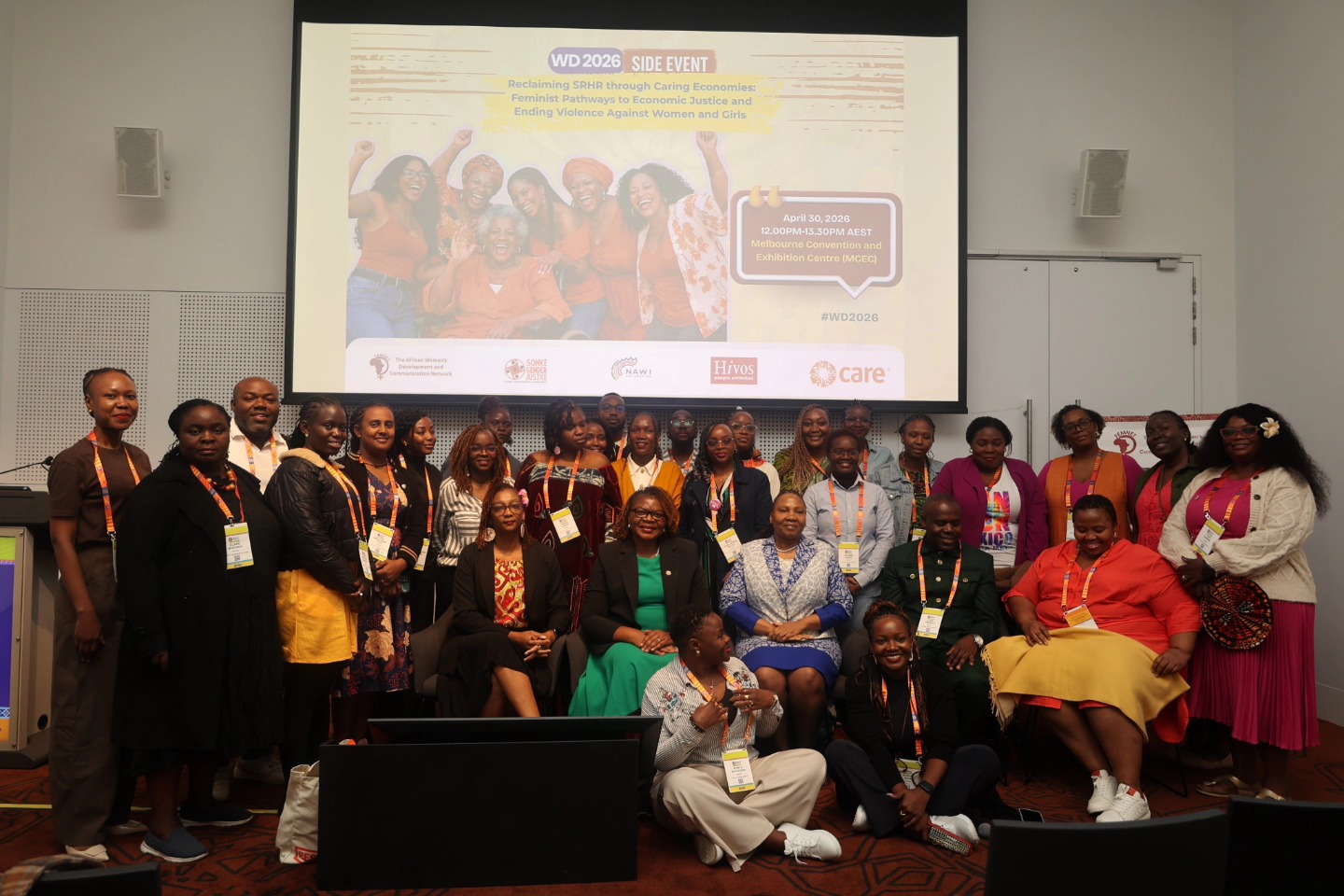
Reclaiming SRHR Through Care Economies and Feminist Justice
At the heart of the Women Deliver Conference 2026, under the theme “Change Calls Us Here,” one conversation stood out as both urgent and deeply transformative: Reclaiming SRHR through Care Economies: Feminist Pathways to Economic Justice and Ending Violence Against Women and Girls.
This was not just another panel discussion. Organized by Sonke Gender Justice, Hivos, Care International, and Nawi Collective, it was a necessary feminist reckoning.
It was a room filled with bold voices, lived realities, and unfiltered truths from Pan-African leaders who understand that Sexual and Reproductive Health and Rights (SRHR) cannot be discussed in isolation from the economic systems that shape women’s lives. The conversation challenged us to think beyond policy language and into the everyday realities of women and girls whose unpaid care work, limited access to healthcare, and exposure to violence continue to define their survival. Because the truth is simple: there is no SRHR justice without economic justice.
Across Sub-Saharan Africa, women and girls continue to carry the heaviest burden of unpaid care work, spending up to three times more hours than men on domestic and caregiving responsibilities. This unpaid labor limits their access to education, formal employment, leadership opportunities, and financial independence. At the same time, the region still records some of the highest maternal mortality rates globally, with women facing preventable deaths due to underfunded public health systems and inadequate access to quality sexual and reproductive healthcare.
In her opening remarks, Her Excellency Ms. Boemo Sekgoma, Secretary General of the SADC Parliamentary Forum, strongly emphasized the critical intersection between SRHR and the care economy, reminding us that policy frameworks must intentionally reflect the realities women face daily. She noted that care work is not peripheral to development; it is central to it. Without investing in care systems, countries cannot claim to be serious about gender equality, nor can they meaningfully protect sexual and reproductive rights.
Her reflections echoed across the room because they spoke to what many women already know from lived experience: when healthcare systems fail, when childcare is unaffordable, when maternal health is neglected, and when violence remains normalized, women pay the price—physically, emotionally, and economically.
Gender-based violence also remains a daily reality. Nearly 1 in 3 women globally experience physical or sexual violence in their lifetime, and in many African contexts, economic dependence and weak social protection systems make it even harder for survivors to seek safety and justice. These are not isolated issues—they are interconnected systems of inequality.
Memory Kachambwa, FEMNET’s Executive Director, offered one of the most compelling interventions, calling for feminist innovation in financing and challenging global financial systems to work for African women and girls.
As she powerfully stated, “Special Drawing Rights (SDRs) must become instruments of feminist justice in Africa. In times of health crisis, these resources should be rapidly redirected to strengthen public health systems, protect SRHR, and invest in the care economy—because women and girls bear the heaviest burden. Recovery is not real if women are left behind, and care work remains invisible and underfunded.”
Women are expected to hold families, communities, and economies together, often without pay, protection, or recognition. Their unpaid labour continues to subsidize broken systems while limiting their bodily autonomy and economic freedom.
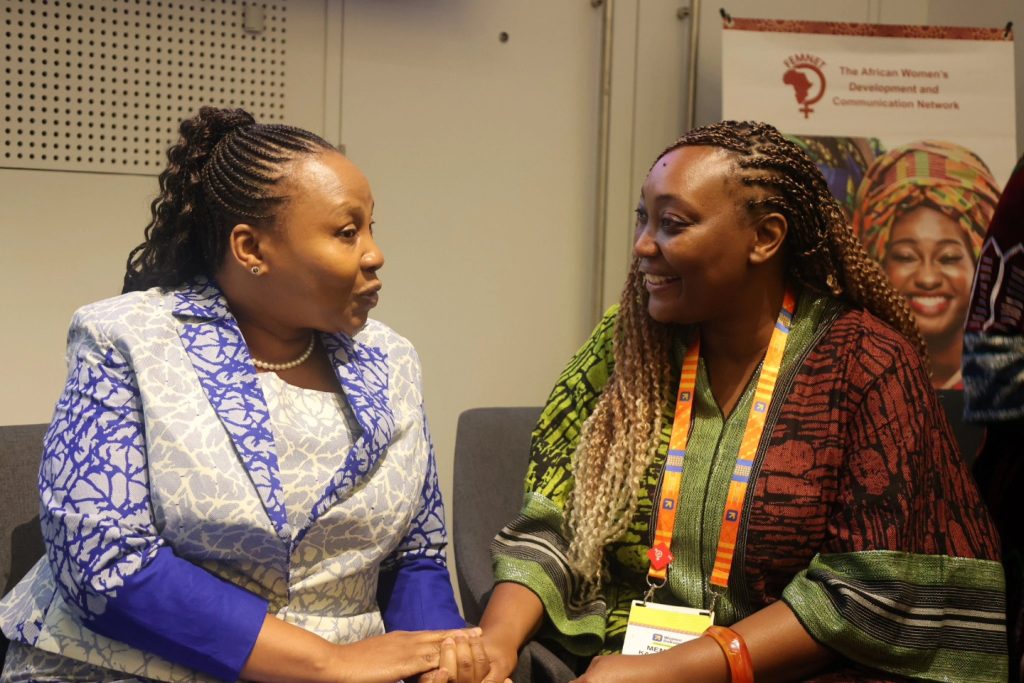
Memory Kachambwa, FEMNET’s Executive Director, and Her Excellency Ms. Boemo Sekgoma, Secretary General of the SADC Parliamentary Forum, chatting after the side event.
As panelists shared experiences from their respective countries, one message became clear: feminist movements must reclaim care as both a political and economic issue.
This conversation also pushed us to confront the financing gap. How do we fund justice? How do we ensure that commitments to women’s rights move beyond declarations into tangible investments?
This statement reframed the conversation entirely.
SDRs are often discussed in macroeconomic spaces, far removed from grassroots feminist struggles. But what if they became tools for justice? What if emergency financing prioritized maternal health services, GBV response systems, community health workers, and care infrastructure? What if economic recovery plans recognized care work as the backbone of resilience? That is the feminist future we must build.
Reclaiming SRHR means dismantling the systems that keep women trapped in cycles of unpaid labor, poverty, and violence. It means recognizing that ending Violence Against Women and Girls (EVAWG) requires us to also address economic dependency, inaccessible healthcare, and weak public systems. It means centering African feminist voices in policy spaces where financial decisions are made. It means moving from token inclusion to structural transformation.
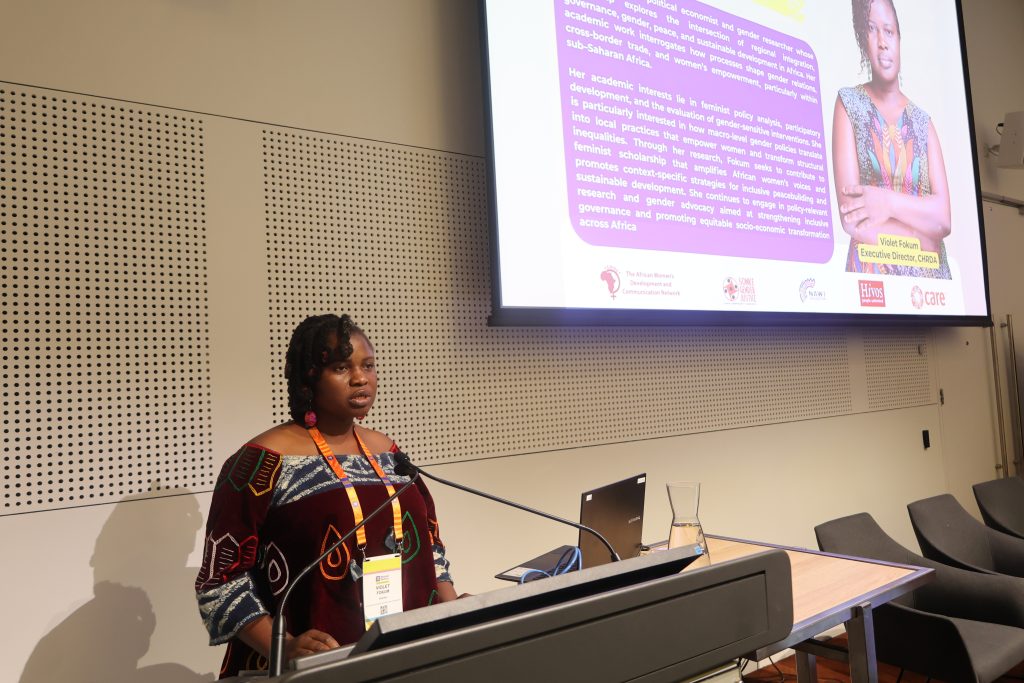
Violet Fokum from Cameroon shares her lived reality on issues of SRHR in her country context.
Women Deliver reminded us that change does not happen because it is convenient—it happens because it is necessary.
And indeed, change calls us here.
It calls us to demand care economies that value women’s labor.
It calls us to push for financing models rooted in justice, not charity.
It calls us to protect SRHR not as a privilege, but as a right.
It calls us to listen to lived realities and build systems that respond to them.
This side event was not simply a discussion. It was a call to action.
Because feminist pathways are not theoretical—they are already being built by women who refuse to be invisible.
The question now is: will the world listen?
Related Tags
Related Posts
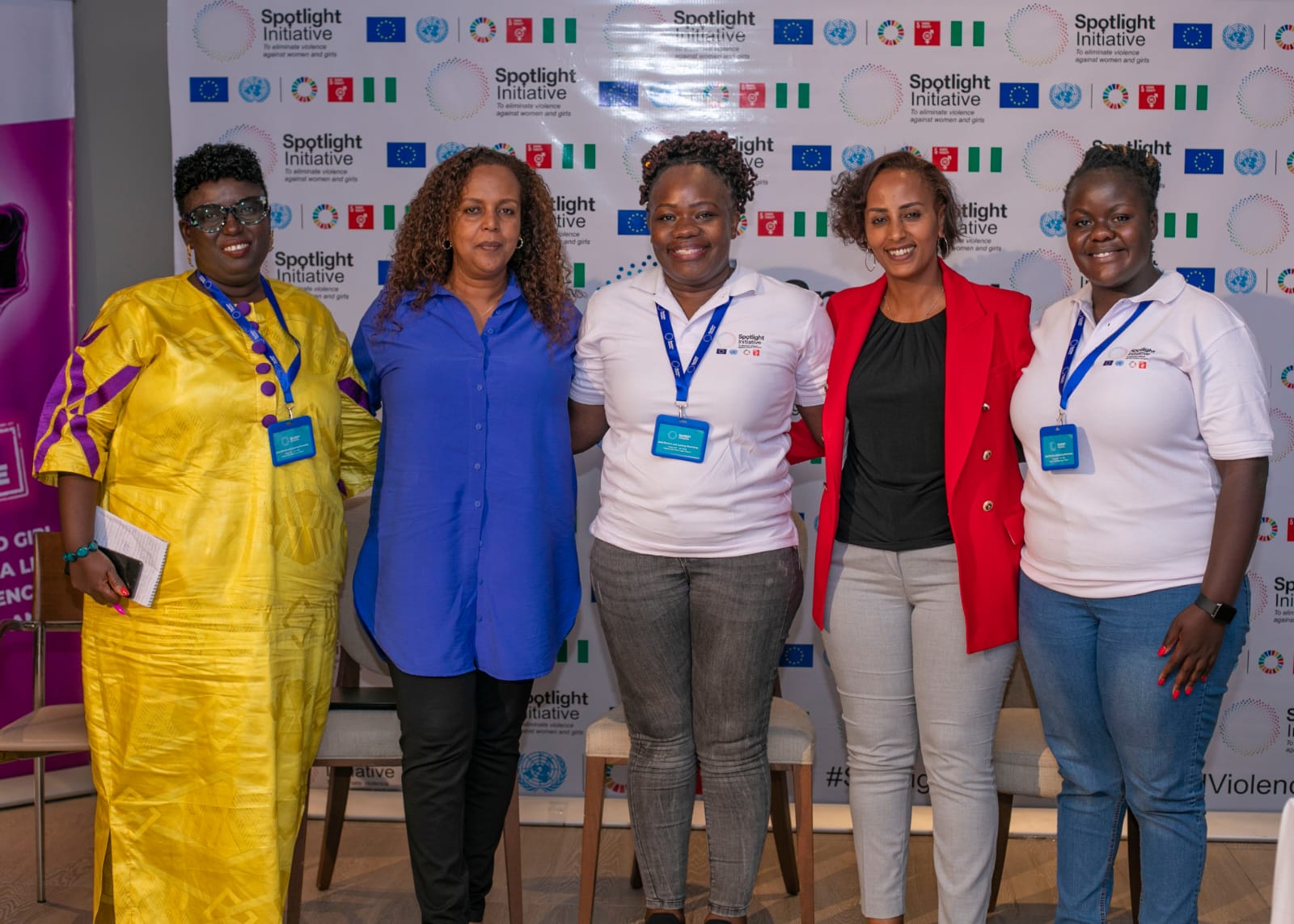
The Spotlight Initiative, “Perspectives from SRHR Specialist,”
The global Spotlight Initiative is a United Nations initiative in partnership with the European Union and other partners
Learn MorePress Release: Launch of the Campaign for the Decriminalization of Abortion in Africa
THE AFRICAN COMMISSION ON HUMAN AND PEOPLES’ RIGHTS Press Release 18.01.2016 at Addis Ababa, Ethiopia: LAUNCH OF THE
Learn More