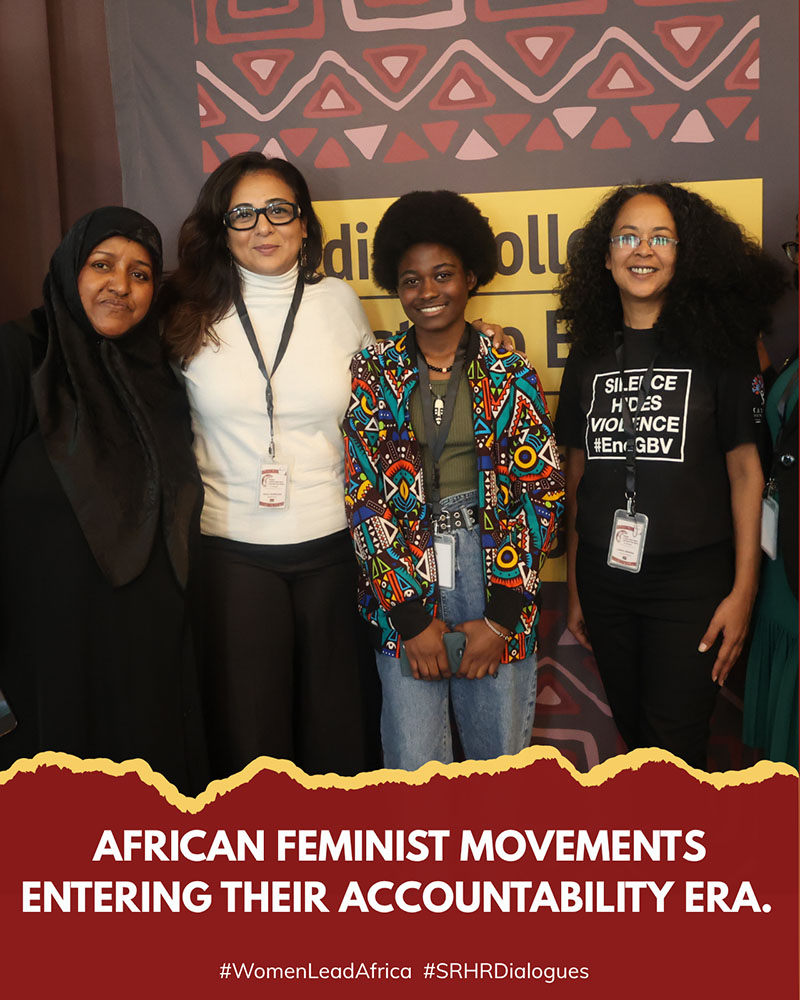
African Feminist Movements Entering Their Accountability Era
“I am not free while any woman is unfree, even when her shackles are very different from my own.”
Feminist movements across Africa are organizing to end Gender-Based Violence (GBV) amid rising femicide, shrinking civic spaces, digital violence, and institutions that continue failing survivors while placing ever-greater burdens on the movements fighting for justice. The movements across Africa continue navigating political backlash, online harassment, underfunding, and increasingly hostile environments while still carrying out the burden of community protection, advocacy, and care. Despite these realities, feminist movemnets continue to build, resist, organize, and demand accountability and refusing to let violence become normalised.
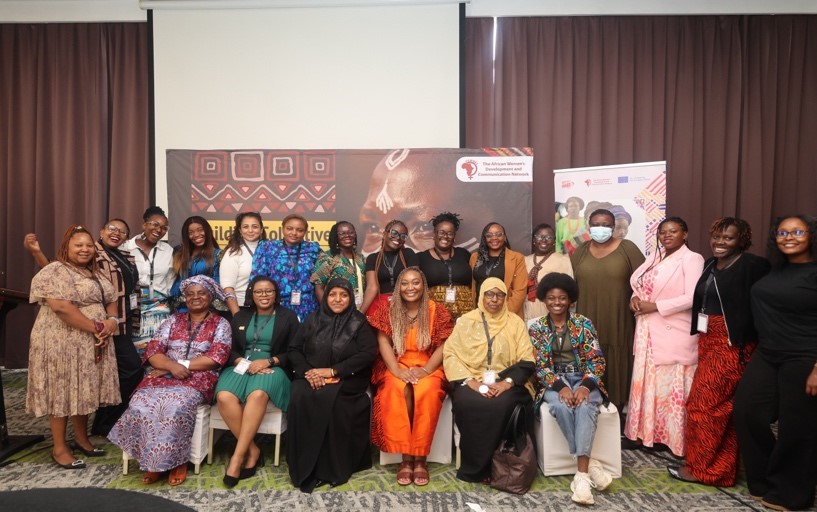
It was within this political moment that feminist organizers, advocates, and women’s rights organizations convened by FEMNET in partnership with Porticus in Nairobi, Kenya for a convening on Reshaping an African Feminist Agenda to End Gender-Based Violence. The convening created space for collective reflection, feminist strategy-building, and urgent conversations around accountability, movement power, digital safety, trauma-informed organizing, and survivor-centered advocacy.
The conversations wasted very little time on institutional politeness, and it was very clear this was not going to be a room for carefully rehearsed talking points or performative activism.
Memory Kachambwa, Executive Director of FEMNET, challenged Women rights organizations present with a question that shaped the tone of the day:
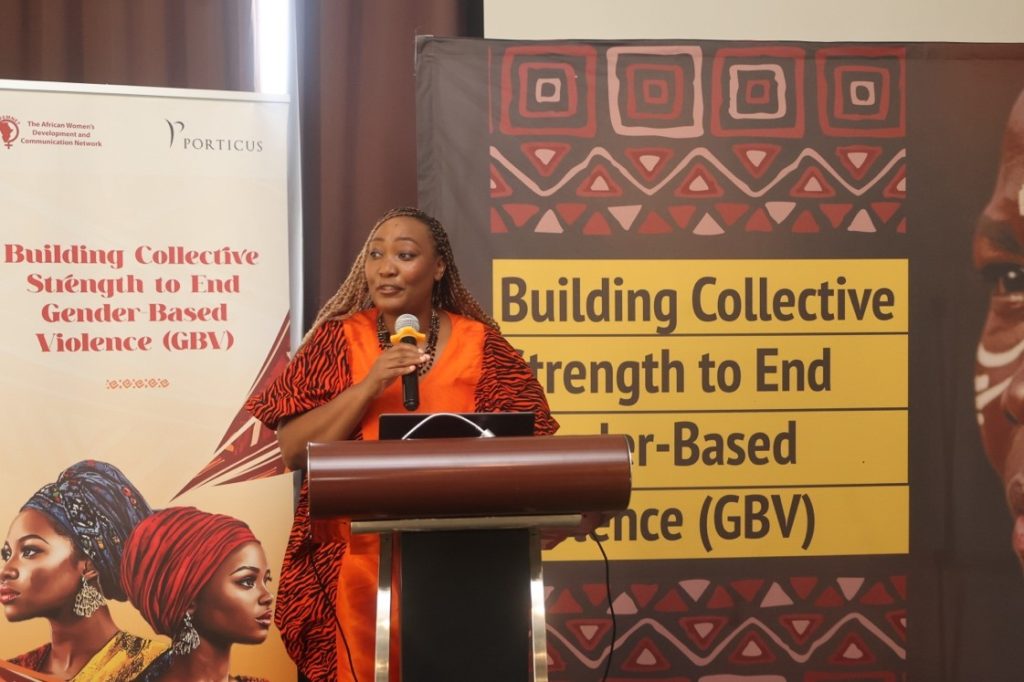
“How do we collectively fuel an African agenda with the feminist fire needed to achieve true gender equality?”
Participants repeatedly returned to one central concern, while regional and international frameworks including the recently adopted African Union Convention on Ending Violence Against Women and Girls (AU CEVAWG), the Maputo Protocol, the African Charter on Human and Peoples’ Rights, the AU Gender Strategy, and regional gender frameworks under SADC and the East African Community have strengthened normative commitments on gender justice across the continent, implementation and accountability mechanisms remain weak, fragmented, inconsistent, or inaccessible to many survivors.
Participants reflected on the widening gap between policy commitments and lived realities, for survivors navigating justice systems that still struggle to prioritize protection, dignity, and accountability. Discussions around feminist legal advocacy highlighted a difficult truth familiar to many feminist organizers, laws alone do not guarantee justice.Accountability depends on implementation, political will, survivor-centered systems, accessible legal processes, and institutions capable of responding without retraumatizing survivors.
But as the conversations deepened, something else became impossible to ignore violence does not only live in laws, institutions, or physical harm.
It also lives in a language.
“She provoked him.”
“He was angry.”
“Boys will be boys.”
“It’s a private family matter.”
Womens rights organizations unpacked how language itself becomes a tool of power, shaping public attitudes around GBV while shifting accountability away from perpetrators and onto survivors.
At one point, the room paused on the difference between saying:
“She provoked him.” versus “He assaulted her.”
The shift sounded small but politically, socially, and psychologically; it changed everything. one statement asks society to understand the violence, the other asks society to confront it.
The conversation around narrative power became one of the defining moments of the convening.
The WROs reflected on how feminist advocacy is not only about influencing policy spaces, but also about disrupting the language, media framing, cultural norms, and public narratives that continue excusing violence against women and girls.
Who gets believed.
Who gets protected.
Who gets blamed.
Whose pain gets minimized.
Whose violence gets normalized.
These are all shaped by narrative power.
The room also reflected on why feminist movements intentionally use the word “survivor” instead of “victim.” Survivor-centered language, participants noted, restores dignity, agency, resistance, healing, and continuation rather than defining women solely through violence and trauma.
Beneath the difficult conversations about violence, impunity, and institutional failure was another conversation unfolding, one about healing, rest, emotional well-being, and how feminist movements survive without losing themselves in the process. Participants reflected not only on survivor well-being, but also on the emotional toll carried by organizers, advocates, counselors, and frontline feminist workers who continuously navigate trauma in their work. Conversations around trauma-informed organizing emphasized that caring for movements also means caring for the people sustaining them. Wellness was not framed as self-indulgence or distraction from advocacy, but as part of the political work itself. There was a shared recognition that movements cannot fight violence externally while reproducing exhaustion, burnout, silence, and emotional harm internally. Healing, participants noted, is not separate from justice work. It is part of how feminist movements sustain resistance, restore dignity, rebuild trust, and create spaces where survivors can exist beyond survival alone.
Perhaps that is what made Day One feel different. The conversations did not feel distant from reality.
They felt lived and maybe that is what accountability truly looks like not only demanding justice from institutions, but refusing to allow violence, silence, and harmful narratives to remain socially acceptable in the first place. Because dismantling GBV is not only about changing laws.
It is also about dismantling the cultures, systems, narratives, and silences that taught societies to excuse violence to begin with.
Same thing as the one in red find a connection.