
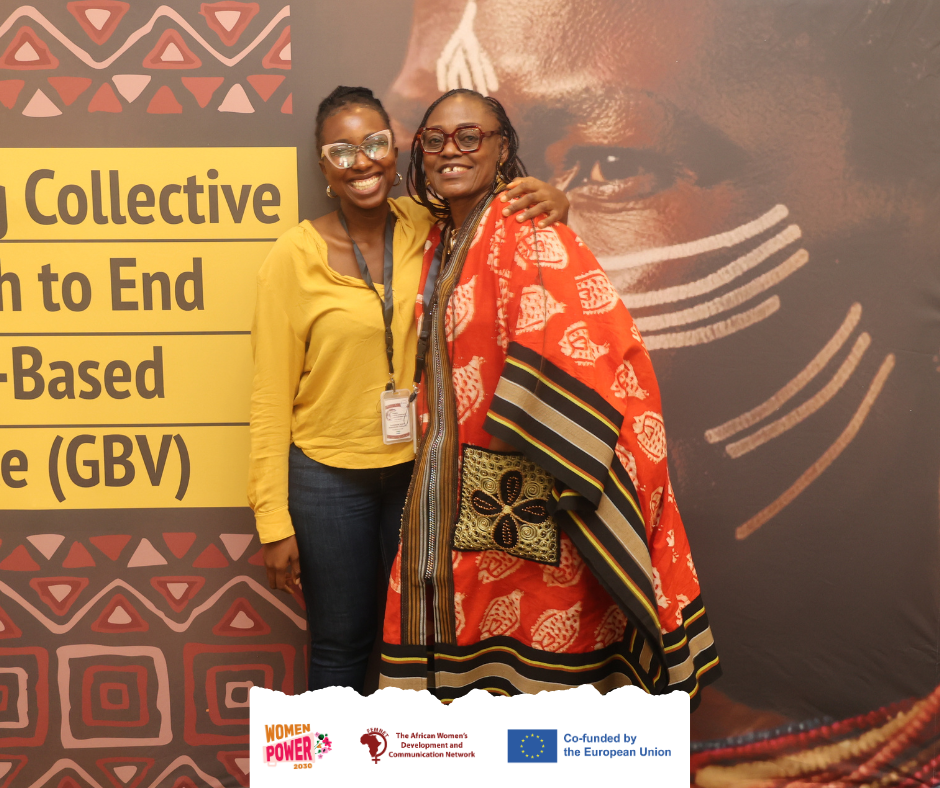
From Presence to Power: Transformative Women’s Leadership and Shifting Systems of Change
In conversations about gender equality, leadership is often framed as representation—who is in the room, who gets a seat at the table, who is visible. But feminist leadership asks a more radical question: what changes when women enter those spaces, and who holds the power to define the rules in the first place?
At the recent convening on reshaping an African feminist agenda to end gender-based violence, hosted by FEMNET, leaders from across the continent gathered not only to reflect on the realities facing women and girls, but to imagine what transformative change truly requires in practice.
Among the voices shaping this critical dialogue was Bunmi Dipo Salami, Executive Director at BAOBAB for Women’s Human Rights. In a powerful reflection, she unpacks what it means to move beyond inclusion into structural transformation—where leadership is not about occupying space, but about reshaping power itself.
In this interview-style reflection, Bunmi speaks candidly about the shift from “power over” to “power with,” the importance of sponsorship over mentorship, the urgency of building meaningful allyship, and the often-overlooked realities of digital exclusion affecting rural women and girls.
Her insights are both grounding and challenging, inviting us to rethink not only how women lead, but how systems must change to make true feminist leadership possible.
What does transformative women’s leadership mean to you?
For me, transformative women’s leadership goes far beyond securing a seat at the table. A seat is not the end goal. Real transformation begins when we move from inclusion into structural change—when we begin to interrogate and reshape systems themselves.
It is about dismantling the logic of “power over” and replacing it with something more honest and generative: power with, power to, and power within.
I have seen how often leadership spaces celebrate the presence of women without changing the systems those spaces are built on. That is not enough. Feminist leadership demands more. It requires us to challenge how decisions are made, who gets to decide, and whose knowledge is considered valid.
How should women’s leadership development evolve?
Too often, leadership development is reduced to mentorship, offering advice, sharing experiences, and giving guidance. But what I believe we need to move toward is sponsorship.
Sponsorship is about access. It is about opening doors, sharing resources, and actively ensuring that young women are not just prepared for leadership but positioned within it.
If I sit at a table where decisions are being made, feminist leadership asks me: Who else should be here, and how do I make room for them? Better still, how do I help build entirely new tables where they are already centered?
This shift from advising women to actively advancing them is where transformation becomes real.
Why do allies matter in feminist leadership?
We cannot talk about transformative leadership without also talking about alliances. Leadership does not exist in isolation.
In many of the spaces I have worked in, women are still few at decision-making tables, while men remain the majority. That reality means we must be intentional about building solidarity and engaging men as allies, not as saviors, but as partners in justice.
Gender equality is not a women’s issue; it is a societal one. And without allyship, especially from men who understand this, the work of transformation becomes heavier than it should be.
What issues affecting women and girls are still under-addressed?
One of the most urgent issues I see is digital transformation and how unevenly it is experienced.
When we speak about digital economies, innovation, and technology, the focus is often urban and tech-centric. Yet many rural women, especially those in agriculture, remain excluded from these conversations and systems.
Many of these women are already contributing to the economy, yet they lack access to digital tools. Some do not own smartphones. Others face barriers linked to education, income, and geography.
So the question becomes: how do we design a transformation that does not leave them behind?
If technology is shaping the world, then justice demands that we intentionally design entry points for women in rural and marginalized communities. Not by forcing them to adapt to systems that ignore their realities, but by creating tools and programmes that meet them where they are.
Transformation must be practical, accessible, and rooted in lived experience.
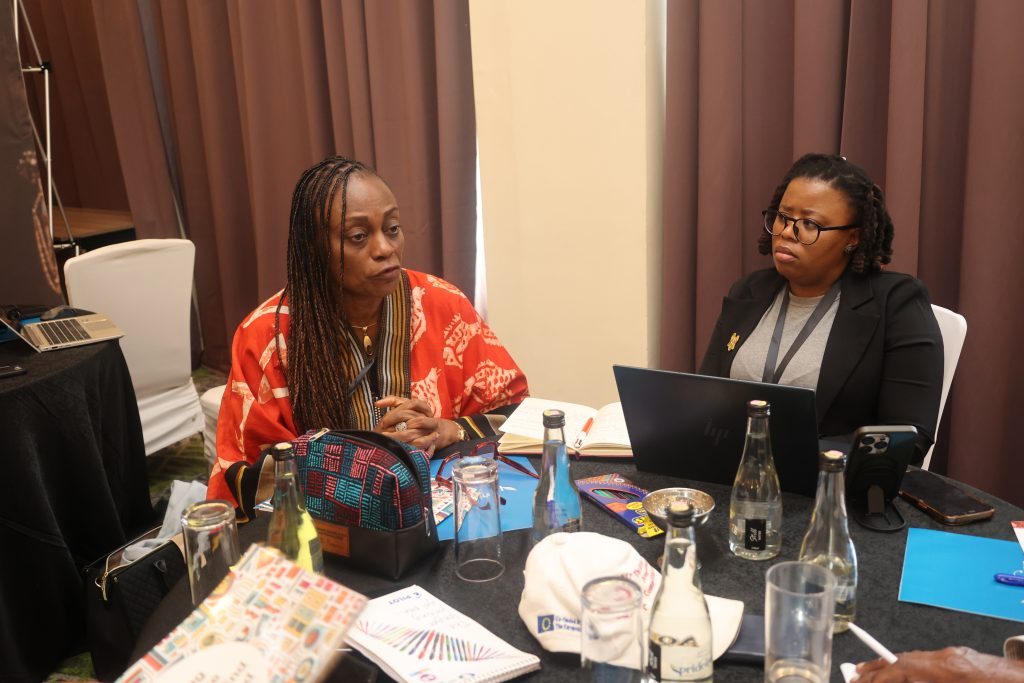
Bunmi Dipo Salami, Executive Director at BAOBAB for Women’s Human Rights Nigeria, speaking at the convening on Reshaping an African Feminist Agenda to End Gender-Based Violence.
What is your key takeaway from this convening?
My biggest takeaway is the power of collective action. Sitting in a room with women from across 16 African countries reminded me that while our contexts differ, our struggles often echo each other. We carry both shared and specific realities, urban and rural experiences, formal and informal economies, and local and regional challenges, but there is strength in that diversity.
We are not meant to do this work alone. We are meant to build with one another, to learn across borders, and to act in solidarity. That is how movements grow stronger.
This is why spaces like FEMNET matter. FEMNET is more than an institution; it is a feminist home. It is a movement that allows women to show up fully, connect deeply, and build solidarity across differences.
Transformative women’s leadership is not about presence; it is about power. It is the collective work of dismantling unequal systems, expanding access, and building solidarity across differences so that every woman and girl is not only included in decision-making spaces but fully empowered to shape them.
