
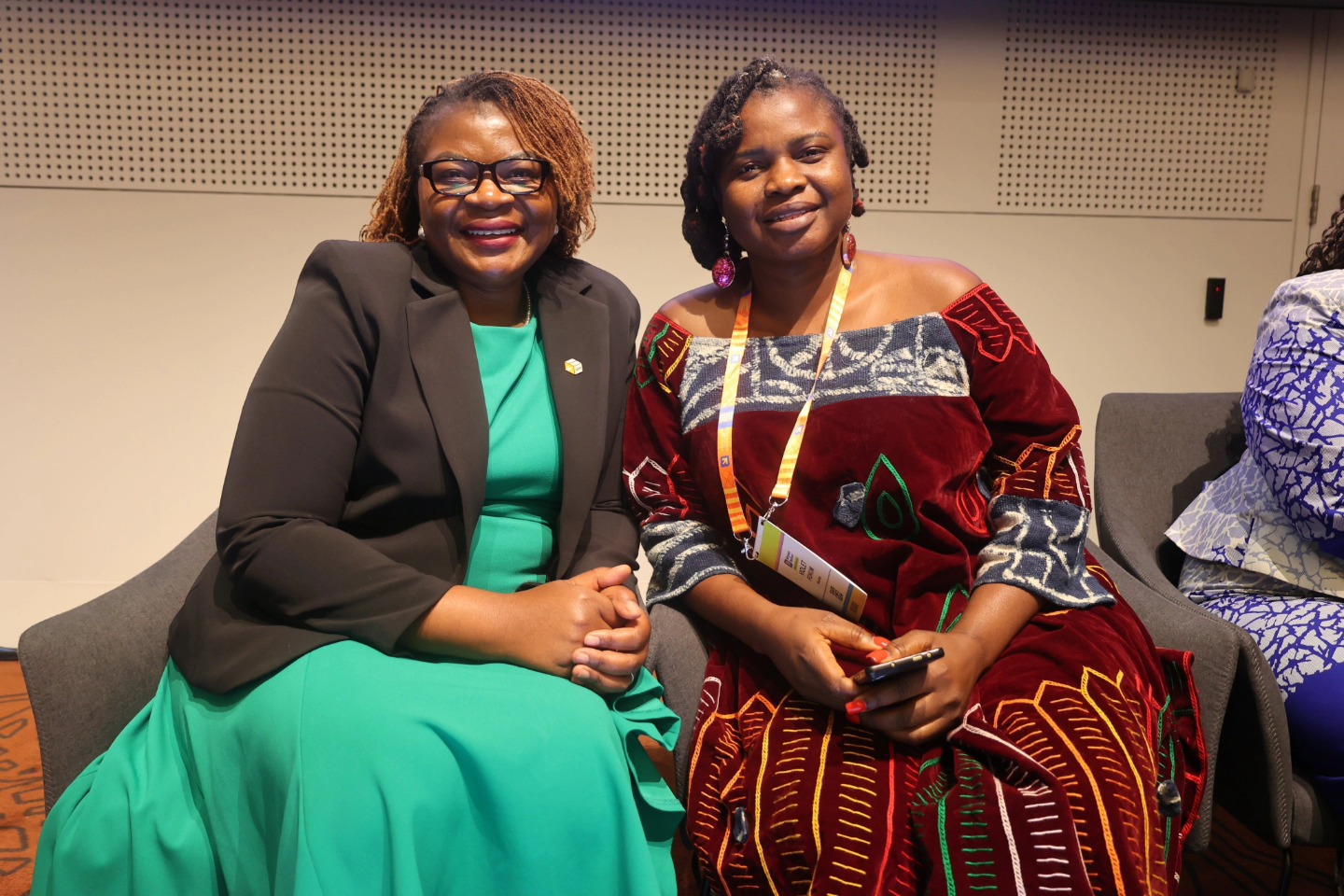
When Change Calls: Reflections on Justice, Debt, and Feminist Resistance
The Women Deliver Conference was more than just a gathering of feminists, human rights advocates, policy makers, activists; it was a space for challenging conversations, honest reflections and bold ideas about the future we want to build. As someone coming from Cameroon, many of the conversations felt deeply connected to the realities we face daily: economic hardship, gender inequality, conflict and the resilience of women and communities navigating these challenges. Throughout the conference, our slogan ‘What Change Calls Us Here’ continued to echo in my mind, it became both a question and a challenge; asking not only what kind of world we want, but what responsibility each of us has in creating it. For me, it became clear that change is not just about participation, it is about shifting power, especially in spaces where decisions about our lives are made.
One striking takeaway was the reminder that debt is not gender neutral. Listening to discussions on global financial systems, I realized how deeply unequal structures continue to shape outcomes for women and girls. When countries spend huge portions of their GDP servicing debt, it is women’s labour, often unpaid that quietly sustains households and communities. Yet, they are rarely at the decision-making table. That contradiction stayed with me and it resonates strongly with contexts like Cameroon, where economic pressures, the socio-political crisis and limited public resources often translate into heavier unpaid care burdens for women, especially in crisis-affected regions.
Another thought-provoking moment from the conference was a session on justice beyond punishment. Through a documentary and panel discussion, it became clear that achieving justice requires engaging men and boys not as bystanders, but as active allies. The conversation challenged deeply rooted norms reminding us that determination knows no gender, and that men’s support can be transformative in women’s lives. It also highlighted the importance of male role models within institutions, equal opportunities for both boys and girls, and the urgent need for policies to move beyond promises toward real accountability. Mentorship and stewardship were emphasized as critical tools for long-term change.
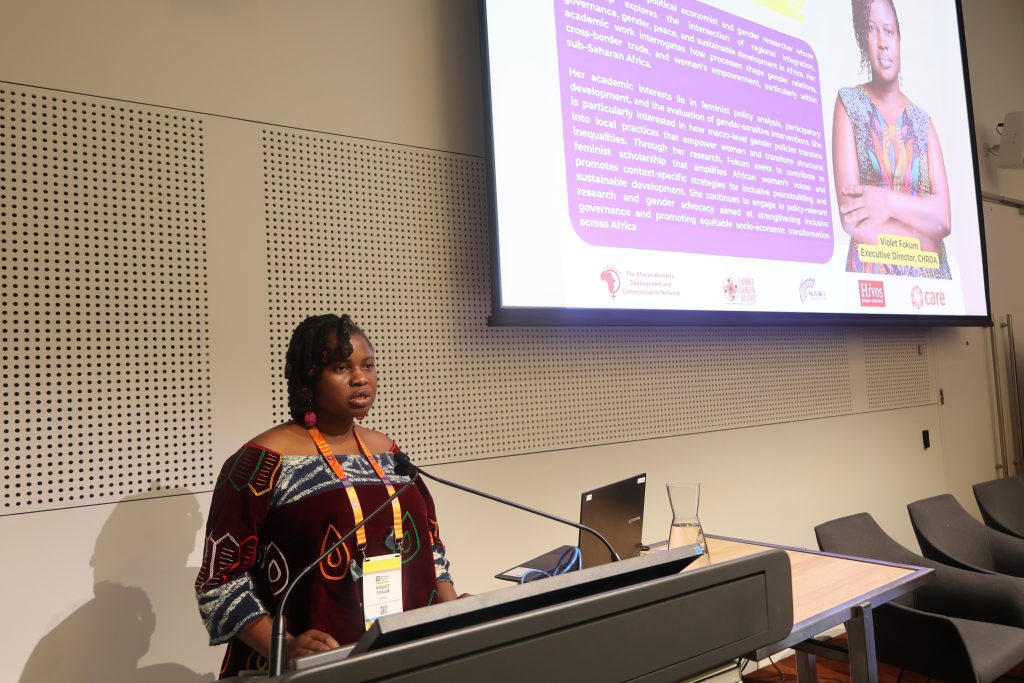
Violet Fokum, sharing in one of the side events at the Women Deliver Conference.
In Cameroon, particularly within the Anglophone crisis, these ideas feel even more urgent, as communities navigate violence, displacement, and weakened justice systems. This shifted my thinking about justice systems. If we are serious about change, justice must go beyond punishment to include corrective action. Rehabilitation should not be optional; it should be central. In conflict-affected settings like Cameroon, where trust in formal systems can be fragile, community-based and restorative approaches to justice may offer more meaningful pathways for healing. Real, lasting transformation happens when everyone sees themselves as part of the solution.
Another highlight was the emphasis on feminist alternatives. From gender-transformative budgeting to rethinking macroeconomic policies, there was a clear call to move beyond broken systems. Initiatives like innovative financing and direct funding for women’s rights organizations showed that solutions already exist, we just need the political will and trust to scale them. For Cameroon, this speaks directly to the need to strengthen local women-led organizations that are already responding to Gender Based Violence, supporting livelihoods, and building peace at the grassroots level.
“What change calls us here” also felt very personal. It is a call to push back against austerity measures that disproportionately harm women and girls. It is a call to advocate, to organize, and to ensure that women are not only included but leading conversations on economic justice. It is also a call to build trust within communities, recognizing that real change often starts locally, even when global systems fail us. In Cameroon, where civil society often operates within constrained spaces, this call is both challenging and necessary.
Looking ahead, the real test is how we translate these conversations into action. It means continuing to engage governments while also holding them accountable, pushing for debt justice frameworks rooted in feminist principles, and ensuring funding reaches critical areas like SRHR and GBV prevention. It also means creating more pathways for women, especially young women and grassroots organizations to access resources and decision-making spaces. In Cameroon, this could mean amplifying local voices in peacebuilding processes and ensuring that policies reflect the lived realities of those most affected by crisis. If the conference sparked ideas, the future demands implementation, persistence, and collective courage to reshape the systems that were never designed with us in mind.
I left the conference both challenged and hopeful. Challenged because the systems we are up against are deeply entrenched. Hopeful because the collective energy, ideas, and commitment of feminist movements show that change is not only necessary, it is already happening.
Violet Fokum (Ph.D)
Lecturer, The University of Bamenda
ED, Center for Human Rights and Democracy in Africa
