
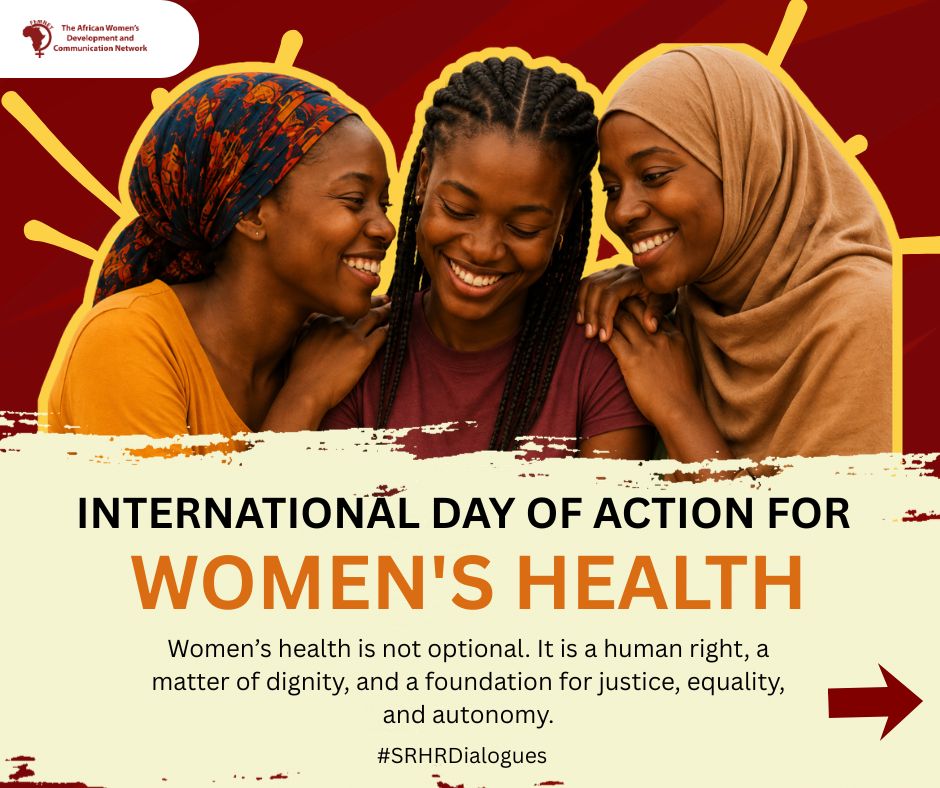
Internation day of Action for Women’s Health
Sexual and reproductive health is not an option, it is a necessity. Today, 28 May, we mark the International Day of Action for Women’s Health. Far from being a celebration, it is a call to action, as women’s wellbeing remains a challenge in our societies where menstruation is still taboo, access to contraceptives is inadequate, and childbirth remains a cause for concern!
This year’s theme “Essential, not optional: strengthening health systems to guarantee health rights, including sexual and reproductive rights, in a context of multiple crises”, highlights the absolute necessity of prioritising human health, especially in times of crisis (armed conflicts, political and security crises, climate change…).
Health systems that fail women
According to the World Health Organisation (WHO), in 2023, more than 700 women died every day from preventable causes related to pregnancy and childbirth. Furthermore, around 70% of these deaths occur in sub-Saharan Africa. These alarming figures simply reveal the reality of health systems that are underfunded, inaccessible and ill-suited to women’s needs.
In many communities, access to healthcare remains constrained by structural and socio-economic barriers, including geographic distance, limited basic services (such as water and essential health products), financial costs, and prevailing social norms.
These challenges are more acute in rural areas, where inadequate health infrastructure forces women to travel long distances to access safe delivery services: “We have to travel to the nearest town to give birth under acceptable conditions.”
Women’s health and well-being thus become a privilege rather than a right.
Menstruating in precarious conditions: an overlooked reality
The health of girls and women should not be narrowly defined by, nor limited to, motherhood. Across many regions of Africa, access to menstrual hygiene products remains constrained due to high costs and limited availability. In addition, inadequate sanitation infrastructure and persistent socio-cultural taboos contribute to the marginalization of girls and compromise their dignity.
Menstrual-related challenges further exacerbate educational inequalities. Dysmenorrhea frequently leads to school absenteeism among adolescent girls. This situation is compounded by the poor condition and lack of privacy in school sanitation facilities, which often fail to meet basic hygiene standards. Consequently, many girls opt to remain at home during menstruation.
These recurring absences result in significant learning disruptions, directly affecting academic performance and limiting equal access to education. Ultimately, such barriers undermine girls’ ability to fully participate in a safe, inclusive, and empowering learning environment, thereby constraining their long-term personal and professional development.
Facing violence and crises: the urgent need for mental health support
By 2025, nearly one in three women worldwide will have experienced physical or sexual violence during their lifetime, according to the WHO and UN Women. This violence has serious consequences: physical trauma, psychological disorders, unwanted pregnancies and infections.
In this climate of instability, the issue of mental health becomes a cross-cutting concern. Indeed, despite the existence of general healthcare facilities, psychological support services are either non-existent or non-functional. Survivors of violence and women living in crisis situations are particularly vulnerable to anxiety, depression and trauma.
Multiple crises (climate, economic, health and political) exacerbate inequalities. Sexual and reproductive health services, mental health support and access to menstrual hygiene are often the first to be affected.
A call for action
We refuse to accept that women’s health continues to be neglected, that survivors are rendered invisible, and that their rights are treated as secondary.
We reaffirm our demands on:
- Inclusive and adequately funded health systems;
- The effective integration of psychosocial care into essential services;
- Comprehensive care for survivors of violence;
- Access to safe,cleanand affordable menstrual products;
- Guaranteed sexual and reproductive rights for all.
We do not just want to survive. We want to live in good health, with dignity and with full autonomy over our bodies.