
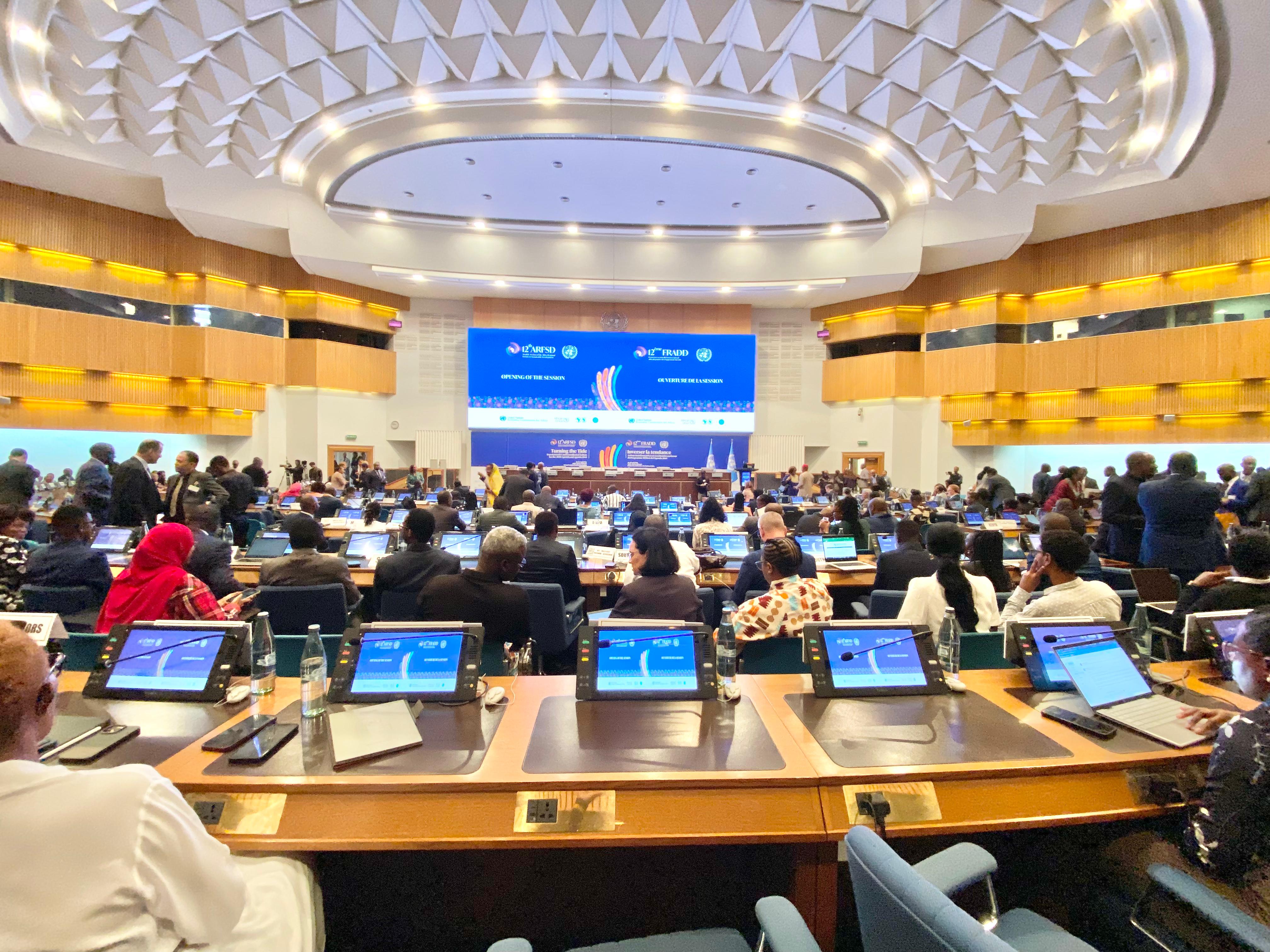
Gavel Down, Momentum Up: Mauritius Takes the Helm as the 12th ARFSD Officially Kicks Off a New Era of Solutions
The clock isn’t just ticking; it’s practically shouting. Today marked the high-energy opening of the 12th session of the African Regional Forum on Sustainable Development (ARFSD), and the atmosphere was electric with a singular, refreshing pivot: we are done diagnosing the problems; it is officially time for the cure.
Facilitated by the ever-incisive Lerato Mbele, the forum opened with a clear mandate: move past the “what” and “why” and dive headfirst into the “how.” With the 2030 deadline for the Sustainable Development Goals (SDGs) looming, the forum is less about diplomatic pleasantries and more about a masterclass in acceleration.
Passing the Torch: From Kampala to the Future
The outgoing Bureau Chair, Robinah Nabbanja (Prime Minister of Uganda), officially opened the session with a powerful retrospective. She didn’t just list achievements; she showcased a continent that has found its megaphone.
Under Uganda’s leadership, the Kampala Declaration wasn’t just a document—it was a movement. Africa’s voice resonated from the High-Level Political Forum (HLPF) to the Feminist Forum on Financing for Development (FFFD) in Sevilla, Spain and the climate negotiations at the Conference of Parties (COP 31) in Brazil, last year.
“We have moved the needle on data systems and coordination,” Honourable Nabbanja noted, while emphasizing the inseparable nexus between peace and sustainable development. Her parting charge?
“Take full advantage of the African Continental Free Trade Area (AfCFTA) and invest heavily in the “arteries” of the continent—transport, logistics, and regional connectivity.”
The Blueprint for Impact
Claver Gatete, Executive Secretary of the ECA, brought the room into sharp focus regarding the global landscape. While global growth slows and climate shocks intensify, Gatete remains an optimist grounded in reality. He announced that Ethiopia will host COP32, a massive win for African climate diplomacy.
The discussion highlighted several “Critical Enablers”:The Youth Dividend -harnessing the energy of the next generation to drive innovation, financing-moving beyond the “gap” and toward sustainable multilateralism and infrastructure & digital transformation -bridging the divide to ensure job creation doesn’t remain a pipe dream.
The United Nations Secretary-General, António Guterres, joined virtually through pre-recorded audiovisual, reinforcing the global weight of the event. He doubled down on the need for “just transitions” and a rapid pivot to renewable energy, reminding the forum that Africa is uniquely positioned to lead the green revolution if given the right tools.
Leadership Reshuffled: Mauritius Takes the Helm
In a moment of formal transition, H.E. Justine Kasule Lumumba (Uganda’s Minister for General Duties) announced the new Bureau leadership. The gavel has officially been handed over to Mauritius, representing Southern Africa.
The New Bureau Guard:
| Position | Country (Region) |
| Chair | Mauritius |
| 1st Vice-Chair | Gabon (Central Africa) |
| 2nd Vice-Chair | Côte d’Ivoire (West Africa) |
| 3rd Vice-Chair | Libya (North Africa) |
| 4th Vice-Chair / Rapporteur | Uganda (East Africa) |
Speaking on behalf of Prime Minister Pravind Jugnauth, Mauritius’s Minister of Blue Economy, Fabrice David, expressed deep honor. He highlighted how the “Island Nation” identity brings a unique perspective to the forum—one focused on the blue economy, resilience, and the specific vulnerabilities of coastal and island states.
The Road Ahead: Galvanizing Models
The 12th ARFSD is setting a new precedent. By focusing on the SDGs currently under review, the forum aims to create a “copy-paste” effect for success. The goal is simple: find the models that work—whether in financing or climate adaptation—and scale them across all 54 nations.
As Selma Malikka Haddadi, Deputy Chairperson of the African Union Commission emphasized during the deliberations, the strength of the continent lies in its collective framework. When Africa speaks with one voice on institutional frameworks and inequality, the world has no choice but to listen.
The diagnosis is over. The treatment has begun.
