
Centering Care in a Culture of Storytelling
Written by Pascaliah Nyaboke – Girls and Young Women Mentee.
Feminist spaces have forced me to unlearn how I was trained to tell stories as a journalist and confront how systems normalize violence against women. Most of my news bulletins included GBV stories, and I couldn’t even count the number of women whose stories I’d read. Here’s something I am realizing: these weren’t just numbers. These were people’s daughters, mothers, sisters, nieces, friends, neighbors, colleagues; human beings whose lives extended far beyond the headlines.
This space has also pushed me into a deeper reckoning with transition. Transitions have a way of exposing how much you don’t know, even after years of experience. They require humility and sometimes discomfort as you begin to see your past actions through a new lens.
I used to think empathy was enough. I would give my sources time, let them pause, lower my voice when the story got heavy, and I believed that it was caring. But I am beginning to understand that empathy, without a framework of care, can still cause harm. I was trained to get the story, meet the deadline, and ensure the bulletin was complete. No one taught me that care is ongoing; that consent is not a one-time question; that silence is not a gap to fill; that not every detail needs to be extracted to make a story “complete.”
No one taught me that sometimes care looks like stopping, like not asking the next question, like choosing not to publish at all. I knew how to hold a microphone, but I did not yet know how to hold a person. That realization has been one of the most difficult parts of this transition.
And yet, transitioning has also been deeply transformative. I am learning about intersectionality, survivor-centered approaches, feminist leadership, and what it truly means to hold space with intention and care. The difficult part is sitting with the realization that I did not always know better and acknowledging the harm that may have come from that lack of awareness.
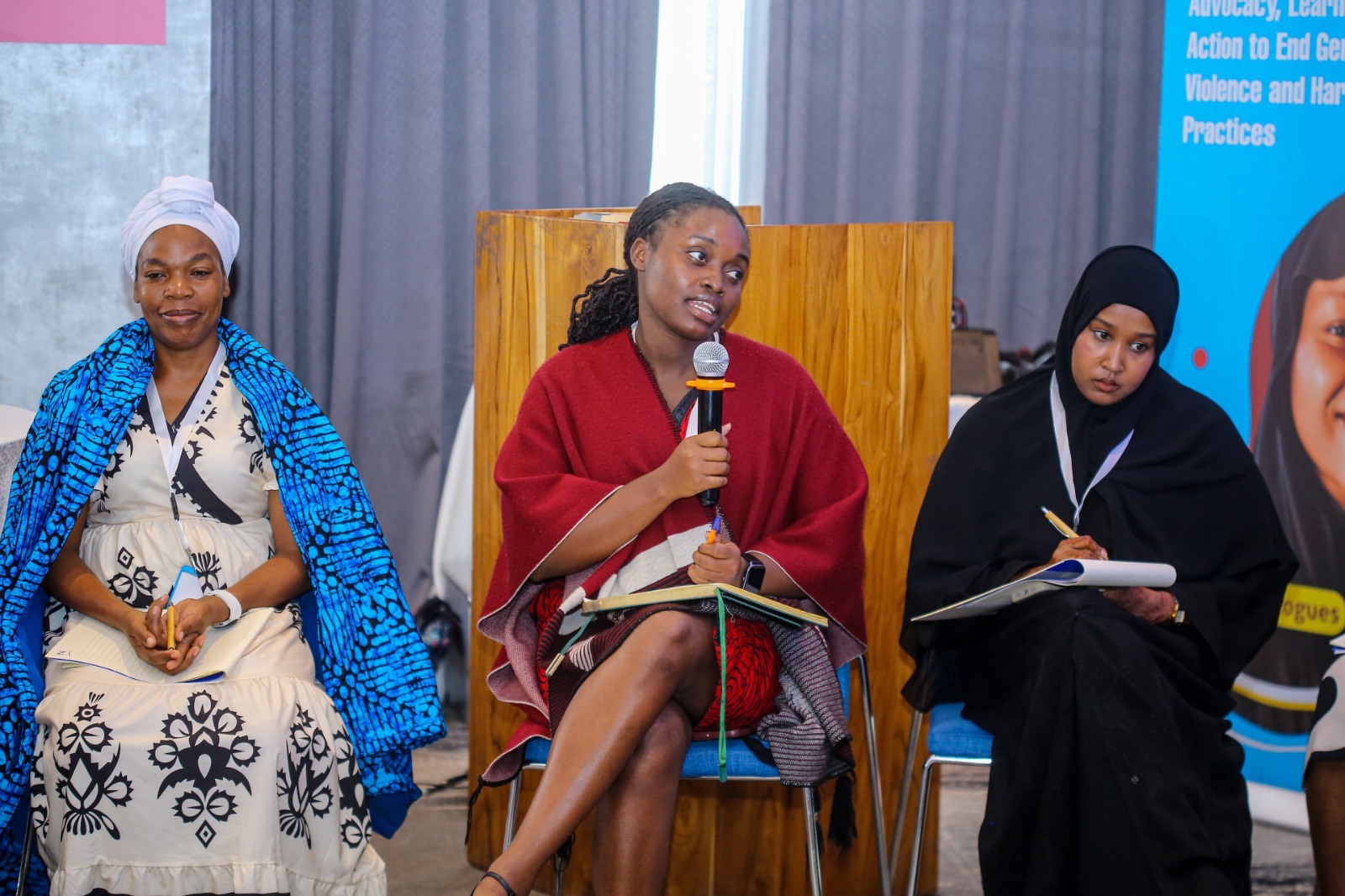
Recently, I had the opportunity to attend the Regional Feminist Leadership and Cross-Country Learning Lab for Community-Driven Advocacy. The experience was both enlightening and sobering. Listening to participants share experiences of gender-based violence and systemic injustice underscored the urgency of moving beyond storytelling that simply recounts harm. These were not just stories of violence; they were reflections of systemic failures, gaps in justice, and the resilience of survivors navigating deeply unequal systems.
At one point, a participant began sharing a case that escalated in ways that felt almost unimaginable. My immediate, instinctive reaction, rooted in a familiar Kenyan expression of disbelief (“Eey deree, shukisha!!,” loosely translating to “it gets worse? please, stop”), made me reflect on how we process overwhelming narratives of harm. Even in moments of shock, we must ask: how do we listen without becoming desensitized? How do we respond without reproducing harm?
Another story highlighted the fragility of justice systems where significant effort and resources are invested in seeking accountability, only for outcomes to undermine that very process. These moments are not just frustrating; they reveal structural weaknesses that demand urgent attention. They also challenge us to think beyond individual cases and toward systemic reform.
Moments like this force me to sit with uncomfortable questions; not just as a feminist, but as a journalist, even though I am no longer in the newsroom. How many times did I tell stories like this and move on to the next bulletin? How many times do we package pain into segments, headlines, and content without questioning what happens after the story airs?
To my colleagues in the media: what does it mean to tell these stories responsibly? Are we amplifying voices, or are we extracting trauma? Are we centering survivors, or are we chasing completeness for the sake of a “good” story? Responsible storytelling must go beyond publication; it must consider dignity, consent, and long-term impact. It must also create space for solutions, not just suffering.
And to our governments: accountability cannot end at policy statements or isolated actions. Survivors need systems that protect, respond, and deliver justice consistently. This means strengthening legal frameworks, investing in survivor support systems, ensuring accountability mechanisms are not easily undermined, and prioritizing prevention alongside response.
Because at this point, it can feel like we are being asked to carry water in a sieve, pouring effort into systems that refuse to hold it. But perhaps the work before us is not just to keep pouring, but to repair the sieve itself.
Where do women and girls go for safety, for justice, for dignity? The answer cannot be “nowhere.” It must be something we actively build through accountable governance, ethical storytelling, and collective commitment to change.