
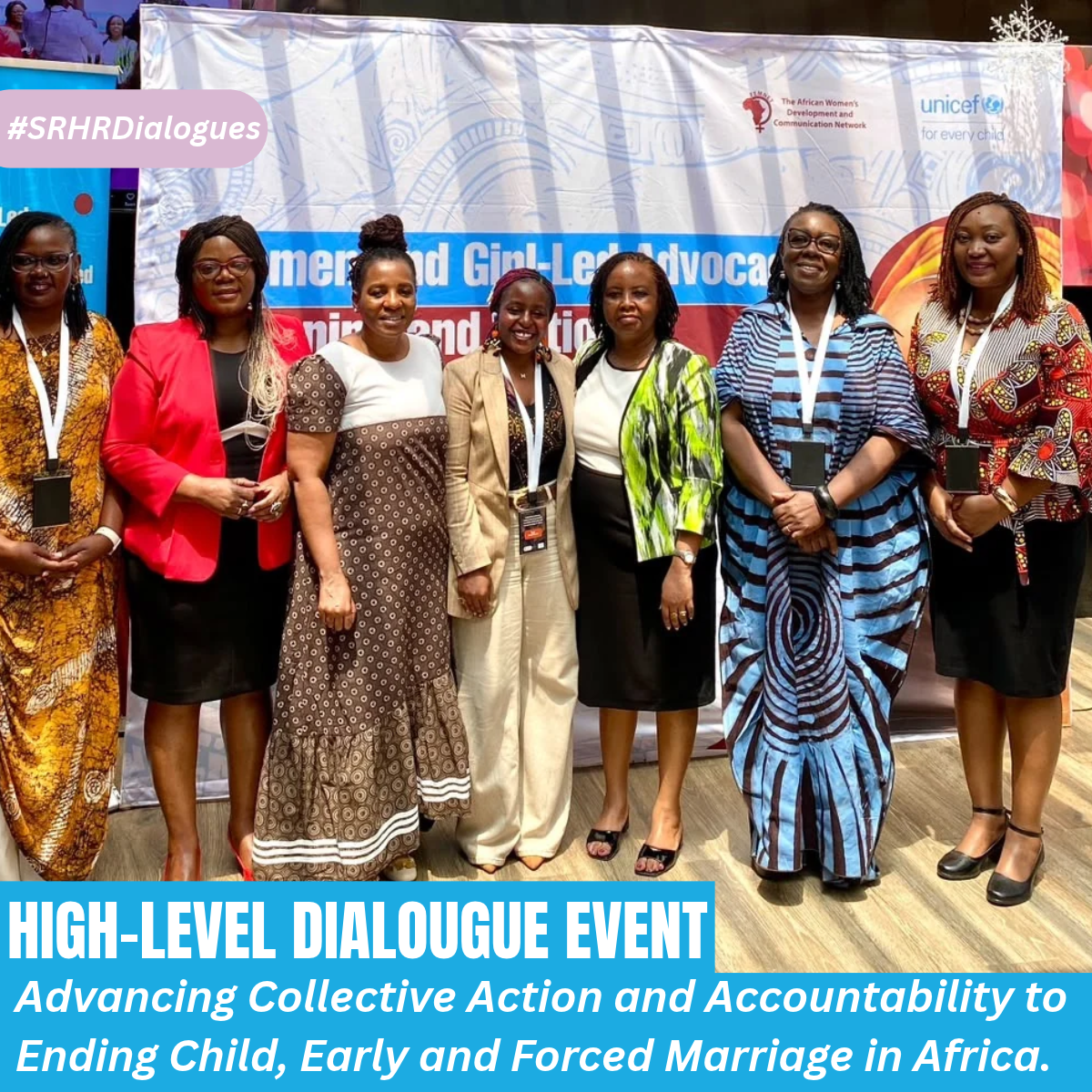
From Commitments to Action: High-Level Dialogue Calls for Urgency and Accountability to End Child, Early, and Forced Marriage in Africa
Hosted on the sidelines of the 16 Days of Activism Against Gender-Based Violence, the hybrid High-Level Dialogue on “Advancing Collective Action and Accountability to Ending Child, Early and Forced Marriage in Africa” brought together advocates, policymakers, civil society leaders, and girls and young women in person and online to confront one of the continent’s most urgent rights challenges.
Moderated overall by Zamara Foundation’s Executive Director – Wambui Kimani, the convening opened with intentional grounding—reminding participants why this work matters—before moving into candid examinations of data, policy gaps, lived realities, and the road ahead.
Across the discussions, a clear consensus emerged: while efforts across Africa have yielded progress, the pace remains far too slow to deliver the protection and justice girls deserve. Speakers emphasized that ending child, early, and forced marriage (CEFM) requires more than goodwill—it demands honest self-reflection on where programming falls short and how advocacy is executed.
“While progress has been made toward ending child, early, and forced marriage, the pace remains too slow. To accelerate action, we must honestly examine gaps in how we are currently programming around CEFM—and rethink how we do our advocacy so that commitments translate into concrete, measurable actions and protection for girls.” — Veronica Kamanga, Senior Advisor and Global Lead for the UNFPA–UNICEF Global Programme on Ending Child Marriage (UNICEF)
Representing the Zamara Foundation, Rose Akeyo highlighted the urgency of bringing institutions, partners, and advocates together to take stock of where progress stands, examine gaps under SDG Target 5.3, and shape what must change in a post-2030 framework. Speakers also underscored that meaningful, lasting change depends on equipping girls themselves with the tools to shape their own lives:
“When girls have access to quality education and economic empowerment, they are better equipped to make informed decisions about their bodies, their health, and their futures—and to exercise agency over their lives.”
A recurring thread throughout the dialogue was the distance between high-level promises and everyday reality on the ground. Ms. Prudence Nonkululeko Ngwenya of the African Union pointed out that declarations alone cannot protect girls—laws and policies must be backed by resources, monitoring, and real enforcement:
“To end child, early, and forced marriage, we must move beyond declarations and commitments to deliver meaningful change. That requires ensuring that laws and policies are properly resourced, actively monitored, and fully implemented on the ground.
She further stressed that accountability mechanisms must be strengthened so governments and duty-bearers are held to their commitments, while calling for targeted, contextualized investments directly in girls.
“We must strengthen our accountability mechanisms—holding governments, institutions, and duty-bearers to their commitments—so that promises to end child, early, and forced marriage translate into tangible protection and justice for girls.”
“We must invest directly in girls themselves through contextualized, targeted interventions—ensuring access to education and information so they can make informed decisions about their bodies, health, and futures, creating pathways for equal leadership opportunities, and economically empowering them to shape their own lives.”
Speakers and participants—including Ellen Alem (UNICEF), Stephanie Sayo (FEMNET), Evelyne Samba (Youth for a Sustainable World), Maryline Njoroge (Women for Women International), and Aisha Khamis (Girls and Young Women)—also examined key trends, SDG Target 5.3 data, and what a strengthened post-2030 agenda must achieve to dismantle harmful practices, reclaim girls’ power and agency, and hold duty-bearers accountable.
As the dialogue drew to a close, FEMNET Executive Director Memory Kachambwa highlighted the historic recognition of the International Day for the Elimination of Child, Early and Forced Marriage on November 27—a landmark that Africa should celebrate and leverage to drive sustained action:
“The United Nations’ formal recognition that child, early, and forced marriage is a major human rights violation—and its designation of tomorrow, November 27, as the International Day for the Elimination of Child, Early and Forced Marriage—is a historic landmark. Africa should celebrate this global milestone, championed by African leadership, and use it to strengthen accountability and accelerate action for girls across the continent.”
With momentum built across in-person and online participants, the dialogue closed with a clear call to carry the day’s reflections forward: turning bold commitments into funded policies, firm accountability, and a future where every girl and young woman in Africa can thrive with equal opportunity and agency.