Beyond the Passport: A Grassroots Feminist’s Journey to the COP31 Negotiating Spaces
I think we have all seen the memes by now. Kenyans joking that if they had known how things would turn out, they would have used the money they spent getting their passports to buy a goat. At least the goat would have had kids by now. The ultimate question of return on investment (ROI).
For me, if someone had told me two years ago that I would need a passport, I definitely would not have believed them. It felt like too big a dream, not just using a passport but even being on a plane. And, honestly, even now, part of me still feels that way.
I have followed UNFCCC processes since last year; the Just Transition Work Programme (JTWP) dialogues, the Subsidiary Body meetings and the COP negotiations. I had imagined what it would be like to participate in these spaces physically. But as a grassroots feminist, I know that funding to attend international meetings is not easily accessible. There is often a limit to how we can participate. We are invited to consultations, asked to share our experiences, contribute to submissions and offer inputs, but rarely have the resources to be present where decisions are negotiated. And I found that frustrating. Why should those closest to the realities of climate injustice have to rely on others to carry their voices into the rooms where decisions are made?
This COP, I had decided not to dream. I did not pursue funding because I was tired of knocking on the same doors and anticipating the same answers. Until a friend dared me to try.
So, one week before COP, I started looking for accreditation. I was nervous about burning bridges if someone helped me secure accreditation and I eventually could not make it. I was also anxious about the visa process. This girl could not exactly demonstrate the kind of financial capacity that makes visa applications comfortable! But the UNFCCC visa process turned out to be relatively straightforward. Suddenly, I had a visa, a badge and a little hope that one of the people we had contacted might come through. Then came the regrets, one after another.
I was not even as heartbroken as I probably should have been. Deep down, I still felt I was reaching beyond what was possible for me.
I kept going to work, as if this was not happening, keeping up with my day to day life. The FEMNET Board came to visit, and it was a lovely engagement. As the visit was coming to an end, Memory said she hoped we would meet in different spaces: locally, regionally and internationally. And that was when I decided to shoot my shot. I asked if there was any possibility of support to attend COP.
She said she would try. Their team was already preparing to travel, so I did not let myself get too hopeful. But then things started moving. Accommodation arrangements, flight bookings, travel preparations. International travel is a whole experience on its own, especially when you are figuring it out as you go. And then Microsoft went down!
I did not have my flight ticket until the very day I was travelling. It all felt so unreal. This was not news I had shared widely or posted about. Only a few people closest to me knew. I packed my bags and went to the airport, half-expecting to be turned back at every stage; security, check-in, passport control, boarding. But somehow, I made it through every checkpoint. And then I was on a plane. My first long flight.
Then I was in Istanbul, another round of passport control, a very tense connection and nearly missing my transfer flight. Then Antalya. My bank card was not working, I had no internet access and I was almost in tears. Sometimes, I genuinely feel like the universe looks out for me. A stranger gave me a lift to my hotel, and I met the amazing Jemimah, who helped me figure out the transit arrangements and navigate some of those first-day uncertainties. Those little moments of kindness made a difference.
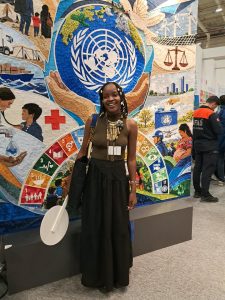
And then, COP31.
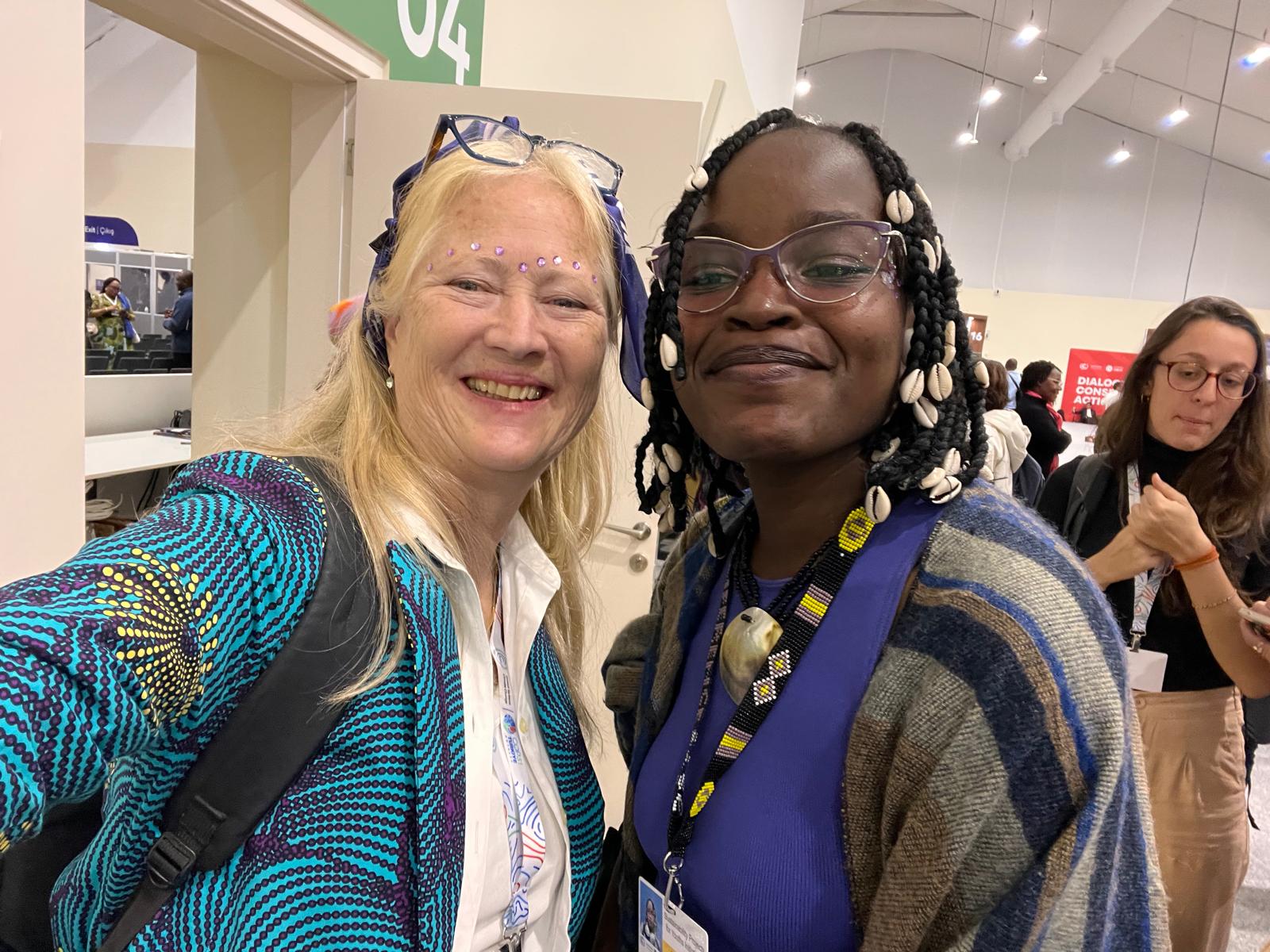
With more than 95,000 people registered, it was massive. There was the excitement of being there, but also the very real challenge of navigating such a huge space. The fear of missing out on important conversations because you were still trying to locate a venue or figure out where a meeting was happening. I was happy to reconnect with people from the Women and Gender Constituency and meet others whose work I had followed. Those connections helped ground me and gave me entry points into the negotiations and broader COP processes.
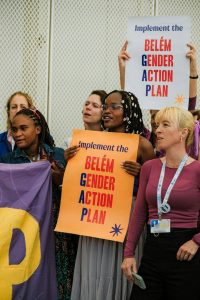
I got to engage with the Gender Action Plan (GAP) and Just Transition discussions, and, perhaps more importantly, to experience the negotiations beyond the documents and online updates I had been following for months.
COP31 was politically difficult, but it was an important learning experience. There is something different about encountering negotiation texts in real time, seeing how positions are defended, challenged and sometimes diluted. I learnt what it means to constantly restrategise, how much work goes into holding a collective position, and how complicated diplomacy can be. I also became more conscious of how easily one can lose sight of what is happening depending on where information comes from, which conversations you are part of and whose interpretation you are relying on.
I left Antalya before the cover decision text was released, while several workstream texts were still under negotiation. So, the work is not finished. We wait, we regroup and next year we pick up the fight again. Addis Ababa has a lot to deliver, especially after the expectations and precedents set in Antalya. And I know many of us are ready; ready to keep pushing, to demand justice and, importantly, to hold the line.
I keep thinking about how close I came to not trying at all. How easily I had convinced myself that this was not something meant for me. How many people in grassroots movements have the knowledge, experience and political clarity to contribute to these processes but never get the opportunity to be physically present because the resources are simply not there.
My experience has reminded me that access to these spaces should not be treated as a personal achievement or a lucky break. It should be part of how we resource feminist movements and grassroots participation. We cannot keep asking communities to contribute their knowledge and lived experiences while leaving them out of the spaces where power is exercised and decisions are made.
I am deeply grateful to FEMNET for making this possible, to the people who encouraged me to try, to those who helped make the logistics work, and to everyone who made Antalya a little less overwhelming.
And to the passport: you have officially justified your existence. The goat can wait.
P.S. My passport has been worth it.
Written by: Felicitus Okoko | Feminist for Peace Rights and Justice Center