Rewriting the Rules of Power: Reflections from the Inaugural High-Level Conference OnGender and Elections in Africa
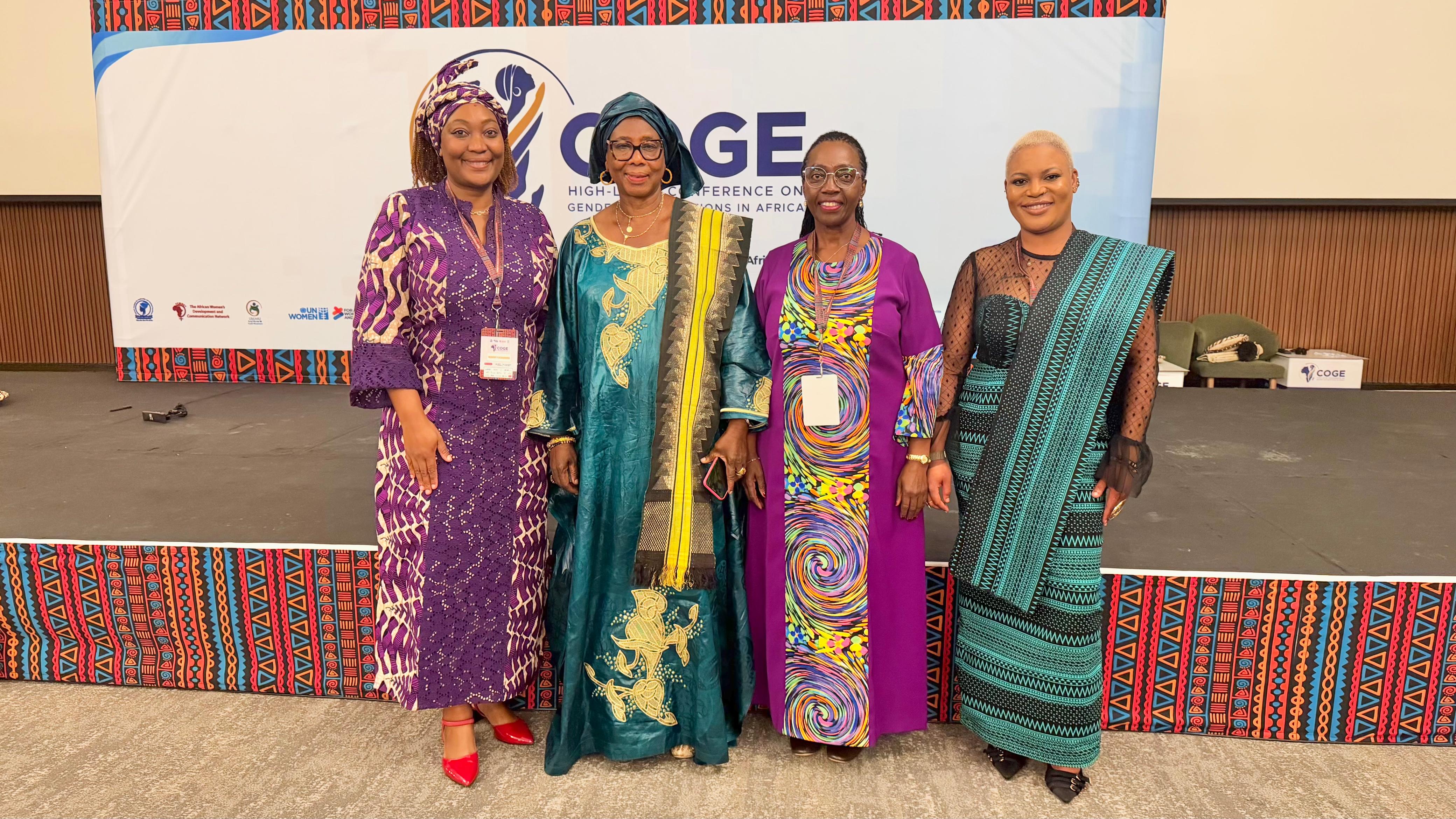
Democracy cannot function at half-capacity, yet across Africa, women continue to be locked out of the rooms where power is negotiated, contested, and claimed. The inaugural High-Level Annual Conference on Gender and Elections in Africa (COGE), convened in Johannesburg, South Africa, from October 29 to 30, 2026, brought together over 150 leaders, advocates, and changemakers to confront this reality head-on—not merely to admire the problem, but to dismantle the architecture that sustains it.
At the heart of the gathering was a sobering reckoning with Africa’s democracy deficit. Women hold just 26% of parliamentary seats across the continent—a figure that has shifted by a sluggish 1.5% since 2015—while only 3.7% of African countries, just 2 out of 54, are led by female presidents. Behind every one of those numbers is a web of deliberate and entrenched barriers: unequal access to campaign finance, technology-facilitated gender-based violence designed to push women out of public and digital spaces, and unspoken patriarchal social norms that treat political authority as a male birthright.
As African feminists have long insisted, formal commitments and polished declarations mean little when implementation stalls and patriarchal power structures remain intact. Harmful practices, gender-based violence, and discriminatory norms are rooted in unequal power relations and gender inequality across the life course, and they show up unmistakably in electoral politics when women are policed, underfunded, or silenced at the ballot. At the same time, evidence from across the continent shows what becomes possible when political will and intentional frameworks are put to work—demonstrated by parity leaders and breakthroughs in countries such as Rwanda (63.8%), South Africa (43%), and Ethiopia (41.9%), even as the broader continental average lags far behind.
With more than 15 African countries heading to the polls between 2026 and 2028, COGE 2026 arrived at a decisive inflection point. As a the Women’s Academy for Leadership and Political Excellence Africa (WALPE) Board Chairperson- Lingalireni Mihowa noted in her welcoming remarks,
We are texcited and honoured to welcome you to this inagural high-level conference as we unite to address the democracy deficit and accelerate women’s political leadership across the continent because women’s leadership and political participation is not a favor—it is a fundamental democratic right that must be recognized, protected, and fully realized. True governance cannot exist when half the population is excluded from the decision-making tables that shape their lives.”
That call to action resonated throughout every session as participants confronted the realities on the ground.
“The playing field isn’t level—so we’re rewriting the rules. From campaign finance inequity and technology-facilitated gender-based violence to unspoken patriarchal social norms, women face massive hurdles running for office. That changes now.” Noted Hon. Naledi Pandor, Former Minister of International Relations, South Africa
Waiting politely for incremental change is no longer an option—which is why participants moved from dialogue to structural action, culminating in the drafting of the landmark Johannesburg Declaration and the official launch of the African Women Leaders’ Solidarity Fund, aimed at mobilizing resources, closing campaign finance gaps, and backing women leaders and electoral candidates across the continent as they organize and contest for power.
“As electoral dynamics evolve across Africa, women face persistent barriers—from financial gaps to online violence. But emerging digital tools & youth alignment are creating new avenues for progress.” Highlighted FEMNET Executive Direcor, Memory Kachambwa
The culmination of the conference was the launch of the African Women Leaders’ Solidarity Fund, aimed at mobilizing financial and non-financial resources to dismantle the economic barriers that keep women out of political leadership across Africa. Designed to support aspiring women leaders, women candidates, and women already exercising political power, the fund seeks to build a lasting culture of feminist solidarity and investment ahead of major continental election cycles, paired with country commitments under the Johannesburg Gender Equality Declaration and concrete action plans.