
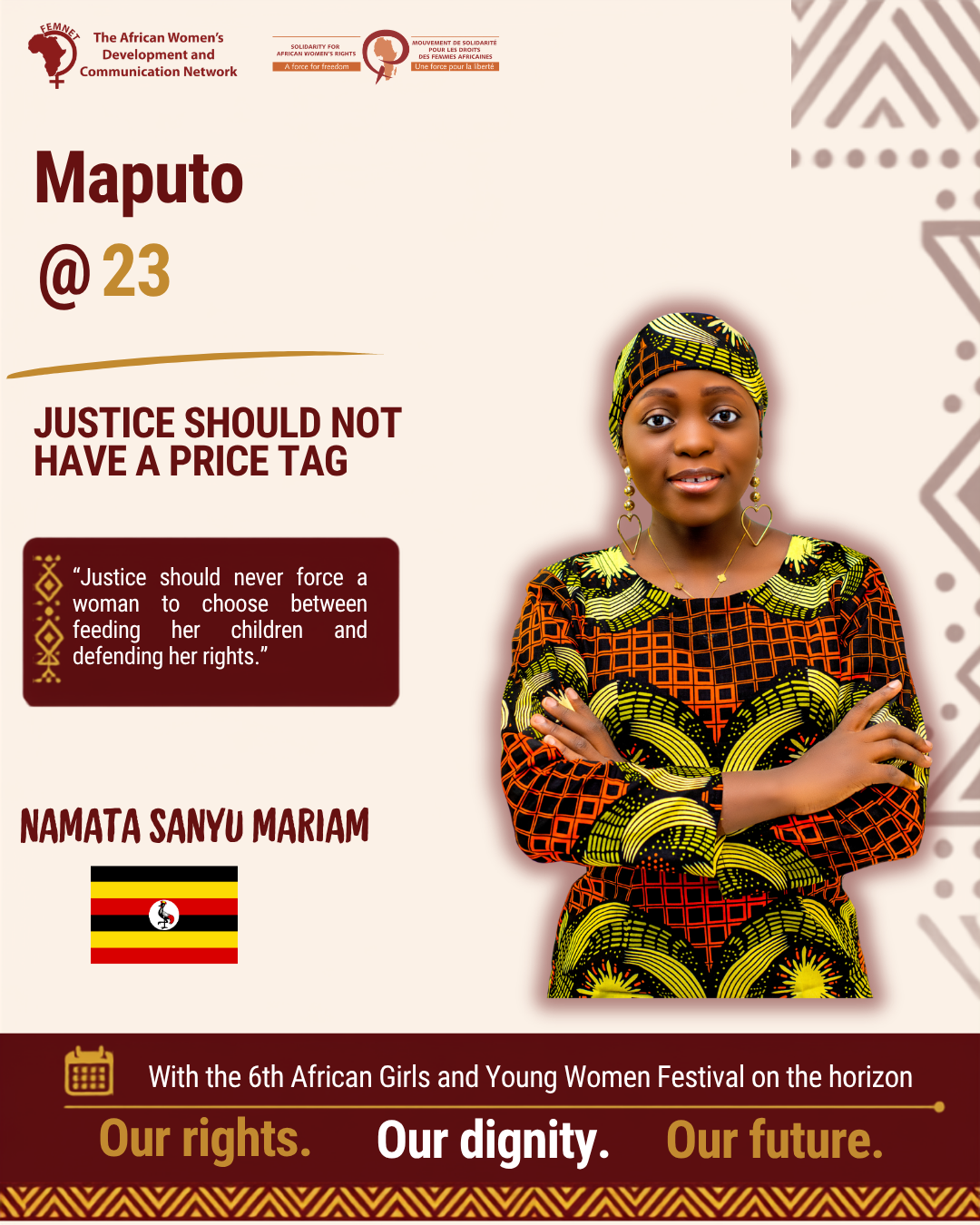
Justice Should Not Have a Price Tag
“Justice should not be a privilege for those who can afford it; it is a right that belongs to every human being.”
What does it mean to have rights if exercising them costs more than you can afford?
Across Africa, many women and girls know when their rights have been violated. They know when they have experienced domestic violence, been denied inheritance, faced discrimination at work, or been unfairly treated. Yet many never seek justice, not because they do not believe in the law, but because the journey to justice is simply too expensive.
For many, justice comes with hidden costs: transport to the police station, legal consultation, court fees, childcare, and days away from work. These expenses discourage even the bravest women from reporting abuse. When justice becomes something people must buy, it stops being justice and becomes a privilege.
Article 8 of the Maputo Protocol guarantees women access to justice and equal protection before the law. It reminds African governments that justice must be available to every woman, regardless of her income, education, age, disability, or where she lives. Rights should not exist only in legal documents; they must be experienced in everyday life.
In Uganda and many other African countries, women still face significant barriers when seeking justice. A woman in a rural community may travel long distances to reach a police station or court. Another may remain silent because she cannot afford legal representation or fears losing the income her family depends on. As the saying goes, “Justice delayed is justice denied.” When women and girls are forced to wait months or even years for their cases to be heard, many lose hope in the justice system.
Girls and young women also face injustice in educational institutions. Some experience sexual harassment from lecturers who abuse their positions of authority. Others are pressured to exchange sexual favors for grades or fear reporting abuse because they worry about retaliation, stigma, or not being believed. As a result, some drop out of school or abandon their dreams. Justice means creating safe reporting systems where survivors are protected, heard, and where perpetrators are held accountable.
Justice should never force a woman to choose between feeding her children and defending her rights.
Through my work with girls and young women, I have learned that access to justice is closely linked to dignity. When girls know that the law will protect them regardless of their financial situation, they gain the confidence to speak out against violence, exploitation, discrimination, and harassment. When women trust the justice system, they are more likely to report abuse and seek help before situations become worse.
As the African proverb says, “Until the lion tells its story, the tale of the hunt will always glorify the hunter.” Women deserve spaces where they can tell their stories and be heard without financial or social barriers standing in their way. Justice begins by listening, but it must also provide protection, accountability, and meaningful remedies.
Article 8 calls on governments to make legal services accessible and affordable by investing in legal aid, strengthening community legal clinics, simplifying court procedures, and ensuring women understand their legal rights. While civil society organizations continue to bridge many gaps, access to justice should not depend on charity alone. It is the responsibility of every state to ensure that no woman is denied justice because she is poor.
When justice is accessible, everyone benefits. Families become safer, communities become more peaceful, and trust in public institutions grows. Women are empowered to claim their rights, participate fully in society, and contribute to national development. A fair justice system not only protects individuals; it also strengthens democracy, equality, and human dignity.
As we commemorate 23 years of the Maputo Protocol, Article 8 remains as relevant today as it was when it was adopted. Progress has been made, but many women and girls still stand outside the doors of justice because they cannot afford to enter or fear they will not be heard. That must change.
Justice should never have a price tag. It should never depend on wealth, social status, or where someone lives. A society cannot call itself just when only the wealthy can afford justice. The true measure of justice is not how it serves the powerful, but how it protects the most vulnerable. Let us build an Africa where every woman and girl can seek justice with confidence, because justice is a right, not a luxury.
By Namata Sanyu Mariam
Advocate for girls’ and young women’s education
Founder ZurHer Reusable Pads
Uganda