
Beyond Oct 11: Why 24 Hours Is Not Enough for the African Girl Child
By Michelle Anzaya
Centering African Girls & Women in Policy and Storytelling
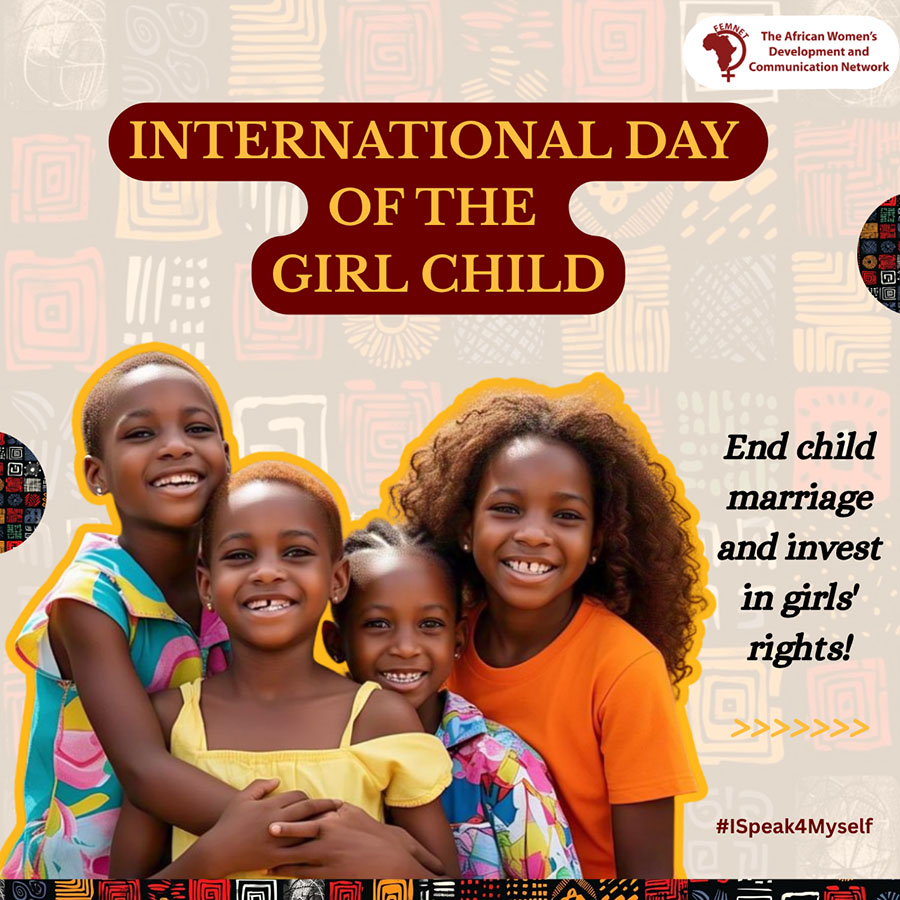
The International Day of the Girl Child (#IDG2026) was commemorated on 11th October, but for African girls, the fight for bodily autonomy and education happens every single day.
Each year, as International Day of the Girl Child comes and goes, global statements fill our feeds, social media graphics spotlight bright young faces, and political leaders reiterate commitments to gender equality.
This year, under the global theme “End Child Marriage and Invest in Girls’ Rights!”, the call to action was once again loud and clear. Yet, as the calendar page turns, African feminist movements are left asking a crucial question: When the 24 hours of international observance end, what remains for the girl child on the ground?
Across Africa, child marriage is not a distant socio-cultural relic; it is an active human rights crisis anchored in systemic inequalities, macro-economic strain, underfunded public services, and weak legal enforcement. In Sub-Saharan Africa, approximately 1 in 3 young women are married before their 18th birthday. In regions facing compound economic, political, and climate shocks—such as West and Central Africa—that number reaches nearly 40%.
For a young girl, early marriage is rarely an isolated event. It is the cascading result of a system that fails to protect her. When secondary schools are inaccessible, fees remain prohibitive, or basic sanitation facilities are absent, families under economic strain are often forced into unthinkable choices. Child marriage becomes a survival coping mechanism driven by poverty—a reality that directly strips adolescent girls of their bodily autonomy, exposes them to severe reproductive health complications, and halts their education permanently.
If we are serious about the 2026 mandate to “Invest in Girls’ Rights,” we must be honest about what genuine investment looks like. It is not found in tokenistic youth panels or temporary campaign hashtags. True investment requires radical structural accountability and macroeconomic choices that prioritize social care over debt servicing.
Real political and economic investment in African girls demands:
Closing Legal Loopholes and Enforcing Policy: National governments must align local and customary laws with international and regional instruments like the Maputo Protocol. We must eliminate legal exceptions that permit child marriage under religious or traditional frameworks and ensure real accountability for violators.
Financing Free, Safe, and Accessible Secondary Education: Education is the single most effective structural buffer against early marriage. Completing full secondary education can reduce a girl’s risk of early marriage by more than 60%. African nations must allocate progressive budget percentages toward free, high-quality public education and safe learning environments.
Resourcing Girl-Led Grassroots Movements Directly: Despite being the most effective catalysts for community transformation, girl-led and youth-led feminist organizations across the global South receive less than 2% of direct gender equality funding. Power and resources must be shifted directly to the frontlines.
Guaranteeing Bodily Autonomy and Health Access: Protecting girls requires institutionalizing comprehensive, age-appropriate sexuality education and healthcare services, ensuring adolescent girls have full sovereignty over their bodies, health, and choices.
At FEMNET (African Women’s Development and Communication Network), our stance is firm: 24 hours of global attention is wholly insufficient for the lived reality of the African girl child. Her right to learn, lead, live free from violence, and make decisions about her own body is non-negotiable 365 days a year.
As commemorations for #IDG2026 draw to a close, the real work begins. We call on regional bodies, African governments, civil society partners, and international donors to move beyond annual rhetoric and commit to budget allocations, legal reform, and sustained political will.
We do not just celebrate African girls on October 11th—we hold the line with them, every single day.