
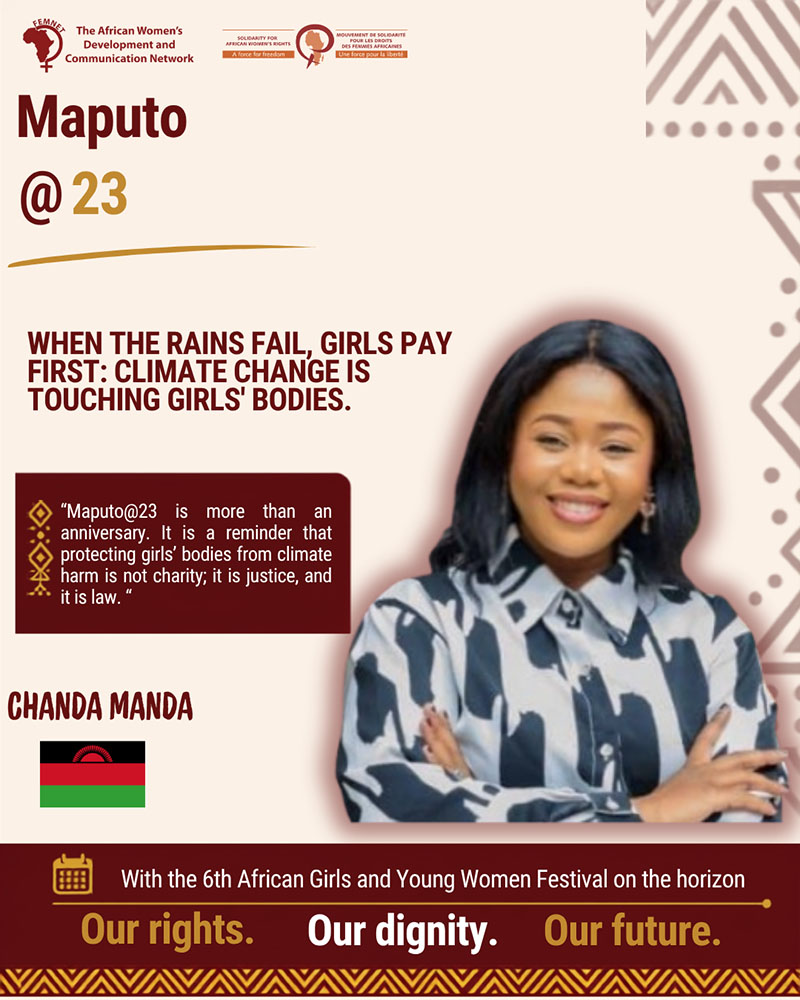
When the Rains Fail, Girls Pay First: Climate Change is Touching Girls’ Bodies. #ThePromiseofArticle18
By Chanda Manda – Malawi
In July 2003, in Maputo, Mozambique, African Union Heads of State signed a promise to the continent’s women and girls. Article 18 states that “women shall have the right to live in a healthy and sustainable environment.” Twenty-three years later, that promise is being tested not in courtrooms or conference halls, but in dried-up riverbeds, failed harvests, and the bodies of adolescent girls across the continent.
Twenty-three years after the adoption of the Maputo Protocol, African women and girls continue to demand the fulfillment of their rights to health and a sustainable environment. Article 18 is clear: women have the right to live in safe, healthy surroundings. Yet across Africa, climate change is not just an environmental crisis; it is a bodily crisis. It is touching girls’ bodies in ways that are intimate, harmful, and unjust.
When floods wash away crops, girls face hunger and malnutrition. When droughts dry up water sources, they walk longer distances, risking harassment and assault. In displacement camps, protection collapses, exposing them to sexual violence and early pregnancies. Even menstruation becomes a struggle when WASH facilities are destroyed. Climate change is not abstract; it is written on their bodies.
When floods destroy homes, families marry off daughters early, exchanging childhoods for bride price. In drought‑stricken communities, hunger drives girls into sex work, their bodies traded for food and soap.
African states! You pledged to uphold the Maputo Protocol, but commitments without gender-responsive climate action remain hollow. Girls’ voices must be at the center of climate justice, because they know better than anyone how hopelessness feels, how helplessness feels, how unplanned pregnancies feel, how hunger feels, how fear shadows long walks for water, and how shame follows when dignity is stripped away.
Maputo@23 is more than an anniversary. It is a reminder that protecting girls’ bodies from climate harm is not charity; it is justice, and it is law. The promise of Maputo must be protected, because climate change is touching girls’ bodies, and their future depends on how we respond today.
From Ratification to Reality: What Article 18 Demands Now
Turning Article 18 into lived protection for girls requires deliberate, gendered climate action.
The call is clear:
Invest in gender‑responsive climate financing to safeguard girls’ health, education, and dignity.
Ensure safety in camps and communities, protecting girls from sexual violence.
Center girls’ voices in climate policy, so they shape the solutions that affect their bodies.
# The Promise Maputo Made
Twenty-three years on, the measure of Maputo’s success will not be how many countries have signed the Protocol, but how many girls no longer have to trade their bodies and how many have access to services when the rains fail. That is the promise #Maputo@23 must carry forward, not as a slogan, but as an obligation owed to every girl standing where climate change and gender injustice meet.
Twenty-three years after the Maputo Protocol, African girls are still waiting for its promise to be fulfilled. Maputo@23 must protect the promise, protect the body, protect the future.