
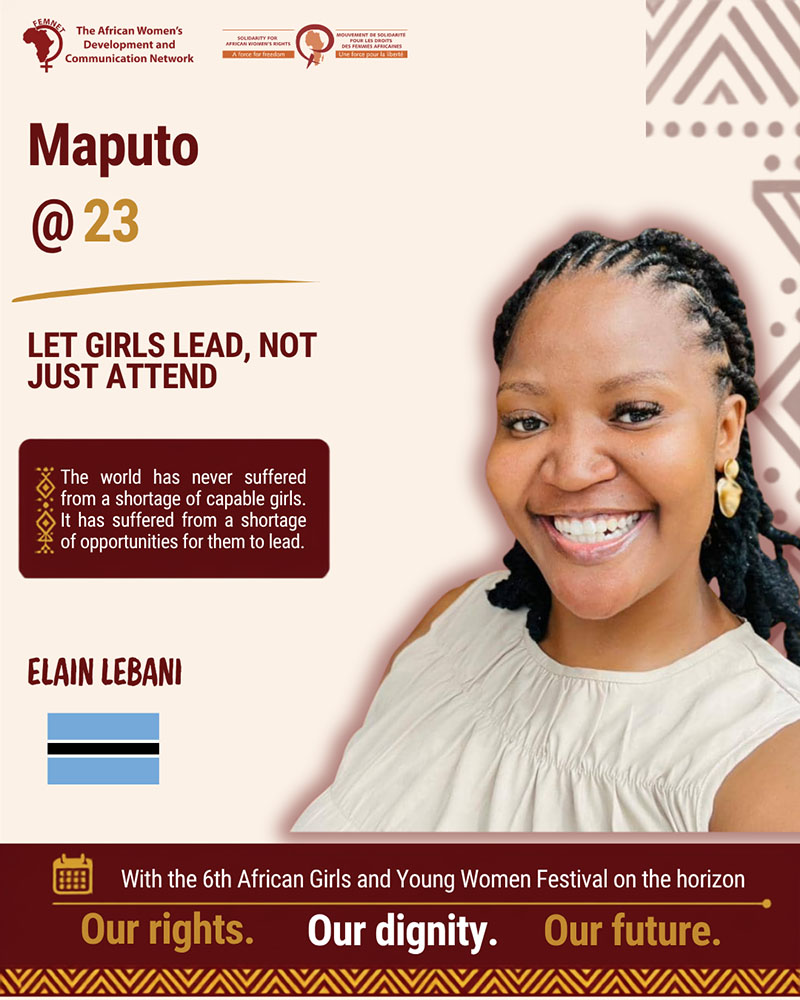
Let Girls Lead, Not Just Attend
From Participation to Power: Why Girls Deserve Decision-Making Roles
Women make up nearly half of the world’s population, yet they hold only about 27% of parliamentary seats globally. If we trust women to shape future generations, why are we still reluctant to trust them with the power to shape our nations?
Girls do not need another invitation to attend. They need a seat at the table, a voice that is heard, and the opportunity to lead. Until then, equality remains an unfinished promise.
Around the world, girls are invited to schools, youth forums, community meetings, and leadership programmes. Their attendance is often celebrated as progress, but attendance alone is not enough. Being present means little if they are not trusted to influence decisions. Girls deserve more than an invitation; they deserve the opportunity to lead.
Before a woman is trusted to lead a nation, she is often trusted to raise one. We trust women to nurture families, teach values, build communities, and prepare the next generation for the future. Every president, parliamentarian, teacher, entrepreneur, and community leader was once a child shaped by someone’s care, often a woman’s. If society trusts women with the responsibility of shaping future leaders, it should also trust them with the opportunity to become leaders.
Yet women remain underrepresented in leadership. This is not because they lack the ability to lead, but because opportunities have not always been equal. Leadership has too often been seen through a narrow lens, where girls are encouraged to participate but not always empowered to make decisions.
Some believe that others can speak on behalf of women and girls. While many men are strong partners in advancing gender equality, no one can fully represent experiences they have not lived. The strongest decisions are made when those affected by them have a seat at the table. When women participate in decision-making, they bring valuable perspectives that strengthen policies, improve public services, and help communities thrive.
Even when women reach leadership positions, they often face barriers that receive little attention. Many are offered encouragement but not the honest feedback and mentorship needed to grow. Others are appointed to leadership only during times of crisis, when success is far more difficult to achieve. These challenges make leadership harder, not because women are less capable, but because the path to leadership is often less supportive.
Creating lasting change means doing more than opening the door once. We must build environments where girls are prepared, encouraged, and supported to lead throughout their lives. This includes investing in mentorship, leadership training, education, and opportunities to gain real decision-making experience. Schools, families, faith communities, governments, and
youth organisations all have a role to play in helping girls develop the confidence and skills to lead.
This is not about choosing women over men. It is about recognising that leadership is strongest when everyone has an equal opportunity to contribute. Men and boys are important partners in creating a more equal society. Together, we can build communities where leadership is based on ability, integrity, and service, not gender.
The world has never suffered from a shortage of capable girls. It has suffered from a shortage of opportunities for them to lead. Progress should not be measured by how many girls attend meetings, conferences, or classrooms, but by how many lead organisations, shape policies, influence decisions, and inspire others to follow.
It is time to move beyond symbolic inclusion. Let us stop measuring success by attendance alone and start creating pathways for girls to lead with confidence, purpose, and impact. When girls lead, everyone benefits: families, communities, economies, and nations.
Let girls lead—not just attend.