
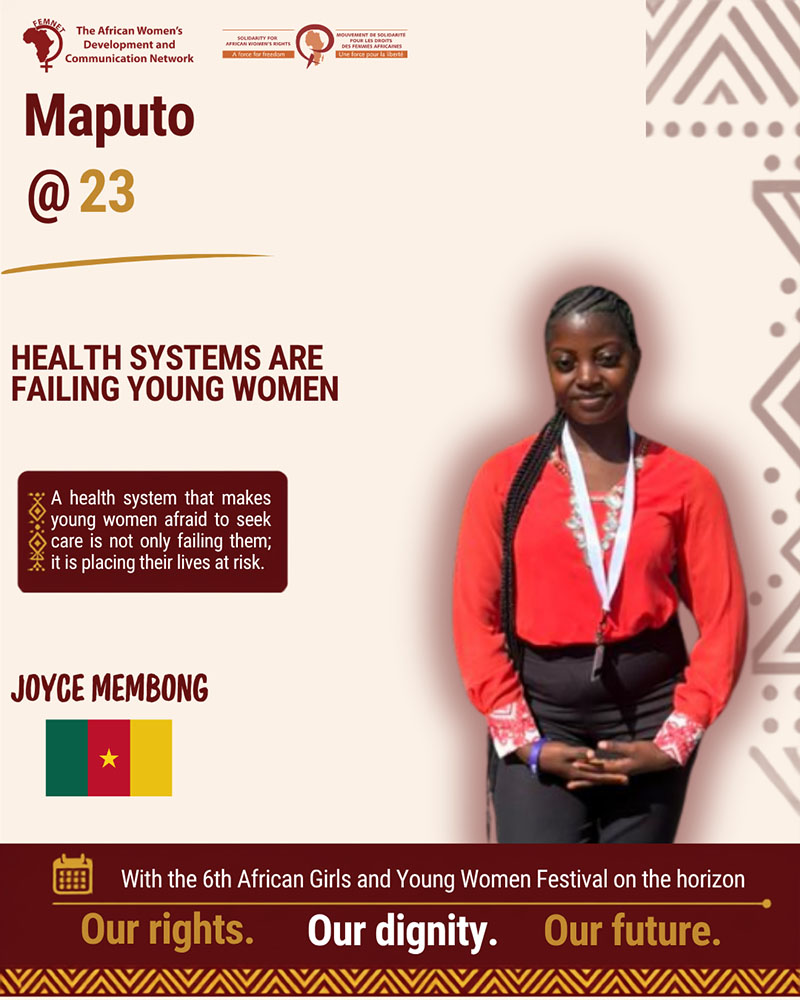
Health Systems Are Failing Young Women
A young woman walks into a health facility with severe menstrual pain. Instead of being asked how she feels, she is told, “It’s normal. Endure it.” Another gathers the courage to seek contraception but leaves in tears after being questioned about her morals. A pregnant teenager delays antenatal care because she fears being shamed by healthcare workers. In a rural community, a girl misses another week of school because she cannot afford sanitary pads or lacks a safe place to manage her period. Elsewhere, a young woman visits a clinic only to discover there are no essential medicines available. These are not isolated stories. They reflect the daily experiences of many young women across Cameroon and much of Africa.
Healthcare is often measured by the number of hospitals built, vaccines administered, or lives saved. While these indicators matter, they tell only part of the story. The true measure of a health system lies in how it treats people, especially those who are most vulnerable. For many young women, the greatest challenge is not simply accessing healthcare but accessing care that protects their dignity.
Dignified healthcare means more than receiving medicine. It means being welcomed without prejudice, listened to without interruption, and treated with compassion regardless of age, marital status, disability, or economic background. It means having access to affordable, quality healthcare without fear of humiliation or discrimination. Yet, for far too many young women, dignity is still missing from the consultation room.
Financial barriers remain one of the greatest obstacles. Although some health services are subsidised, the costs of consultations, laboratory tests, medicines, transportation, and follow-up care quickly become overwhelming. For families already struggling with the rising cost of living, healthcare often becomes a luxury rather than a right. Too many young women delay seeking treatment until their conditions worsen because they simply cannot afford care.
Affordability, however, is only one part of the problem. Judgment continues to shape many young women’s experiences in healthcare settings. Adolescents seeking sexual and reproductive health services are often met with suspicion rather than support. Questions about contraception, sexually transmitted infections, or pregnancy are sometimes answered with lectures instead of evidence-based medical advice. These experiences discourage healthcare-seeking behaviour and deepen mistrust in the health system.
The consequences are serious. When young women feel unsafe in healthcare facilities, many choose silence over treatment. They ignore symptoms, miss follow-up appointments, or turn to unsafe traditional remedies and misinformation. A health system that makes young women afraid to seek care is not only failing them; it is placing their lives at risk.
Menstrual health remains another neglected area. Across Africa, menstruation is still surrounded by silence, myths, and stigma. Many girls miss school because they lack menstrual products, clean water, private sanitation facilities, or accurate information about their bodies. Menstrual pain is frequently dismissed as something they should simply endure, even when it may signal conditions such as endometriosis or fibroids. No young woman should suffer because society refuses to talk openly about menstruation.
Mental health deserves equal attention. Young women face enormous pressures, including unemployment, economic hardship, gender-based violence, online harassment, academic expectations, and the impacts of conflict and climate change. Yet mental health services remain limited, unaffordable, and heavily stigmatised.
For young women living in conflict-affected regions, these challenges are even greater. Climate change further compounds these vulnerabilities through floods, disease outbreaks, drought, and food insecurity. These overlapping crises disproportionately affect women and girls, yet health systems remain inadequately prepared to respond.
Transforming healthcare requires more than building facilities. It demands a shift in culture. Healthcare workers need continuous training on respectful, adolescent-friendly, and gender-responsive care. Governments must invest in affordable healthcare, menstrual health, mental health services, and climate-resilient health systems. Policies should be developed with young women, not merely for them, because their lived experiences should shape health decisions.
Dignified healthcare also requires accountability. Young women deserve safe channels to report abuse, discrimination, or neglect without fear of retaliation. Respect should never depend on someone’s age, income, or background.
What does dignified healthcare look like for a young woman?
It looks like a nurse who listens before making assumptions. It looks like a clinic where confidentiality is respected and every patient is treated with compassion. It looks like affordable services that no young woman has to forgo because she cannot pay. It looks like accessible menstrual products, available mental health support, and sexual and reproductive healthcare free from shame. Above all, it looks like a health system that recognises young women as individuals whose health, dignity, and futures matter.
Health systems should do more than treat illness. They should protect dignity, restore hope, and empower every young woman to seek care without fear. Until that becomes a reality, we cannot claim to have achieved equitable or universal healthcare.