
Feminist Perspectives on the Extractives Sector and Natural Resource Governance
Introduction
Natural resource governance (NRG) in Africa sits at the intersection of history, political economy and gendered power relations. Despite the continent’s vast natural resource wealth, the “paradox of plenty” persists, shaped by governance systems rooted in colonial extraction, contemporary capitalist interests and entrenched patriarchy. These systems often concentrate control and economic benefits in the hands of a few, while externalising the social, economic and ecological costs onto communities, particularly women and other marginalised groups.
AFMA-Central Africa applied a Feminist Political Ecology and Pan-African feminist lens to examine these dynamics and explore pathways towards more just and accountable natural resource governance. Grounded in principles of intersectionality, accountability, transparency, distributive justice, collective ownership and environmental sustainability, the academy examined how power operates across NRG institutions and value chains, and how these systems can be transformed to advance gender, economic and environmental justice.
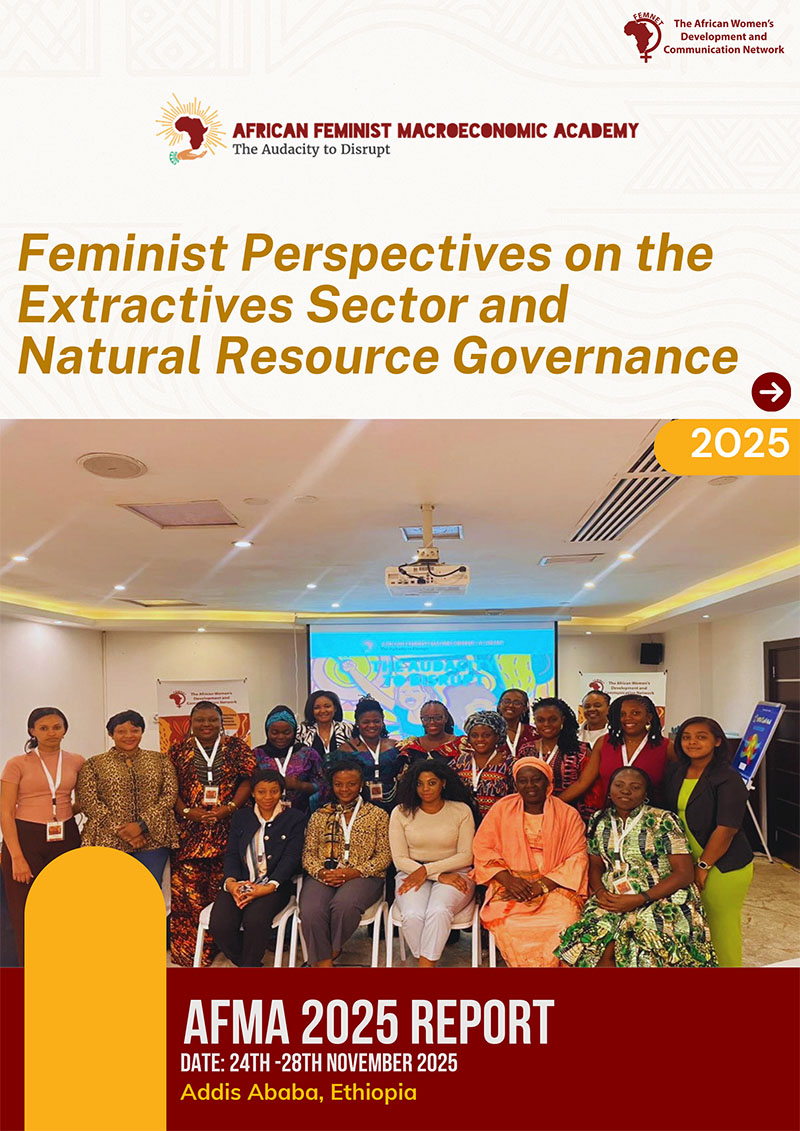
The academy brought together 19 participants from Cameroon, the Democratic Republic of Congo, Equatorial Guinea and Ethiopia, strengthening their capacity to apply feminist analysis to natural resource governance and to advance more equitable and sustainable approaches within their respective contexts.