
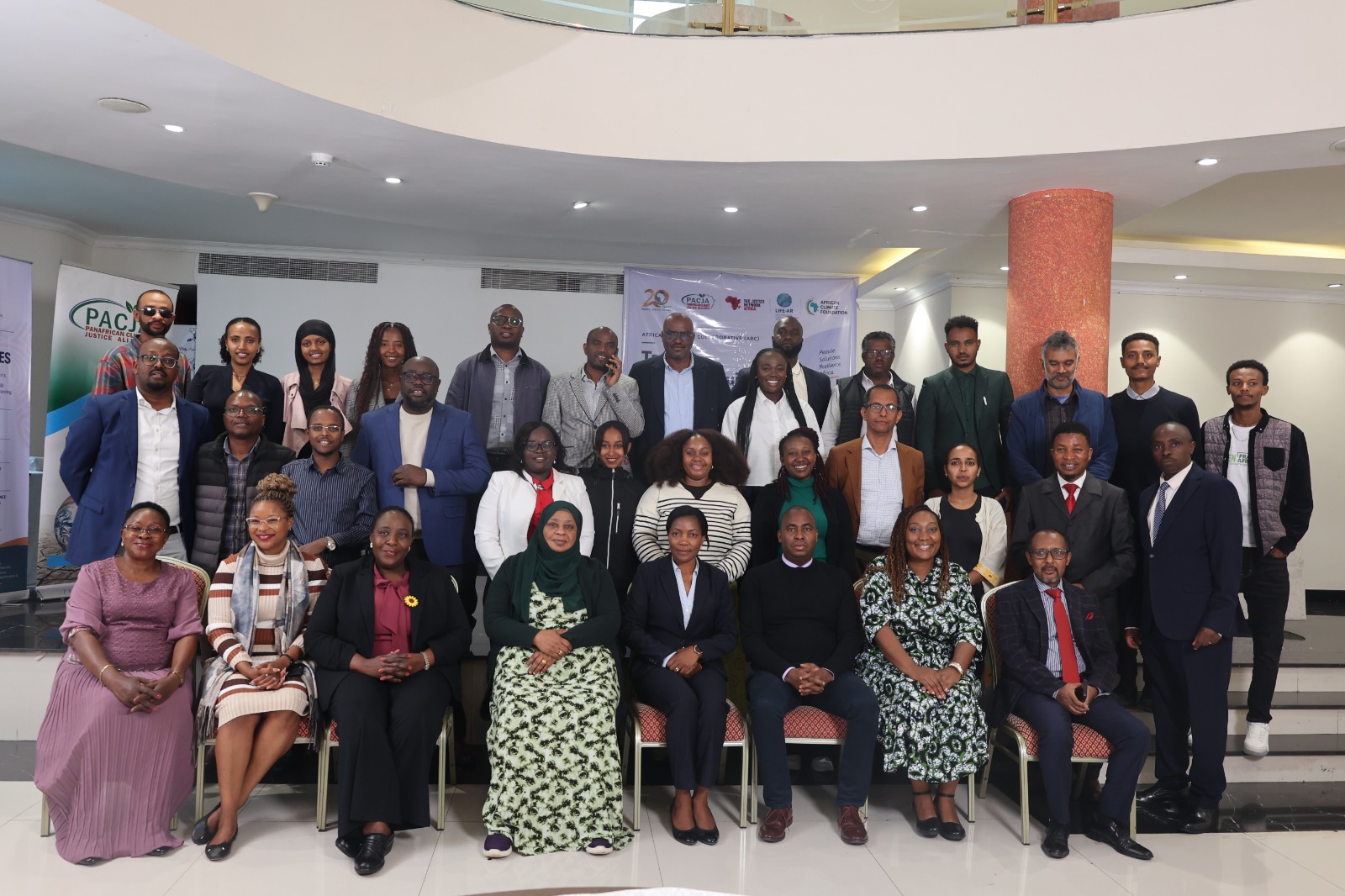
Africa Resilience Collaborative: Putting Communities at the Heart of Climate Finance
On the sidelines of CCDA-XIV in Addis Ababa, a new collaboration is asking an urgent question: what would climate resilience look like if the people living the crisis were also at the centre of deciding where the money goes?
For years, Africa has been told to become more resilient to a climate crisis it did little to create. Yet the resources meant to support that resilience continue to move through financial systems that too often leave the very communities on the frontlines waiting at the margins.
It is against this backdrop that the Africa Resilience Collaborative (ARC) was launched on the sidelines of the 14th Climate Change and Development in Africa Conference (CCDA-XIV), bringing together African climate justice and development actors around a shared ambition: to reshape how climate finance reaches the continent and, more importantly, who gets to shape and access it.
The Collaborative brings together PACJA, TrustAfrica, the African Climate Foundation, LIFE-AR and Tax Justice Network Africa, building on years of collaboration among African institutions working towards climate justice.
And the numbers tell us why this work matters.
Only around 10% of climate finance reaching Africa currently trickles down to frontline communities, while globally, women receive less than 2% of development finance. These figures expose a financing architecture that remains deeply disconnected from the realities of the people carrying the greatest burden of the climate crisis.
For women and girls, climate change is not an abstract policy conversation. It shows up in longer journeys to fetch water, shrinking agricultural yields, unpaid care work, displacement, loss of livelihoods and heightened economic insecurity. Across communities, women are already developing ways to adapt, organise and protect their families and ecosystems. Yet their knowledge, leadership and solutions remain among the least funded.
In her statement of solidarity at the launch, Memory Kachambwa, Executive Director of FEMNET, congratulated the partners behind the Africa Resilience Collaborative while underscoring the urgency of reforming the financial architecture that underpins climate action in Africa.
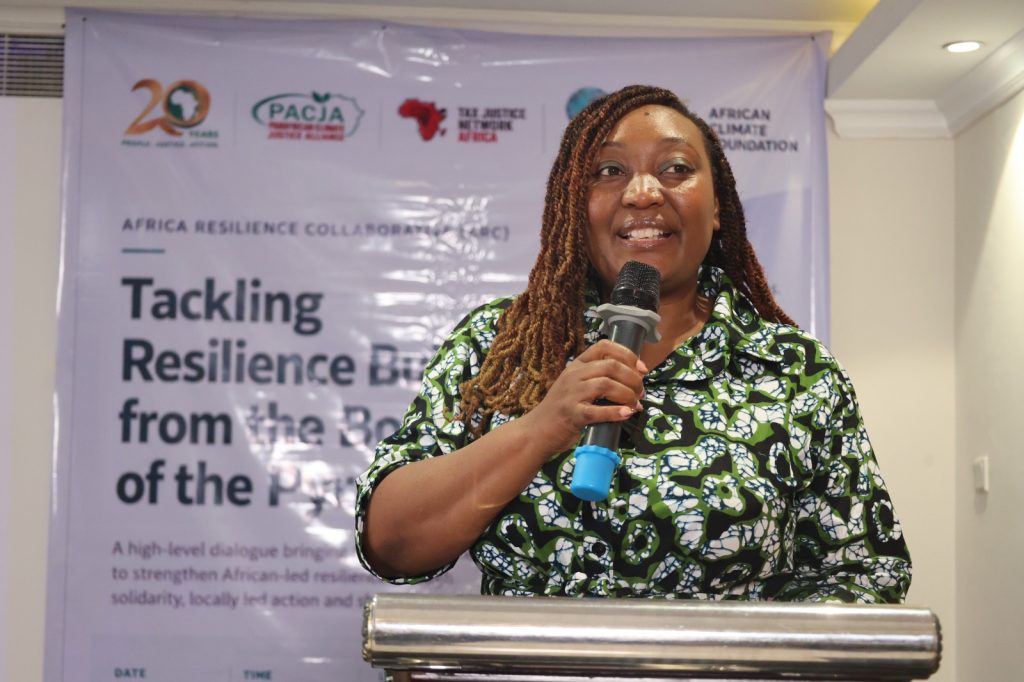
Memory Kachambwa, Executive Director of FEMNET, issued a statement of solidarity congratulating PACJA, Trust Africa, the African Climate Foundation, LIFE-AR and Tax Justice Network Africa on launching the Africa Resilience Collaborative.
For Memory, collaboration is critical. But collaboration must also mean making space for those whose voices have historically been excluded from climate finance decisions — including women, youth and the media, alongside communities at the frontline of climate impacts.
She challenged stakeholders to look beyond the billions announced at international climate conferences and ask the harder question: Are these resources actually reaching communities, and are they enabling locally-led solutions to thrive? Because pledges are only meaningful when they become something communities can touch, use and build with.
This is particularly important as countries and institutions work to deliver on commitments such as the Belém pledge to triple adaptation finance. For Africa, increasing the volume of finance is only part of the equation. The quality, accessibility and destination of that finance matter just as much.
Climate finance must be flexible enough to respond to local realities. It must be accessible to organisations that are often too small to navigate complicated funding mechanisms. And it must reach feminist, youth-led and community-based organisations that are already doing the work of adaptation on the ground.
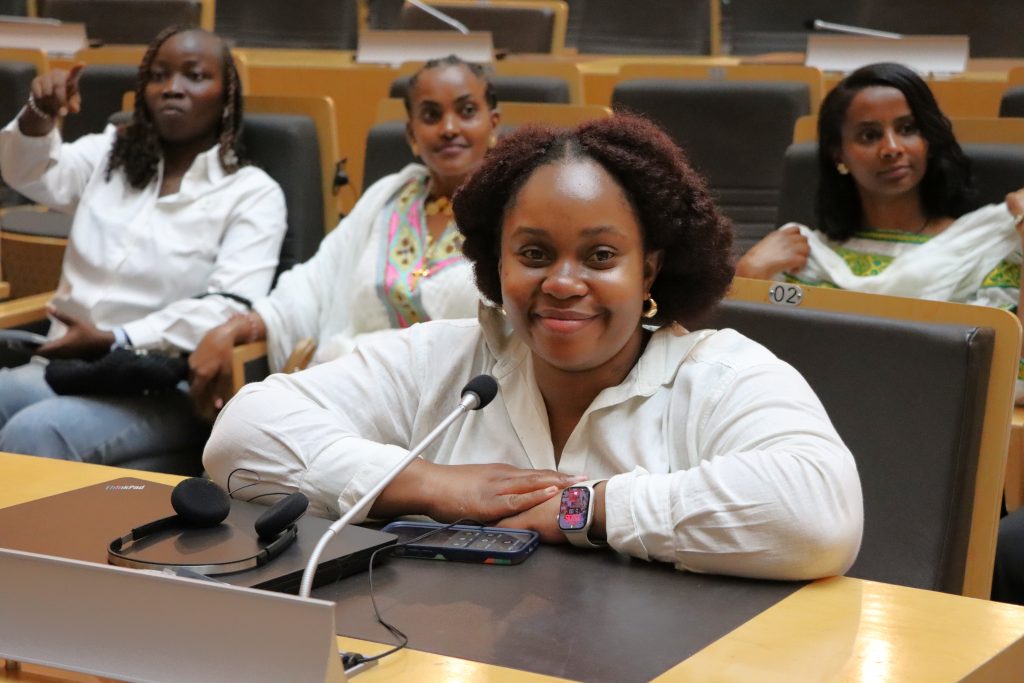
Chido Nyaruwata during a visit to the African Union (AU) Headquarters in Addis Ababa, Ethiopia, as part of the Africa Feminist Academy for Climate Justice Cohort 4, organised by FEMNET.
As Chido Nyaruwata, a Climate Justice Researcher from Zimbabwe, put it during the launch:
“There needs to be allocation of climate finance for adaptation for youth-led feminist organisations within the climate finance architecture, especially by organisations that regrant to local communities.”
Her intervention captured a gap that feminist movements have been naming for years: those closest to the problem are often furthest from the money.
The Africa Resilience Collaborative offers an opportunity to begin closing that gap.
One of its priorities is to channel resources more directly towards locally-led adaptation. For FEMNET, this must go hand in hand with putting women and girls at the centre. Locally-led cannot simply become another development buzzword. It must mean that women’s organisations, feminist movements, smallholder farmers, Indigenous peoples, youth and other frontline actors have meaningful influence over decisions, resources and priorities.
It also means confronting the structures that continue to determine who has access to finance in the first place.
As Kachambwa emphasised, reforming the financial architecture is fundamental to ensuring that climate finance supports a Just Transition and delivers tangible change at community level. Africa does not need more promises that remain suspended somewhere between COP communiqués and donor spreadsheets. It needs financing systems that recognise the expertise already present in communities and trust those doing the work.
The launch of ARC therefore comes at an important moment. It is a reminder that Africa’s resilience is not something to be manufactured for communities. It is already being practised by communities every day. Women are farming through changing seasons, organising for food and water security, protecting ecosystems, building livelihoods and holding communities together through climate shocks. Young feminists are demanding a future that is not only greener, but fairer.
The task before the climate finance architecture is to catch up.
For FEMNET, supporting the Africa Resilience Collaborative is about more than welcoming a new initiative. It is about advancing a vision of climate justice where finance follows the people, where locally-led solutions are trusted and resourced, and where women and girls are not treated as beneficiaries of resilience but recognised as leaders, decision-makers and architects of Africa’s climate future.
Resilience without justice is simply survival. And Africa deserves more than survival. It deserves a climate future shaped, financed and led by the people who call it home.