
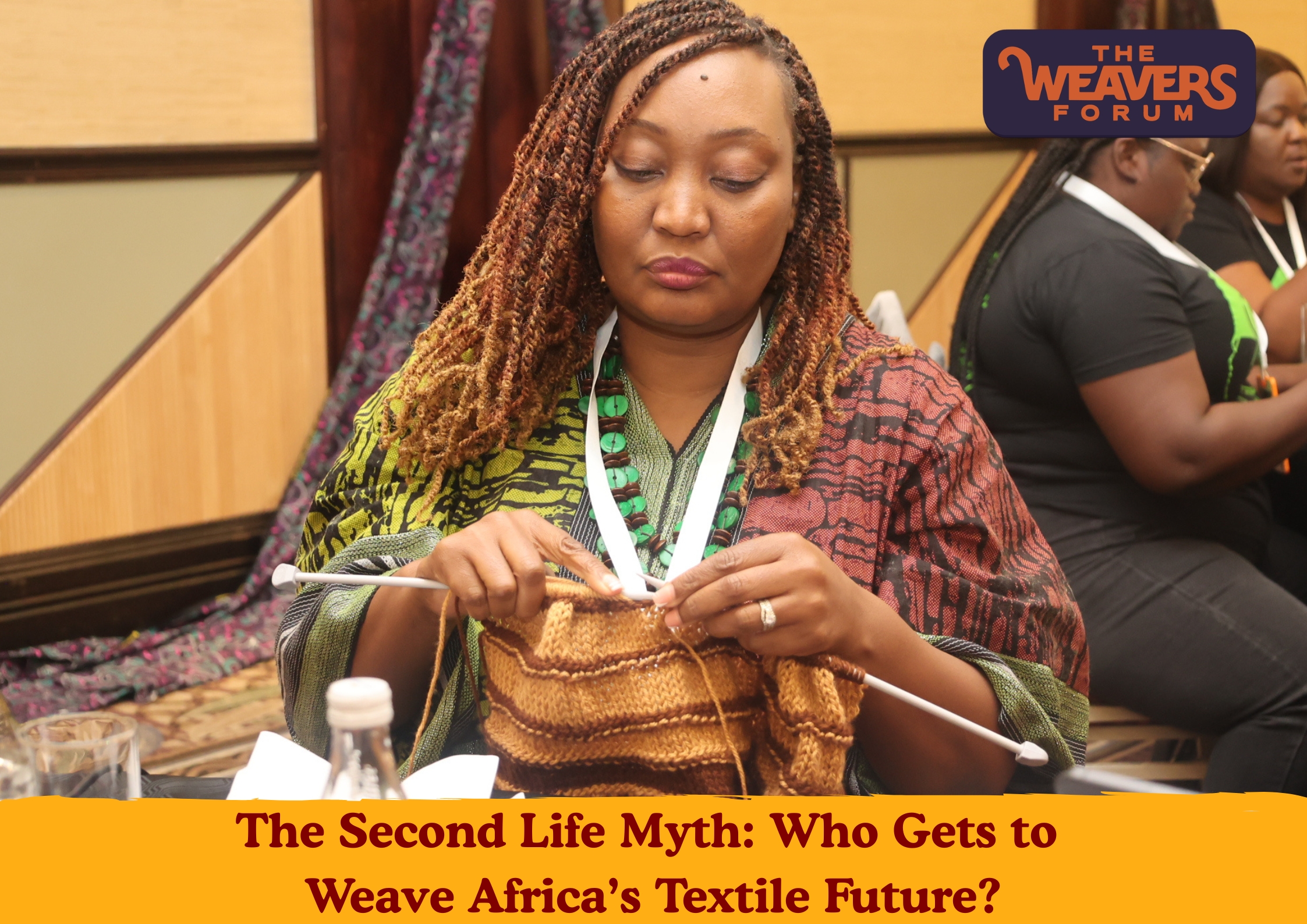
The Second Life Myth: A Feminist Political Economy of African Textiles and the Second-hand Clothing Trade
There is something almost comforting about the phrase second-hand clothing. It sounds circular, sustainable, and even generous: a shirt has had its first life somewhere else and now, apparently, it gets a second life in Africa. But what if the story is not quite that simple? This was one of the questions that stayed with me from The Second Life Myth: A Feminist Political Economy of African Textiles and the Second-hand Clothing Trade, a session at the inaugural Weavers Forum in Windhoek, Namibia. The conversation invited us to look beyond the familiar story of Mitumba (second-hand clothes) and ask a much bigger question: what happens when Africa becomes the destination for clothes the rest of the world no longer wants?
It is an uncomfortable question because second-hand clothing is not simply a story of waste. It is also a story of livelihoods. Walk through a mitumba market in Nairobi, Accra, Kampala or Dar es Salaam, and you will see an entire economy at work, with traders making a living, customers finding affordable clothing, and transporters, sorters, market workers and others earning incomes along the value chain. In Kenya alone, the second-hand clothing trade has been reported to support around two million livelihoods. That reality makes the conversation far more complicated than simply saying, “ban second-hand clothes and save African textiles.” The harder and more important question is how we build an economy where people can earn a living today while also creating the productive capacity we need for tomorrow.
This is where feminist political economy gives us a useful lens. The session, led by Adomaa Adusei, situated textiles within a much bigger conversation about economic sovereignty, reminding us that textiles are not merely commodities but repositories of culture, identity and collective memory. At the same time, the session examined how imported textiles can undermine domestic manufacturing, contribute to environmental waste and erode indigenous textile traditions and cultural knowledge, even as the second-hand clothing economy continues to provide livelihoods for thousands of traders. In other words, there is a knot here, and pulling at one end reveals several others. The question of second-hand clothing is simultaneously a question about jobs, manufacturing, trade, culture, the environment and who gets to retain economic value.
The scale of the trade makes this conversation difficult to ignore. According to the United Nations Economic Commission for Europe, international trade in used clothing was worth about US$9.3 billion in 2021, with garments largely moving from higher-income to lower-income countries. Kenya was among the major importing countries. In 2024, World Bank trade data recorded approximately 230.3 million kilograms of worn clothing and other worn articles imported into Kenya, valued at about US$207.1 million. China alone accounted for approximately 126.6 million kilograms of those imports. These numbers tell us something about the sheer scale of the trade, but they do not tell the whole story, because behind every kilogram is a network of people whose livelihoods may depend on buying, selling, transporting, sorting, repairing and wearing these clothes.
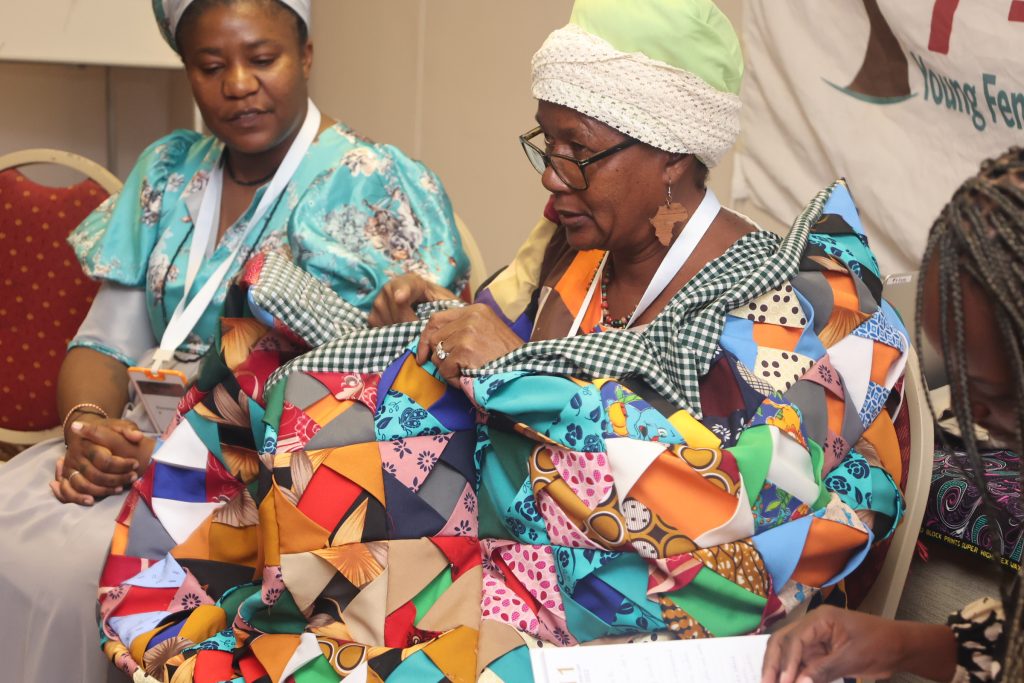
And then there is the question of what happens to the clothes that do not find a buyer. The global textile industry generates enormous amounts of waste, with the United Nations estimating that around 92 million tonnes of textile waste are produced globally every year. The international trade in used clothing has also grown dramatically, increasing sevenfold over the past four decades. The language of giving clothes a “second life” therefore begins to feel a little more complicated. Of course, clothes can be reused, repaired, resold and repurposed, and extending the life of a garment can be an important part of a more circular economy. But sending unwanted clothes somewhere else does not, by itself, make the fashion system circular. A genuinely circular economy requires us to ask how clothes are designed, how long they last, who produces them, who profits from them, how they are repaired, and what happens when they can no longer be used.
This brings us back to Africa’s own textile story, because long before the second-hand clothing trade became such a dominant feature of our markets, Africa had vibrant textile traditions of its own. We had cotton production, weaving, dyeing, embroidery and intricate forms of textile knowledge passed from one generation to another. Textiles were not simply something we wore; they carried stories about identity, place, status, ceremony and community. They were culture, memory, creativity and economic activity woven together. The Weavers Forum session asked us to think about what happens when those systems are weakened by unequal trade structures and inadequate investment in local manufacturing, particularly when women remain central to textile economies but are often excluded from the productive resources and value generated through their labour. Limited access to finance, infrastructure and markets, alongside gendered divisions of labour, continues to confine many women to lower-value segments of agricultural and textile value chains.
And this is where the feminist question becomes particularly important: who gets to keep the value? It is not enough to say that women are working. We have to ask whether they are earning, whether they own the enterprises they build, whether they have access to finance and productive resources, whether they can move from production into processing, branding and distribution, and whether they have the power to capture more of the value created by their labour. Economic participation is one thing; economic power is another.
The second-hand clothing debate also reminds us that industrial policy cannot be built around simple slogans. If we want stronger African textile industries, what happens to the millions of people whose livelihoods currently depend on the second-hand clothing trade? This is why the Forum’s call for carefully sequenced industrial policies is important. The aim should be to protect workers and traders while simultaneously rebuilding local production capacity, rather than creating a situation where one group loses its livelihood before another economic system is ready to absorb them.
Because you cannot simply pull one thread out of a fabric and expect everything else to remain intact. If we want stronger African textile industries, we have to think about the entire chain: cotton production, manufacturing, energy and infrastructure, finance, skills, technology, local markets, regional trade, design, branding and distribution. We also have to think about the people who currently survive through informal economies and ensure that economic transformation does not become another way of pushing them to the margins.
This is why the question of economic sovereignty cannot be separated from the question of livelihoods. The question is not simply how we stop second-hand clothes from entering Africa. The more important question is what we are building that makes it possible for African producers, workers, designers and traders to thrive. What would it take for African countries to retain more value within their own economies? What would it look like to invest in local manufacturing, agricultural processing and regional value chains rather than remaining dependent on external markets? The Weavers Forum report points precisely in this direction, highlighting local production and value addition as pathways towards economic transformation while linking textile sovereignty to climate resilience, cultural preservation and regional economic integration.
And perhaps this is where the weaving metaphor becomes more than a clever theme for a conference. A textile is made up of many threads, and so is an economy. Manufacturing connects to trade; trade connects to livelihoods; livelihoods connect to care; care connects to gender; gender connects to power; and power determines who owns resources and who gets to make decisions. Pull at one thread, and suddenly the entire fabric begins to reveal itself.
So perhaps the real lesson from the “Second Life Myth” is not that we should reject reuse or romanticise local production. We should absolutely reduce waste, repair, reuse, upcycle and build more circular economies. But Africa should not become the world’s dumping ground in the name of sustainability, just as the people whose livelihoods depend on second-hand clothing should not become collateral damage in the rush to rebuild domestic industries. What we need is both livelihood protection and industrial transformation, both environmental responsibility and economic justice, both local production and regional markets, and both cultural preservation and innovation.
The bigger question, then, is what kind of textile future we want to weave. What if the cotton grown on African soil could be processed here? What if African women who already possess generations of textile knowledge had greater access to capital, technology, and markets to build thriving enterprises? What if African designers were not creating only for niche markets but were part of a vibrant continental textile industry? What if “Made in Africa” became not simply a campaign slogan but an everyday economic reality?
That would be a second life worth talking about.
Because the goal cannot simply be to give old clothes another life. We also need to give African textile economies a new life. And perhaps that means returning to the loom—not to recreate the past exactly as it was, but to pick up the threads of knowledge, labour, culture and creativity that have always been ours and weave them into something stronger, more sovereign and more just. The women who have always held these threads should not simply be workers within the textile economy; they should have a decisive voice in what gets produced, who owns it, who profits from it and what kind of economic future it creates.
The future of African textiles should therefore not be defined by what the rest of the world sends us when it is finished with its clothes. It should be shaped by what Africa chooses to create, produce, own, trade and wear. And perhaps that is the deeper invitation of feminist political economy: not simply to ask how we survive within systems that were never designed with us at the centre, but to imagine, organise and build economies that allow us to determine what the next generation will inherit.
The future is not waiting to be found in the next bale of clothes. It is waiting to be woven.
Related Tags
Related Posts
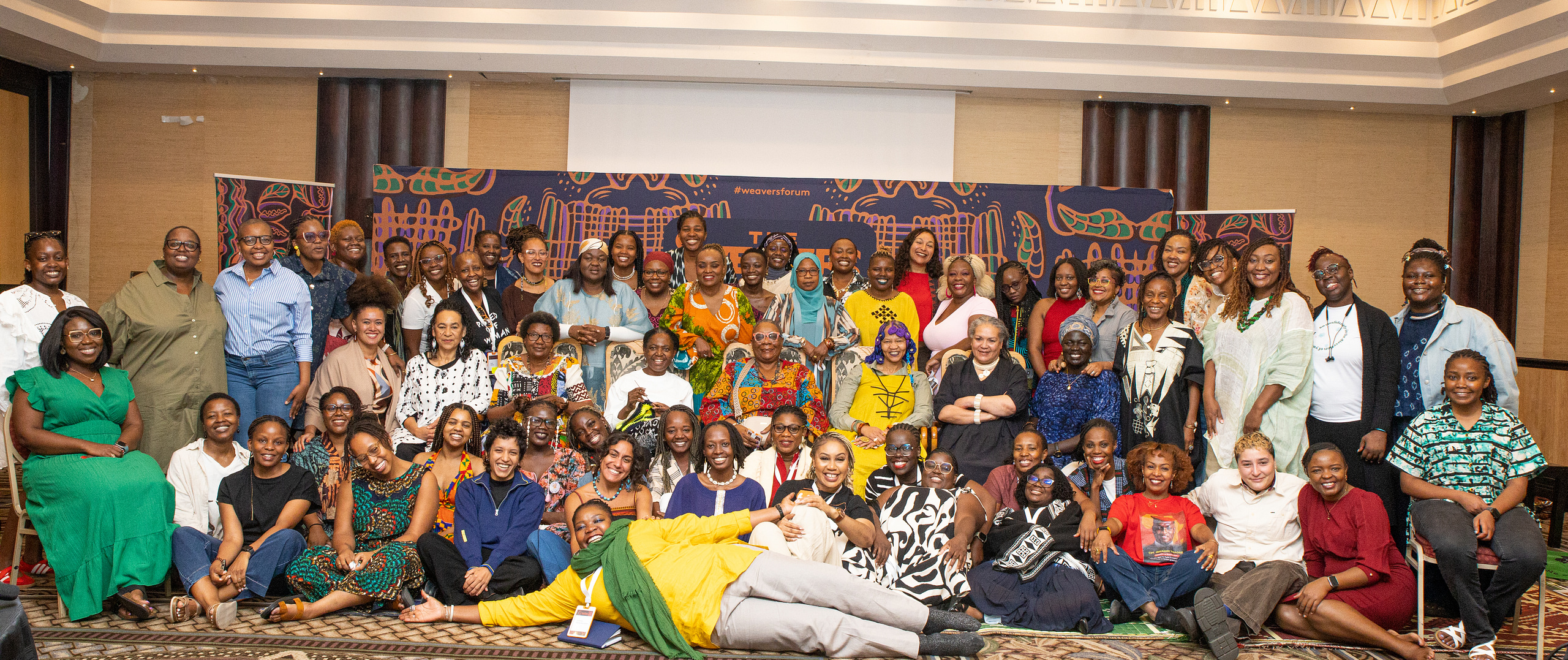
With Thought, Needle and Thread: The Beginning of a New African Feminist Economic Imagination
There are gatherings you attend, take notes, exchange contacts, take a few photographs, and return home. Then some
Learn More
Establishing a Revolutionary Era of Resistance: A Feminist Perspective on Kenya’s Finance Bill 2024
On June 20, 2024, citizens of Kenya from all regions of the country participated in a second round
Learn More