
The Family Is Political: Why FEMNET Is Building a Continental Front for Equal Family Laws
By Muthoki Nzioka
At the inaugural Africa Family Law Network conference, FEMNET placed lived experience and the leadership of young people at the centre of the struggle for equal family laws
Family law is often discussed through statutes and court decisions. Yet it governs intimate questions in a woman’s life: whether she may leave a marriage, keep her children, inherit property, retain the wealth she helped create, or live free from violence. Few areas of law show more clearly how public power enters the private sphere.
This recognition lies at the heart of the Africa Family Law Network (AFLN), a pan-African feminist platform connecting women’s rights organisations, legal practitioners, activists and community leaders working to end discrimination within the family. It exists because no country can confront these injustices, or the coordinated backlash against women’s rights, alone.
That urgency brought AFLN together for its inaugural annual conference in Nairobi from 4-6 August 2026. It was a political stocktake: Where has Africa advanced? Where have reforms stalled? How are anti-rights actors using culture, religion and family values to reverse hard-won gains? What kind of movement can push equality forward?
For FEMNET, a founding member of AFLN, these questions sit at the centre of its feminist mandate. Family law is where constitutional promises meet unpaid care, economic dependence, inheritance, marriage, divorce and bodily autonomy.
“Family law is where patriarchy becomes deeply personal. It determines who holds power in the family, who owns and inherits property, whose choices are respected and who can live with dignity and freedom.”
MEMORY KACHAMBWA | FEMNET EXECUTIVE DIRECTOR
What FEMNET brought to AFLN?
FEMNET brought decades of pan-African movement-building and a political method connecting law with lived experience. It facilitated the conference conversation on national family-law reforms, creating space to examine progress, resistance and implementation gaps across jurisdictions.
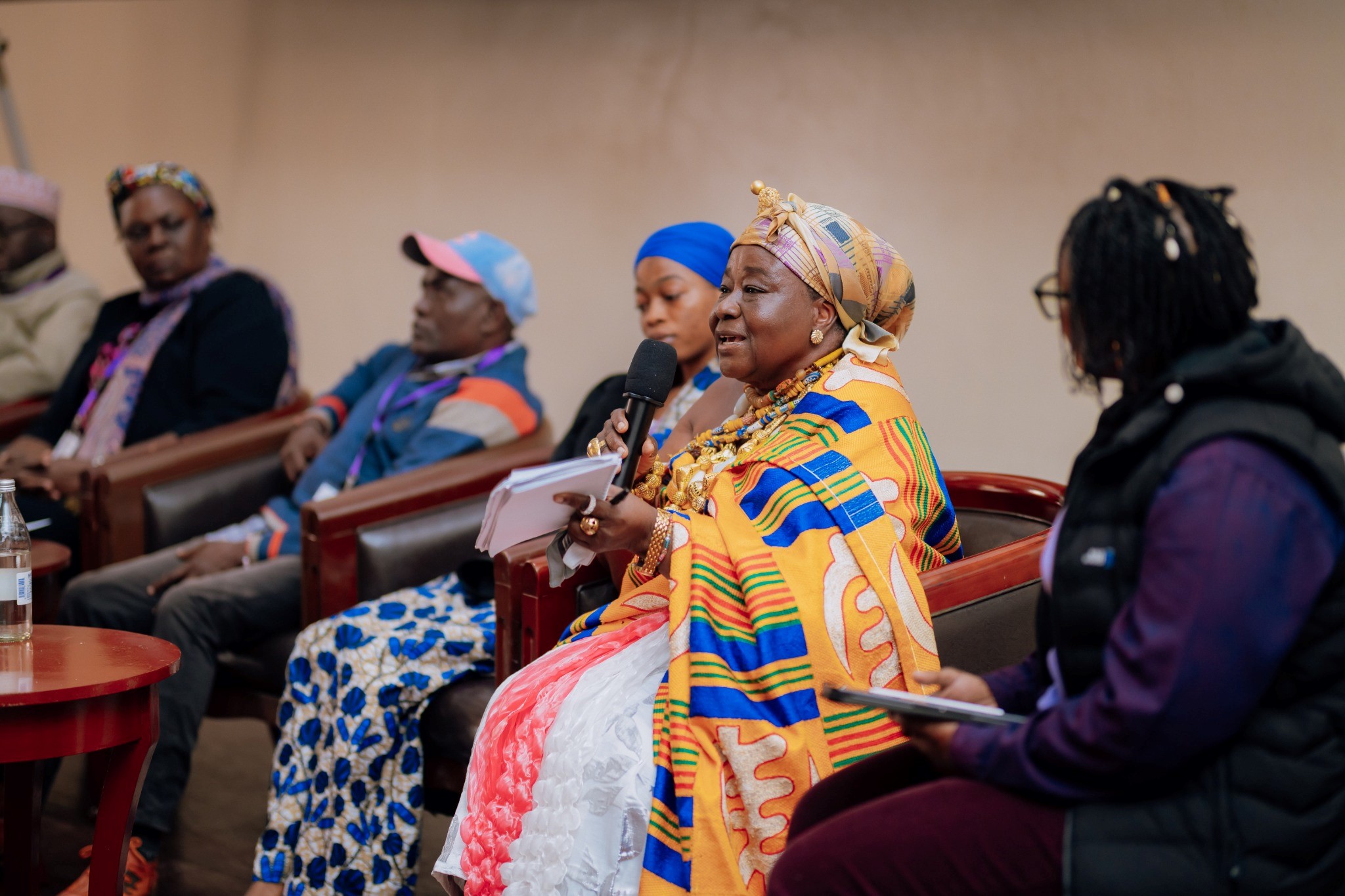
FEMNET also made the room reflect the communities where family law is interpreted and enforced. It supported Mama Dzitri Norvitorwo II, Queen Mother from Hohoe, Ghana; Dr Alice Odingo of the University of Nairobi Gender Mainstreaming Committee; and Adiatu Mustapha, a Ghanaian university student leader.
Rolex Mwamba of the Inter-Religious Council of Kenya; Alii Hiribae Komora, an imam and headteacher; and Chikwangu Katana Kitaso, a Giriama community leader, also joined the conversation. Together, they showed that reform must reach customary institutions, faith communities, universities and families.
Young people belong at the centre
Adiatu Mustapha’s contribution carried a particular message: young people cannot be treated as an audience for reforms designed without them. They are already navigating gendered expectations around marriage, sexuality, care, leadership and belonging. They are also organising, questioning inherited norms and imagining more equal families.
Including young people is therefore not about adding a youth voice after decisions have been made. It means recognising them as political actors who must help define the problem, shape the strategy and carry reform into universities, movements and communities. Intergenerational organising is how feminist gains are defended and renewed.
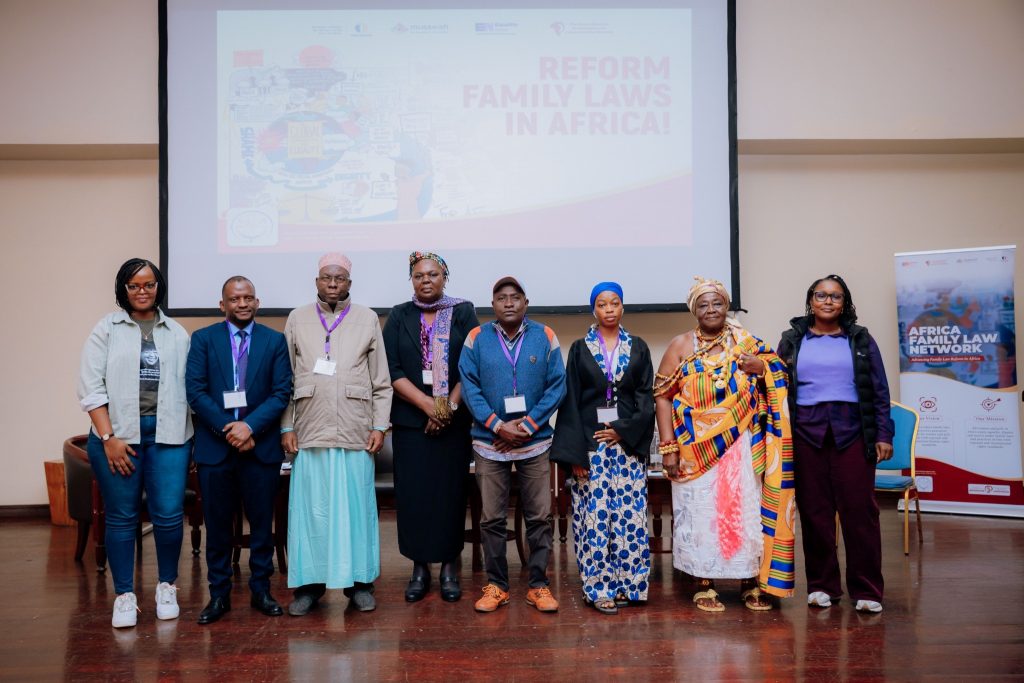
Community, faith, education and youth representatives supported by FEMNET at the conference. Photo: FEMNET
Nairobi clarified three things: progressive laws mean little when women cannot use them; anti-rights organising crosses borders, so feminist movements must be equally connected; and reform must be intergenerational, with young people helping to define and carry the strategy.
Community engagement must never mean seeking permission for women’s equality. It must challenge people with influence to use it to dismantle, rather than defend, patriarchal power.
FEMNET will use its continental network to connect like-minded women’s rights organisations, youth-led and student movements, legal advocates, and progressive cultural and faith actors. The aim is stronger shared analysis, cross-border solidarity, coordinated advocacy and rapid responses when rights come under attack. National struggles must connect to regional mechanisms, while regional commitments must return to communities.
AFLN is not another meeting place. It is a collective organising answer to backlash, rooted locally, connected across borders and uncompromising in its insistence that women’s rights within the family are fundamental rights