
African Feminists Chart the Road to COP32 as Women and Gender Constituency Africa Elects New Regional Representatives
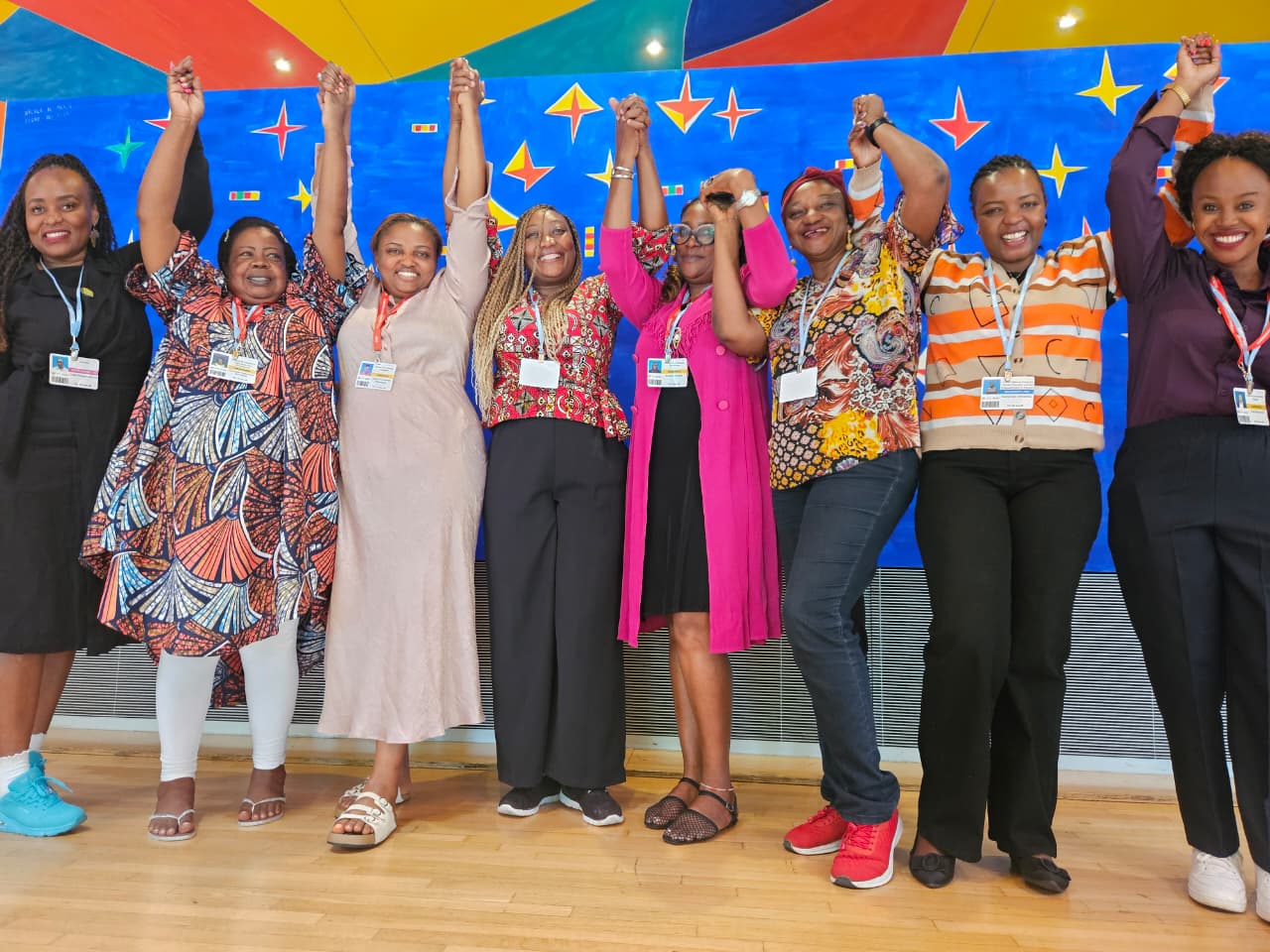
The sidelines of the Bonn Climate Change Conference (SB64) in Bonn, Germany, provided an important moment for African feminist climate leadership, as members of the Women and Gender Constituency (WGC) Africa elected a new team of regional representatives to guide the constituency’s work from 2026 to 2028.
The newly elected team comprises five representatives drawn from Africa’s regions, reflecting the diversity and strength of the continent’s feminist movement. Among those elected is FEMNET Executive Director, Memory Kachambwa, who will represent the Eastern Africa region for the next two years.
The election comes at a key moment for Africa’s climate justice movement. The incoming team assumes leadership as the continent prepares to host COP32 in Addis Ababa, Ethiopia—an opportunity that many see as a defining moment for elevating African priorities and ensuring that women and girls are at the centre of global climate action.
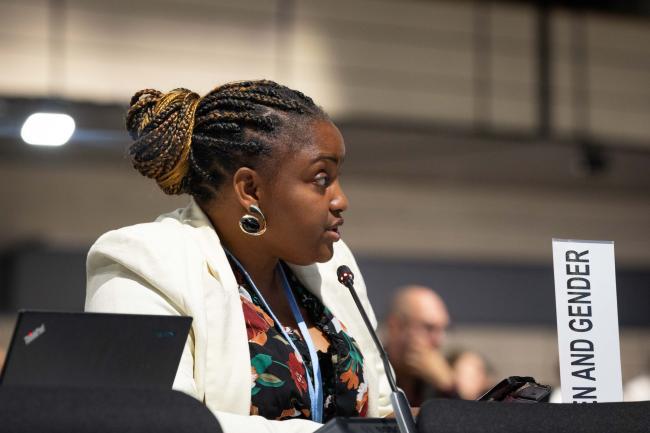
Dr. Zoneziwoh Mbondgulo-Wondieh, outgoing regional coordinator for the Women and Gender Constituencies Africa.
Reflecting on the transition, outgoing regional coordinator Zoneziwoh Mbondgulo-Wondieh of Women for a Change described the last two years as a period of intensive feminist organising, solidarity-building, and advocacy within the UNFCCC process.
“Our mandate was from 2024 to 2026, and it has been an exciting two years of feminist organising, holding the space, and amplifying the voices of African women within global climate negotiations,” she said.
Expressing confidence in the newly elected team, Zoneziwoh noted that they will have the unique responsibility of helping shape African feminist engagement as the continent hosts COP32.
“I am super excited for them because during their term, Africa will host COP32 in Addis Ababa. I have strong confidence in the team and the energy, vibrance, and momentum they bring. African women are claiming the space, and the world should watch out for Africa’s Women and Gender Constituency.”
For many African women, however, participating in international climate negotiations remains an uphill task. Restrictive visa regimes continue to lock out delegates from key meetings, often delaying or denying access to those whose voices are most needed in decision-making spaces. The high costs associated with attending global climate conferences—including flights, accommodation, accreditation, and local transportation—present additional barriers, particularly for grassroots women’s groups, young feminists, Indigenous women, and community-based organizations.
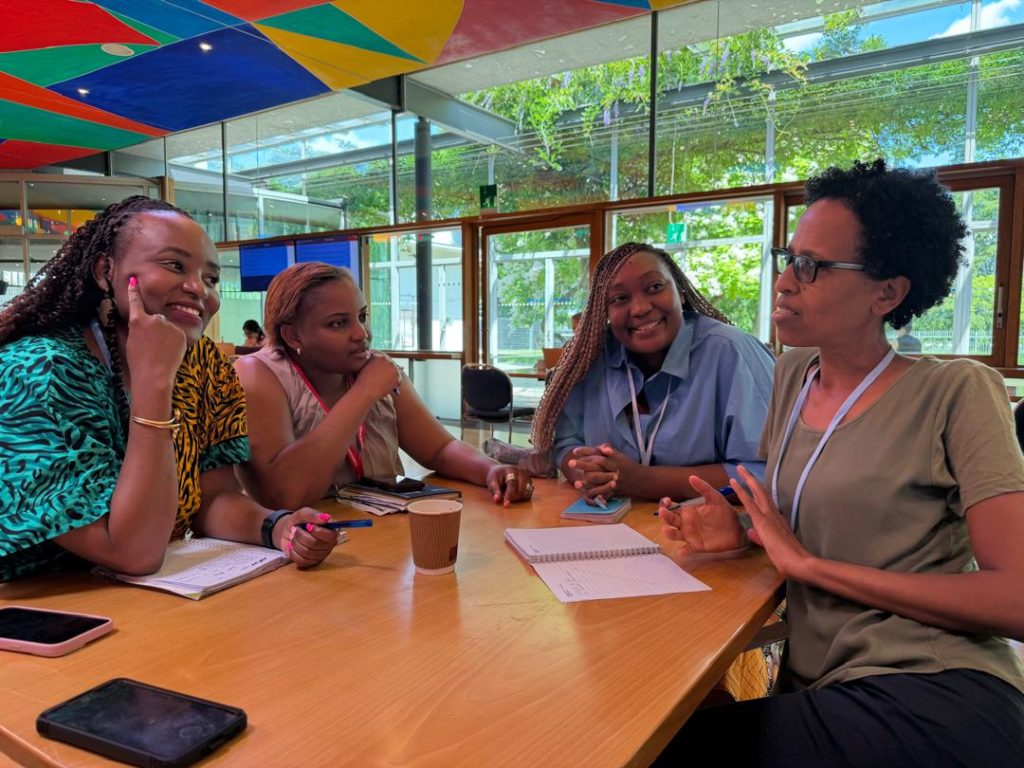
A section of Women & Gender Constituency Africa members holding an informal catch-up with Arsema Tesfaye from the Ethiopian Delegation at SB64.
Beyond these logistical and financial challenges lies another persistent obstacle: the exclusion of feminist perspectives from climate policy discussions. Despite being disproportionately affected by climate change, women and girls—especially those from marginalized communities—often remain underrepresented in negotiations and leadership spaces where climate decisions are made.
Against this backdrop, the election of the new WGC Africa representatives signals a renewed commitment to ensuring that African women’s voices are not only present but influential in shaping climate solutions.
Speaking during the handover, Memory Kachambwa reaffirmed her commitment to advancing an inclusive African agenda on the road to COP32.
“As we journey towards COP32 in Ethiopia, we have a responsibility to ensure that this conference reflects the true spirit of Africa—one rooted in solidarity, inclusion, resilience, and justice. For too long, women and girls, particularly those from grassroots communities and marginalized groups, have been left behind in climate decision-making spaces. Our commitment as the incoming team is to work collectively to open these spaces wider, amplify African feminist voices, and ensure that those most affected by the climate crisis are at the centre of shaping the solutions. COP32 must be a turning point for inclusive and feminist climate leadership on the continent.”
With COP32 set to take place on African soil, expectations are high that the conference will create greater opportunities for meaningful participation by African civil society, women’s rights organizations, grassroots movements, and feminist advocates. The newly elected representatives will play a critical role in ensuring that the road to Addis Ababa is guided by the principles of equity, inclusion, and feminist climate justice.
As the climate crisis continues to deepen inequalities across the continent, the Women and Gender Constituency Africa remains steadfast in its commitment to championing gender-responsive climate action. The newly elected team now carries the responsibility—and opportunity—of ensuring that Africa’s hosting of COP32 becomes a milestone for transformative, inclusive, and feminist climate leadership.