
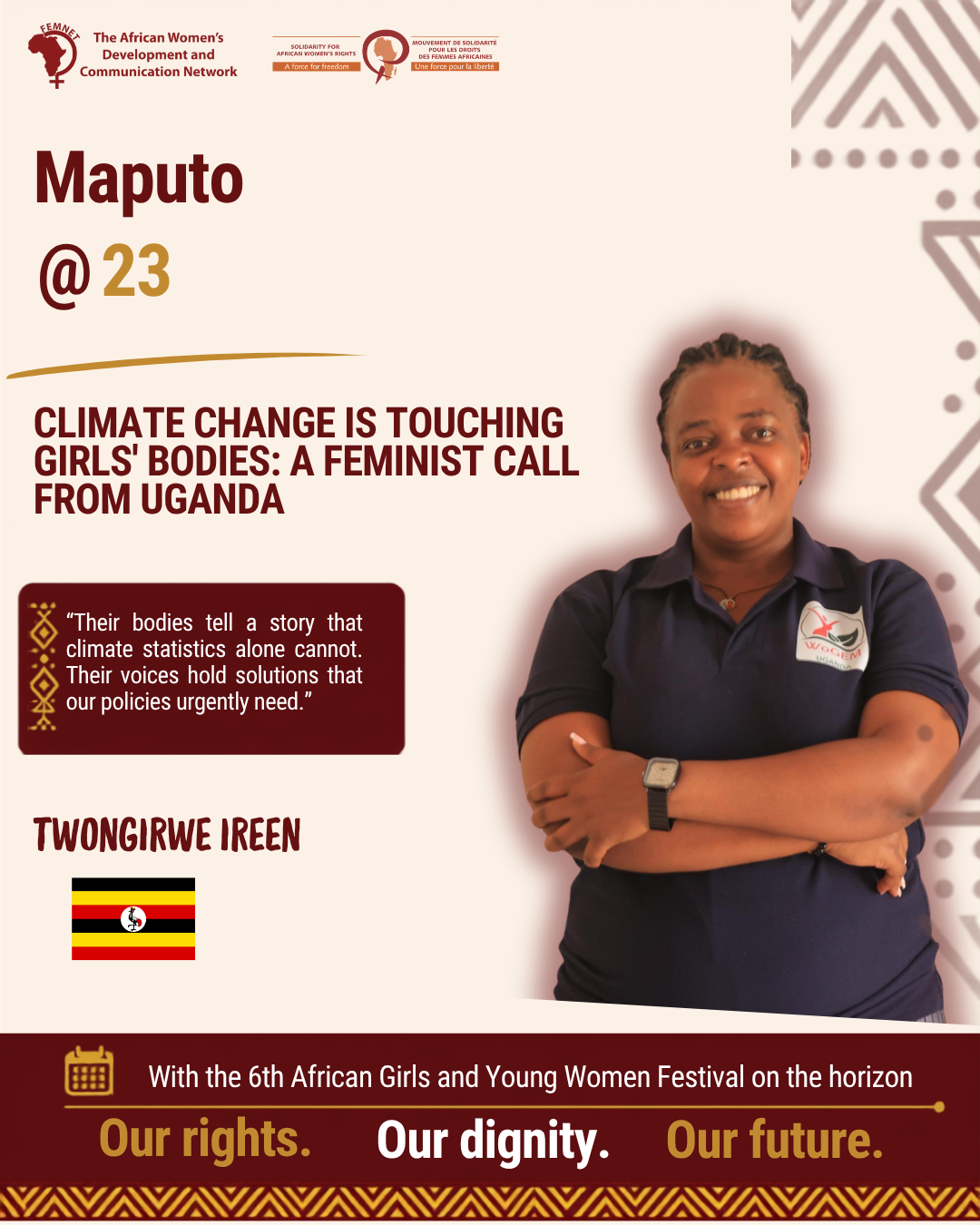
Climate Change Is Touching Girls’ Bodies: A Feminist Call from Uganda
When people talk about climate change, they often speak about rising temperatures, floods, droughts, and disappearing forests. Those realities matter. But there is another truth we do not talk about enough: climate change is touching girls’ bodies. As a Ugandan feminist working alongside girls and women in rural and oil-affected communities, I have learned that the climate crisis is not gender-neutral. It is experienced through empty plates, tired feet, missed school days, unsafe journeys, and growing fear. It is experienced in the body.
When climate impacts hit, girls are often among the most affected as they help mothers and elders search for food and keep households going. Climate crisis causes food insecurity. Hunger weakens their bodies and affects their health, concentration, and ability to learn. Some leave school because there is no money for fees or because they must help their families survive.
When water sources dry up, girls walk longer distances to collect water. What used to take one hour can now take three or four. These journeys expose them to harassment, violence, and exhaustion. By the time they return home, there is little energy left for homework, rest, or simply being children. Moreover, climate change also affects menstrual health. During floods or displacement, many girls lose access to clean water, safe toilets, and menstrual products. Managing a period with dignity becomes another daily struggle. Too many girls miss school because the spaces meant to support them simply do not exist. In Uganda’s oil-hosting communities, these challenges are often intensified. Environmental degradation, loss of land, and shrinking livelihoods increase economic pressure on families. When households struggle to survive, girls are more likely to be pushed into early marriage or transactional relationships as coping mechanisms. Their bodies become part of the cost of survival.
During my community and school engagements, I have met and seen girls planting trees in schools, leading climate clubs, teaching their families about waste management, and speaking confidently in community meetings. I have seen young women turning agricultural waste into renewable energy projects, advocating for clean, just, equitable and inclusive energy, demanding a place at decision-making tables. They are already leading. What they lack is not ability but opportunity, resources, and recognition.
Furthermore, as feminists, we know that climate justice cannot exist without gender justice. A climate policy that ignores girls’ health, safety, education, unpaid care work, and leadership is incomplete. Likewise, conversations about girls’ rights must recognize that climate change is shaping every aspect of their lives.
I therefore call for urgent action from governments and development partners to invest in climate- resilient schools with clean water, safe sanitation, and menstrual health services. We need climate finance to reach grassroots women’s and girls’ organizations that understand local realities. We need communities to protect girls from violence and harmful practices that increase during times of crisis. We need girls to have seats at the tables where climate decisions are made, not as symbols, but as leaders whose experiences and ideas matter.
Importantly, climate change is not only changing our weather; it is also changing how girls grow up, how they learn, how they eat, how they move and how they dream. If we truly want climate solutions that leave no one behind, we must start by listening to girls. Their bodies tell a story that climate statistics alone cannot. Their voices hold solutions that our policies urgently need.
In a nutshell, the climate crisis is personal. It is political. And for millions of girls across Africa, it is lived every single day. Protecting girls’ bodies, rights, and futures is not separate from climate action; it is at the heart of it.
For God and my Country
Ireen Twongirwe
Executive Director
Women for Green Economy Movement Uganda (WoGEMU)
www. wogemuganda. org