
From Ambition to Action: Will Africa Achieve the SDGs Before 2030?
By Eunice Ngina Muema
Vice Chair – National Steering Committee (META)
Development Practitioner | Youth & Market Systems Expert | Certified Mentor and Coach
With less than five years left to achieve the Sustainable Development Goals (SDGs), Africa stands at a defining moment.
The question is no longer whether the continent has ambition. Africa has demonstrated remarkable ambition, innovation, and resilience over the years. The real question now is whether we have the systems, financing, partnerships, and urgency required to deliver meaningful change at scale.
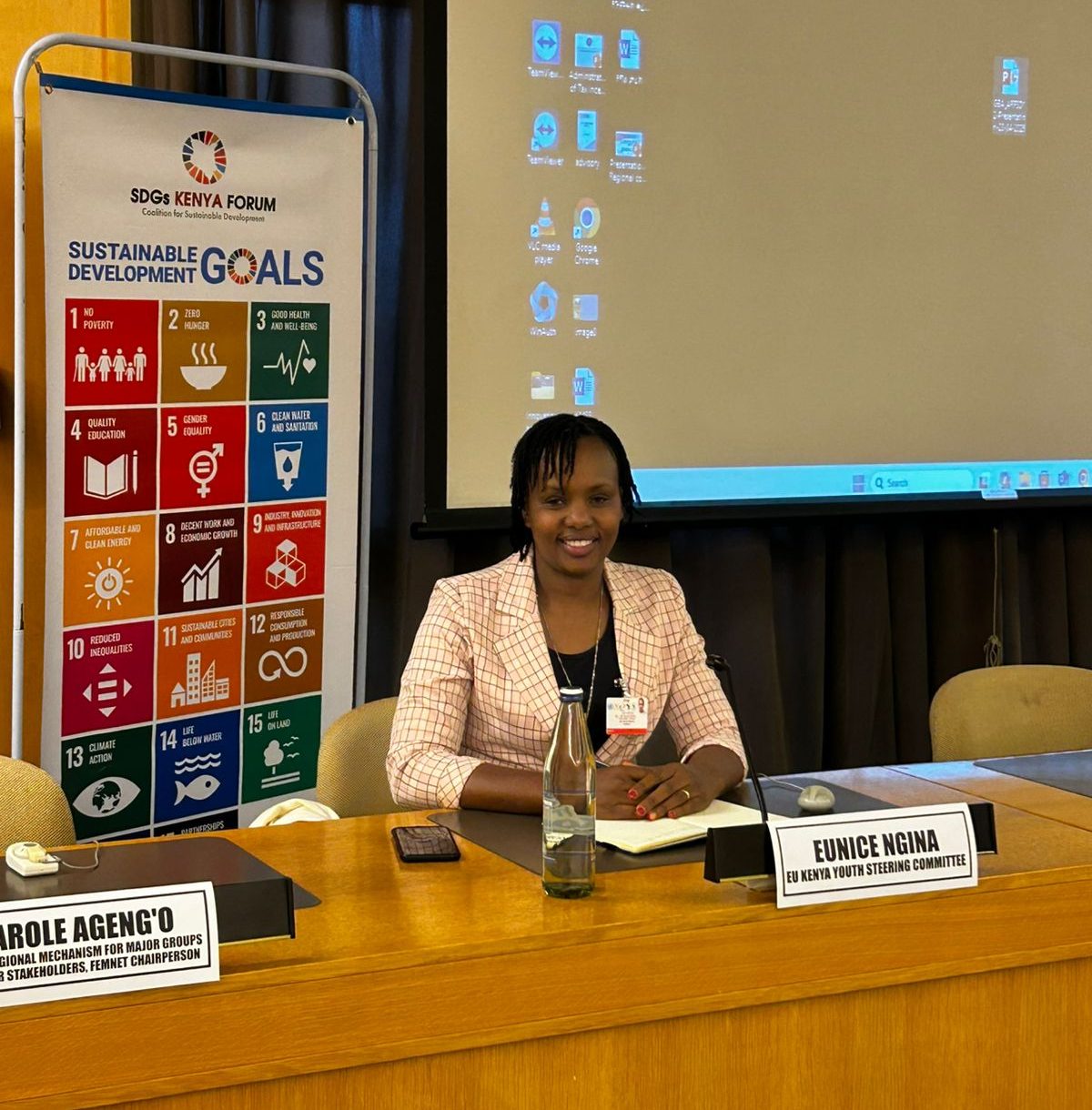
Attending the 12th Africa Regional Forum on Sustainable Development (ARFSD) in Addis Ababa was both a powerful and deeply reflective experience for me. The forum brought together policymakers, development partners, civil society actors, private sector leaders, feminist movements, youth representatives, and technical experts from across the continent to reflect on Africa’s progress toward Agenda 2030 and Agenda 2063.
What stood out most throughout the discussions was the clear shift in tone. The conversations demonstrated that Africa already possesses innovative ideas, practical solutions, and strong policy commitments. However, the real challenge now lies in implementation and the ability to deliver meaningful impact at scale.
The central question emerging across the forum therefore became: How do we move from ambition to large-scale delivery and measurable transformation?
Across the different sessions, one message consistently emerged: implementation is now Africa’s greatest challenge.
The continent has developed strong frameworks, strategies, policies, and commitments. Yet many communities still struggle with unemployment, poverty, climate vulnerability, exclusion, and weak access to opportunities. The gap between policy conversations and lived realities remains significant.
Learning What Really Matters
One of the most impactful areas of discussion for me focused on the role of the private sector in accelerating the SDGs.
A very clear message emerged from the conversations: public resources alone are not enough to deliver Africa’s development agenda.
Governments cannot deliver the SDGs independently. The scale of financing required is simply too large.
This means the private sector must move beyond being viewed only as a profit-making actor and instead become a genuine development partner capable of driving innovation, investment, efficiency, and scalable solutions.
What particularly resonated with me was the emphasis on practical implementation.
Africa already has enough policy discussions. What is now needed are systems capable of translating ideas into tangible results for communities.
The forum highlighted several practical examples already working across the continent, including digital financing systems, climate adaptation financing, blended finance mechanisms, and cooperative-based financial models supporting underserved populations.
These examples demonstrated that Africa does not lack innovation. What is often missing are investment-ready structures, scalable implementation systems, affordable financing, stronger coordination mechanisms, and long-term institutional support capable of sustaining impact.
Financing: The Missing Link
Financing discussions dominated many sessions throughout the forum.
From blended finance and climate adaptation financing to debt swaps, ESG financing, and risk-sharing mechanisms, it became increasingly clear that Africa does not necessarily lack capital.
Rather, the continent often lacks the systems required to attract, structure, and deploy capital effectively.
One concept that particularly stood out for me was the relationship between ESG (Environmental, Social, and Governance) and the SDGs.
At one point during the discussions, a speaker made a statement that stayed with me:
“ESG is how investors think. SDGs are how development actors think.”
That statement captured an important reality.
Development conversations and investment conversations are often happening in parallel rather than together. Yet the opportunity lies in aligning the two.
If projects are properly structured, transparent, measurable, and scalable, investment can flow toward solving Africa’s development challenges.
Another powerful reflection from the forum was the growing recognition that “data is the new collateral.”
Historically, many smallholder farmers, youth entrepreneurs, and women-led enterprises have struggled to access finance because they lacked traditional forms of collateral such as land titles or fixed assets.
However, digital systems are beginning to shift this reality.
Farmer records, aggregation data, transaction histories, digital payments, and market records are increasingly becoming important tools for assessing trust, productivity, and financing potential.
For me, this discussion strongly connected with my work within agricultural market systems and the Export Supply Hub.
Across many communities, young people and farmers are already producing, innovating, and building enterprises. Yet they continue to struggle because systems are often not designed to recognize their potential.
Clean Cooking: More Than Just Energy
One session that remained with me long after the forum ended focused on clean cooking.
At first glance, clean cooking may appear to be purely an energy issue. However, the discussions revealed that it intersects with nearly every aspect of sustainable development.
The session highlighted that only a small percentage of Kenyan households currently have access to clean cooking solutions. Yet the implications extend far beyond energy access.
Clean cooking is connected to:
- Public health
- Women’s empowerment
- Environmental sustainability
- Livelihoods
- Household economics
- Time poverty
- Climate action
Traditional cooking methods continue to expose millions of women and children to harmful indoor air pollution, increasing health risks and respiratory illnesses.
At the same time, women and girls often spend significant amounts of time collecting firewood and managing inefficient cooking systems. This limits time available for education, economic participation, leadership, and other opportunities.
The environmental impacts are equally significant, particularly through continued dependence on biomass fuels that contribute to deforestation and environmental degradation.
What made this session particularly inspiring was the presence of locally driven solutions.
One Kenyan entrepreneur shared how her organization is working with schools to transition toward electric cooking systems. The initiative is helping schools reduce operational costs, improve efficiency, reduce cooking time, and lower dependence on traditional fuels.
What struck me most was the realization that the solutions already exist.
The real challenge now is scaling them.
And scaling requires:
- Financing
- Supportive policy environments
- Investment
- Partnerships
- Inclusive systems
The session also powerfully challenged the tendency to view women only as end-users within the clean cooking ecosystem.
Women must also be positioned as:
- Entrepreneurs
- Distributors
- Technicians
- Innovators
- Leaders within the value chain
That shift is critical if clean cooking transitions are to become both sustainable and economically transformative.
Finding My Voice: Financing Care, Powering Equality
One of the most meaningful moments for me during the forum was participating as a panelist during a side event titled:
“Financing Care, Powering Equality: Feminist and Youth-Led Pathways for Africa’s SDG Progress.”
The session was convened collaboratively by FEMNET, SDGs Kenya Forum, Zamara Foundation, Tax Justice Network, and the Women’s Major Group.
The discussions focused on financing justice, inclusive systems, feminist leadership, youth participation, and the importance of grounding development conversations within lived realities.
During my contribution, I posed a simple but important question:
Whose realities are we centering when we talk about the SDGs?
Because for many young people, especially those at the grassroots, the SDGs are not abstract global goals.
They are daily lived realities.
They are:
- The young farmer with production capacity but no reliable market access
- The graduate searching for meaningful employment opportunities
- The entrepreneur navigating systems that were never designed with them in mind
Through my work with the Export Supply Hub and community-based initiatives, I encounter these realities every day.
The reality is that young people are not lacking ideas, creativity, or energy. What many continue to lack are systems that genuinely include them and create equitable access to opportunities, financing, and markets.
From Beneficiaries to Partners
One of the strongest reflections I carried from the forum is the need to move beyond viewing youth as beneficiaries of development.
Across communities, young people are already organizing themselves, building practical solutions, innovating within limited-resource environments, and creating opportunities where formal systems have often failed to respond effectively.
Yet many development processes still engage youth only symbolically.
Meaningful inclusion therefore cannot stop at consultation alone. It requires deliberate youth participation within decision-making processes, co-creation of policies and programmes, access to financing and opportunities, inclusion within implementation systems, and long-term trust in youth-led solutions.
The discussions also highlighted how many financing systems remain inaccessible to young people because of rigid requirements, weak support structures, and limited trust in grassroots initiatives.
This reinforced an important realization for me:
If Africa is serious about achieving the SDGs, then financing youth is not optional.
So… Will Africa Achieve the SDGs?
After all the conversations, reflections, and interactions during the forum, I left Addis Ababa carrying both hope and urgency.
I left with hope because Africa already possesses immense innovation, resilience, leadership, and locally driven solutions. At the same time, I also left with urgency because the pace of implementation still does not match the scale of the challenges affecting communities across the continent.
The continent continues to face significant gaps in:
- Financing
- Inclusion
- Implementation capacity
- Coordination
- Access to opportunities
- Climate resilience
Perhaps the deeper question is no longer whether Africa can achieve the SDGs, but whether our systems, financing structures, and institutions are prepared to support and scale the work that communities, young people, innovators, and grassroots actors are already doing.
Final Reflection
As I left Addis Ababa, I carried more than notes from the forum; I carried a deeper sense of responsibility. Participation in such spaces should not end with listening to high-level discussions. It should translate into practical action, expanded opportunities, stronger and more inclusive systems, and meaningful change within communities.
Most importantly, it is about building a future where development is done with people, not merely for people.
Africa already has the ideas.
What is needed now is the courage, coordination, investment, and urgency to turn those ideas into transformation.