
Advancing Democratic Action, Governance, and Peace in Kenya
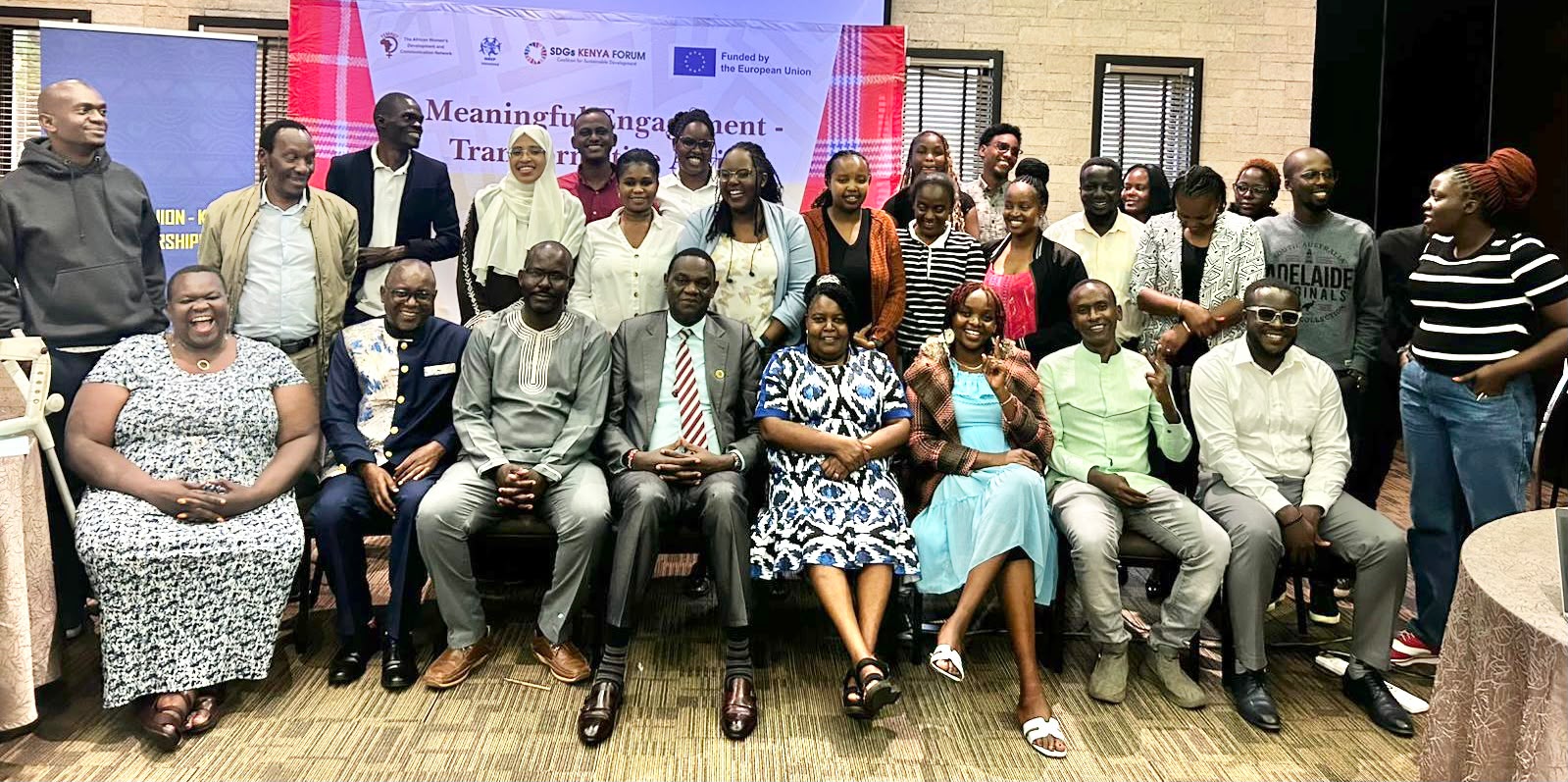
The SDGs Kenya Forum, in partnership with FEMNET and the EU Delegation to Kenya under the META Consortium, hosted a vital hybrid structured dialogue on 21st May 2026, under the theme: “From Dialogue to Democratic Action: Strengthening Governance, Civic Participation, and Inclusive Partnerships.”
As Kenya steps into the critical pre-election window ahead of the August 2027 General Elections , this session united civil society organizations (CSOs), community leaders, and development partners to address shrinking civic space, democratic resilience, and institutional accountability.
The Evolving Landscape:
Vincent Ochieng’ and the EU Delegation unpacked macro-trends like technological disruptions, artificial intelligence, and the rising tide of digital misinformation that threatens social cohesion.
Youth & Digital Mobilization:
Drawing from research presented by Brian Kithinji (YSB), we explored how Kenya’s youth are pivoting to digital activism and online mobilization post-2025 protests. However, structural barriers like unemployment and high political party nomination fees continue to hinder formal youth inclusion.
Leaving No One Behind
Panelists Wanja Maina, Francisco Miller, and Umar Yunus led an intense discussion on ending the double marginalization of women, PWDs, and minority regions. Structural barriers like political gatekeeping and violence must be dismantled to support women leaders.
The core recommendations emphasize that civil society organizations must transition from a reactive stance to a continuous, proactive model of civic awareness ahead of 2027. Alongside this, there is a critical need to shift the national political discourse away from personality-driven arrangements and toward ideology, accountability, and issue-based politics. To protect the information ecosystem, ethical communication frameworks must be scaled up to effectively counter online hate speech, fake news, and radicalization. Furthermore, enhancing multi-stakeholder collaboration by building stronger networks across the state, civil society organizations, faith-based groups, and the media will be vital in establishing robust early-warning systems against political instability. Ultimately, a big thank you goes out to our moderator, Paul Mwaura, our esteemed panelists, and all the participants who joined us both online and in person to shape this important discourse.