
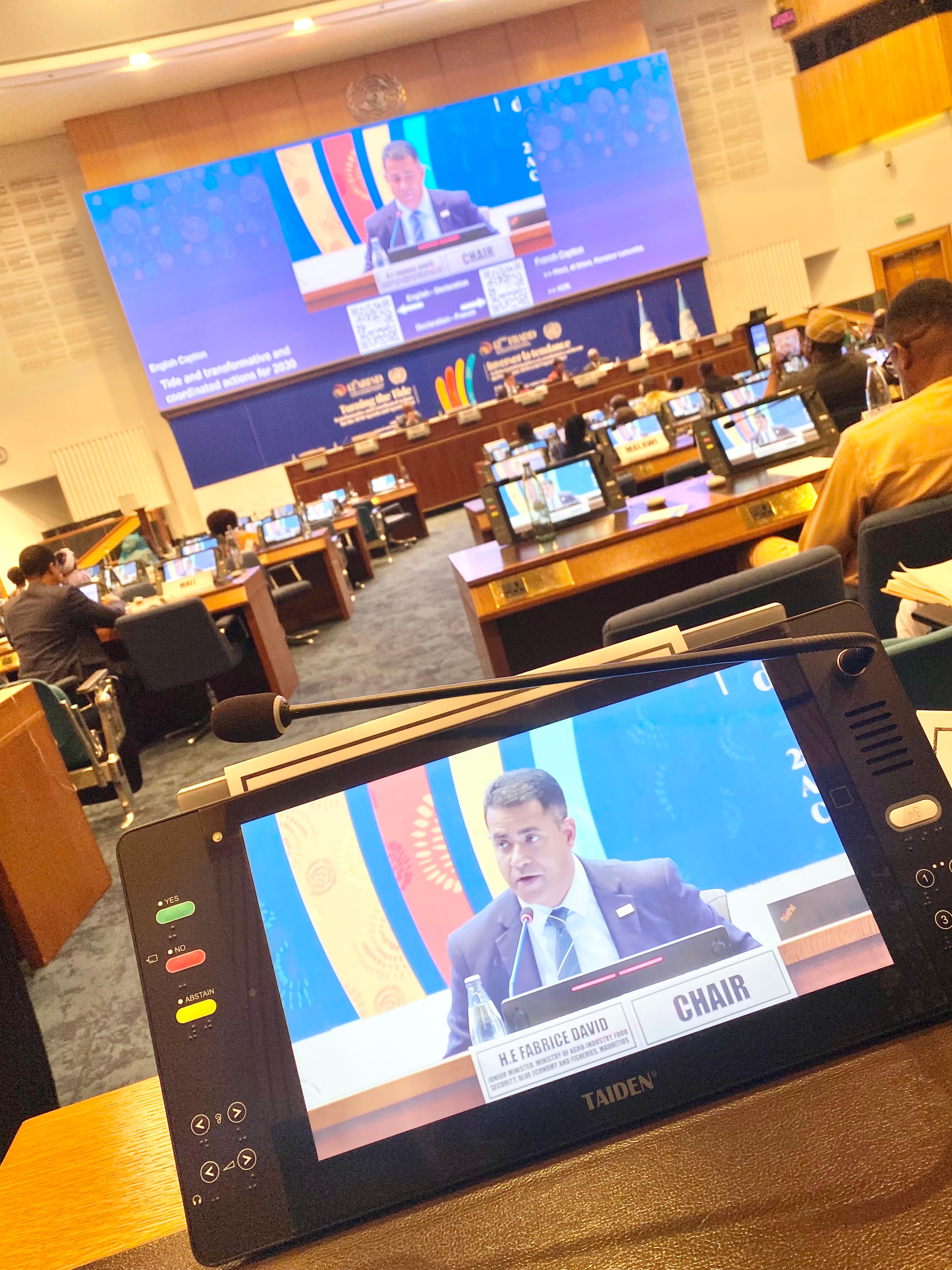
From Dialogue to Delivery – Africa Sets the Pace as #ARFSD12 Concludes in Addis Ababa
The curtains have officially closed on the 12th Session of the Africa Regional Forum on Sustainable Development #ARFSD12, marking a decisive shift in the continent’s approach to the 2030 Agenda. After three days of high-level deliberations at the Economic Commission for Africa (ECA), the forum concluded not just with speeches, but with a unified roadmap for the future.
A Pivot Toward Solutions
The theme of the week was clear: the time for diagnosis is over. Leaders and delegates arrived in Addis Ababa with a sense of “urgency of time,” acknowledging that with only four years remaining until the 2030 deadline, Africa must move from discussing limitations to scaling solutions.
The opening remarks from global and continental heavyweights—including PM Robinah Nabbanja (Uganda), Claver Gatete (Executive Secretary of ECA), Lok Bahadur Thapa (UN ECOSOC President), and a virtual charge from UN Secretary-General António Guterres—set a high-stakes tone. Their collective message echoed through the halls: we must accelerate the SDGs by galvanizing models that work.
New Leadership for a New Chapter
In a landmark moment for the forum, Mauritius (Southern Africa) has officially taken over the Chair of the Bureau from Uganda. The newly elected Bureau reflects a diverse, pan-African leadership structure ready to steer the continent’s development agenda:
-
Chair: Mauritius (Southern Africa)
-
1st Vice-Chair: Gabon (Central Africa)
-
2nd Vice-Chair: Côte d’Ivoire (West Africa)
-
3rd Vice-Chair: Libya (North Africa)
-
4th Vice-Chair / Rapporteur: Uganda (East Africa)
Led by the new Chair, H.E. Fabrice David, Minister of the Blue Economy, Marine Resources, Fisheries and Shipping of Mauritius, the Bureau is tasked with maintaining the momentum generated this week.
The Road to New York: #HLPF2026
The most critical outcome of the forum was the adoption of the “Key Messages.” These are the distilled priorities, success stories, and financing demands of the African continent. These messages will be presented at the upcoming High-Level Political Forum (HLPF) 2026 in New York this July.
By focusing on the specific SDGs under review—including Water (6), Energy (7), Industry (9), Cities (11), and Partnerships (17)—Africa is heading to the UN headquarters with a clear demand for better coordination and innovative financing models that other nations can emulate.
Looking Ahead:ARFSD-13 and the 2027 Review
While the 2026 session focused on infrastructure and energy, the Bureau is already casting its eyes toward the next cycle of transformation. Next year’s #ARFSD13 will prepare Africa for the 2027 SDG Summit, where a new set of critical goals will undergo in-depth review: SDG 4 (Quality Education), SDG 10 (Reduced Inequalities), SDG 12 (Responsible Consumption and Production), SDG 15 (Life on Land), and SDG 17 (Partnerships). This upcoming cycle will be pivotal for Africa, focusing on human capital, equitable growth, and the sustainable management of the continent’s vast terrestrial ecosystems.
As delegates depart, the question of “where next?” remains open. The Bureau noted that the date and venue for next year’s session, #ARFSD13, are yet to be finalized.
In keeping with the spirit of inclusivity, the selection of the host country is rotational across Africa’s five regions. All Member States have been formally invited to submit their expressions of interest, either directly to the Secretariat or through their embassies in Addis Ababa.
Final Thoughts
As the echoes of the closing gavel fade, the real work begins. #ARFSD12 has proved that Africa is no longer just identifying gaps; it is building bridges. Between the ambition of Agenda 2030 and the reality of 2026, the continent has chosen a path of radical implementation.
The message to the world is simple: Africa is ready, the models are proven, and the clock is ticking. Let’s get to work.
