
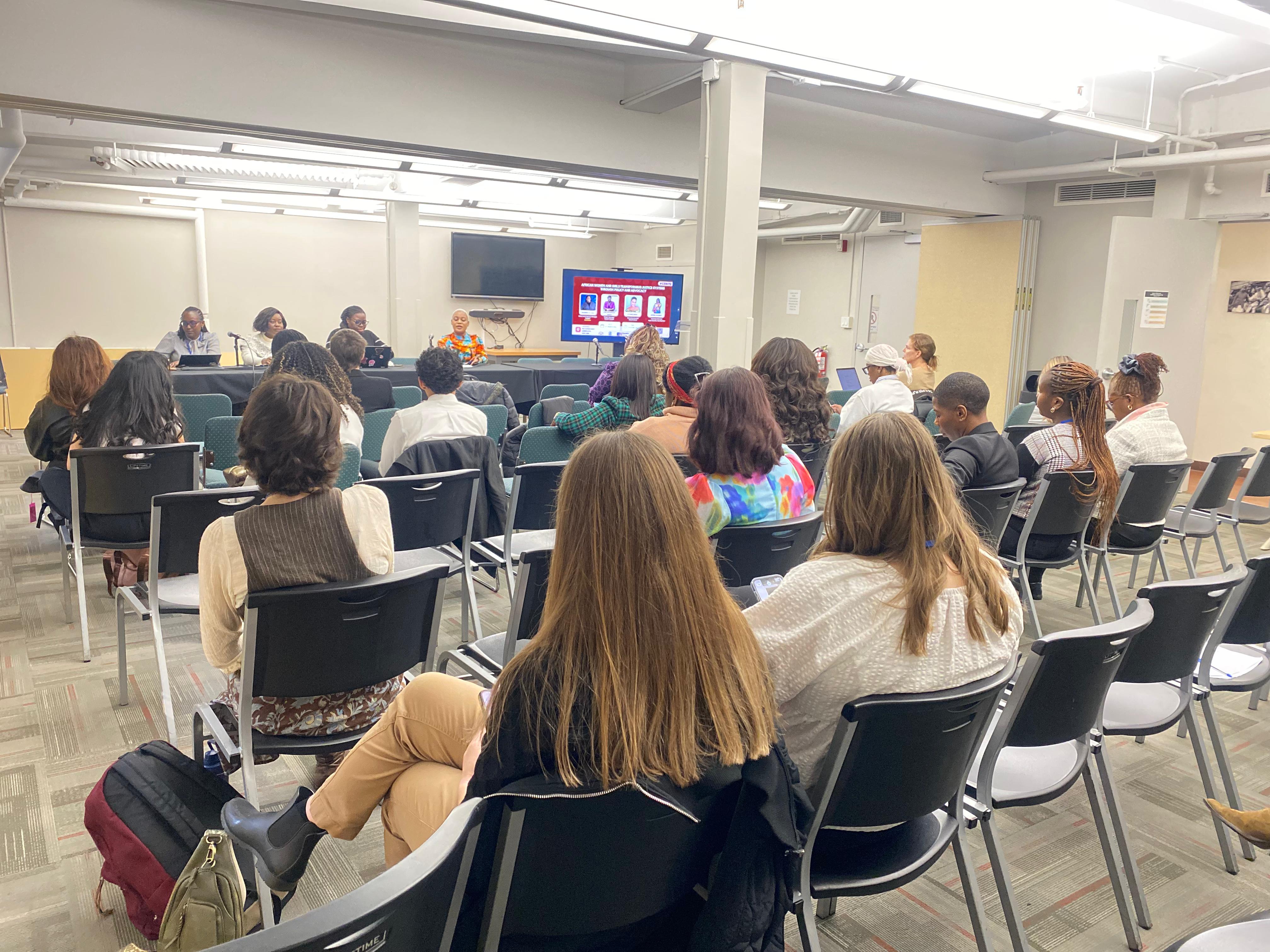
African Women and Girls Transforming Justice Systems Through Policy and Advocacy
Across Africa and beyond, the question of access to justice for women and girls continues to shape conversations about equality, leadership, and the effectiveness of legal systems.
During the parallel event, “African Women and Girls Transforming Justice Systems Through Policy and Advocacy,” advocates, legal experts, and policymakers came together to reflect on progress, confront persistent barriers, and identify pathways toward more inclusive justice systems.
The discussion opened with a critical question that framed the entire conversation: What does access to justice truly look like for women and girls? While legal frameworks across the continent increasingly recognize gender equality, the lived realities of many women still reveal significant gaps between commitments on paper and implementation in practice.
The Leadership Gap in the Legal Profession
A central theme of the discussion focused on the leadership gap for girls and young women in the legal field. Despite the growing number of women entering law schools across many African countries, women remain underrepresented in senior legal positions such as judgeships, senior partners in law firms, and leadership roles within justice institutions.
Participants highlighted that this gap is not due to a lack of ability or ambition. Rather, it stems from systemic barriers embedded within social, educational, and professional structures.
The journey into the legal profession often requires long and demanding periods of study and professional training. For many young women, these timelines intersect with societal expectations around caregiving, marriage, and family responsibilities. At the same time, the limited visibility of women in senior legal roles perpetuates a mentorship gap, making it harder for young women to envision themselves in positions of power.
Deep-rooted patriarchal norms also continue to influence perceptions of leadership in the legal profession. In some contexts, women lawyers and judges still face subtle or overt questioning of their authority and legitimacy in spaces traditionally dominated by men.
“The leadership gap in the legal profession is not about a shortage of talent—it is about the systemic barriers that prevent women from rising to positions of influence and decision-making,” noted Lois Aduoamoah-Addoh, Project Manager-Wildaf Ghana.
“When girls and young women do not see women leading in courtrooms, on judicial benches, or in legal policy spaces, it becomes harder for them to imagine those roles as possible for themselves.” She added.
The Maputo Protocol: From Commitment to Implementation
Another key focus of the event was the Maputo Protocol, formally known as the Protocol to the African Charter on Human and Peoples’ Rights on the Rights of Women in Africa. Adopted in 2003 by the African Union, the Protocol is widely regarded as one of the most progressive legal frameworks for women’s rights globally.
Often referred to as Africa’s “Bill of Rights for Women,” the Maputo Protocol addresses a wide range of issues, including political participation, reproductive rights, protection from gender-based violence, and access to justice.
Over the past two decades, many African states have ratified the Protocol and begun aligning their national laws with its provisions. These reforms have contributed to important progress in strengthening legal protections for women and expanding opportunities for women’s participation in governance and public life.
However, Esther Waweru, the Associate Director of Equality Now, emphasized that ratification alone is not enough. Effective implementation requires strong institutions, judicial awareness, and continued advocacy by civil society organizations and legal practitioners
“The Maputo Protocol provides one of the strongest legal frameworks for women’s rights anywhere in the world. The challenge now is ensuring that it moves from paper to practice in courtrooms and communities,” she remarked.
Areas of Progress
Despite the challenges, participants also highlighted several areas where meaningful progress is taking place.
Across the continent, national legal reforms are increasingly aligning domestic legislation with the principles of the Maputo Protocol. These reforms are strengthening legal protections against gender-based violence, discrimination, and harmful practices.
Women are also becoming more visible in political and decision-making spaces, particularly as countries adopt policies that support gender parity and political inclusion. Article 9 of the Maputo Protocol calls for the promotion of women’s participation in political and decision-making processes, and several countries have taken steps to reflect this commitment in their electoral systems.
In addition, legal practitioners are increasingly using the Protocol in regional and international litigation to advocate for survivors of human rights violations. Courts such as the African Court on Human and Peoples’ Rights and the African Commission on Human and Peoples’ Rights have seen growing references to the Protocol in legal arguments and decisions.
Persistent Gaps and Structural Challenges
While progress is evident, significant structural challenges remain.
Participants highlighted the issue of sustainability in electoral justice mechanisms. In some countries, electoral courts or special tribunals are disbanded immediately after elections. This can leave women candidates—who may face electoral violence, intimidation, or disputes—without avenues for legal recourse.
Another pressing concern is the safety and protection of women working within justice systems. Female judges, lawyers, and human rights defenders in several contexts face intimidation, harassment, or threats linked to their work.
These risks can discourage women from pursuing careers in law or from taking on cases involving gender equality and human rights.
“If justice systems are to work for women, they must also protect the women who are working within those systems to defend rights and uphold the rule of law,” noted Sitabile Dewa, Executive Director, WALPE Africa.

Building Safer and More Inclusive Justice Systems
Participants emphasized that addressing these challenges requires a multi-layered approach.
One key priority is training and capacity-building within the judiciary. Judges, lawyers, and legal practitioners need greater familiarity with the provisions of the Maputo Protocol and how it can be used in legal reasoning, judgments, and advocacy.
Equally important is strengthening safety and support systems for women in the legal profession. This includes equipping female lawyers, judges, and advocates with tools and strategies to navigate risks while carrying out their work.
Participants stressed that gender-responsive justice systems must not only recognize rights but also actively protect those who defend them.
“Gender justice will only become a reality when our legal systems move beyond acknowledging women’s rights to actively safeguarding the people who fight to uphold them,” added Sitabile
Looking Ahead
The event reinforced the importance of continued collaboration between civil society organizations, policymakers, legal practitioners, and grassroots movements in advancing gender justice.
Achieving meaningful change will require sustained investment in legal education, institutional reform, and advocacy efforts that center the voices and experiences of women and girls.
Ultimately, transforming justice systems is not only about increasing representation—it is about reshaping institutions so they respond more effectively to the needs and rights of all.
As the discussion concluded, participants returned to the question that opened the conversation: What does access to justice truly look like?
For many women and girls across Africa, the answer lies in justice systems that are accessible, responsive, protective, and shaped by the leadership of women themselves.