
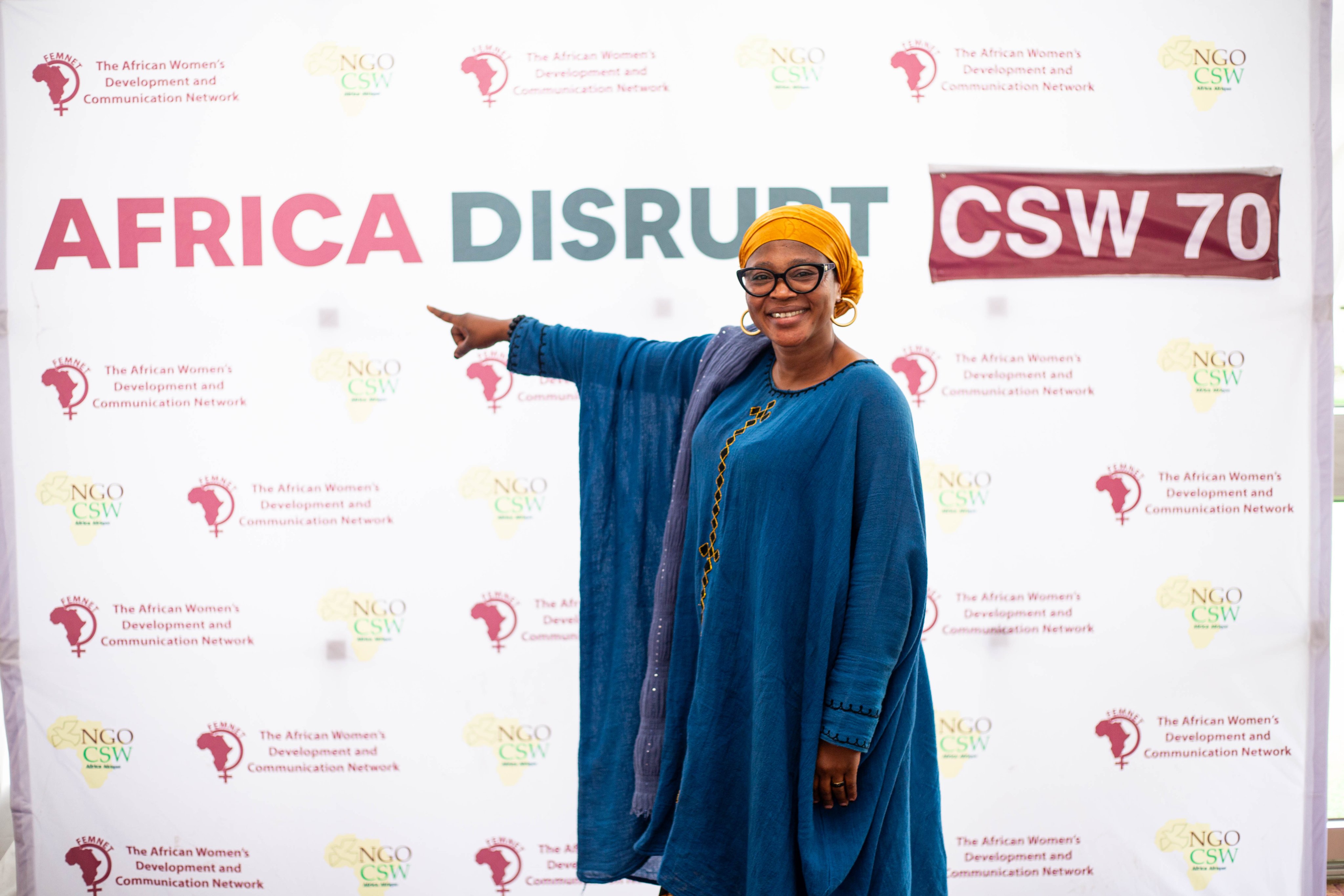
Africa Disrupt CSW70: Centering Justice, Beyond the Room
Africa Disrupt CSW70, held in Accra, Ghana from 17–19 February 2026, marked the fifth convening of a growing continental feminist strategy space that is steadily reshaping how African women engage with global gender equality processes. Under the theme “Centering Justice, Ensuring Equality for African Women and Girls,” this year’s convening was both a reflection and a reckoning; a recognition that while policies and commitments on gender equality continue to evolve, access to justice for African women and girls remains deeply uneven, and in many cases, out of reach.
Africa Disrupt was created to respond to a persistent gap: African feminists were often entering the Commission on the Status of Women (CSW) spaces fragmented, underrepresented, or reacting to agendas already shaped elsewhere. Over the years, it has grown into a critical convening where African feminists align priorities, interrogate policy frameworks, and build collective positions ahead of global engagements. By its fifth edition, Africa Disrupt is no longer just a convening; it is a movement infrastructure, ensuring that African voices are not only present but are actively shaping the agenda.
In her opening remarks, Memory Kachambwa, Executive Director of FEMNET, grounded the convening in truth and urgency: “Justice must not only exist in policy documents, but it must be felt in the everyday lives of African women and girls. Africa Disrupt is a space where feminists come together not only to reflect but to challenge systems that continue to marginalize women and girls.”
Across the continent, access to justice is constrained by a combination of legal, economic, and socio-cultural barriers. Discriminatory laws and norms continue to limit women’s rights in areas such as inheritance, land ownership, and marriage. Even where progressive laws exist, implementation gaps persist, leaving many women unable to claim their rights. The statistics are sobering. In Ghana, nearly 30% of women have experienced domestic violence. Across Africa, gender-based violence remains widespread, with some of the highest global rates of femicide recorded in parts of the continent. In Kenya, over 100 women were reported killed within just a few months, with thousands more cases of gender-based violence documented. These figures are not abstract — they reflect lived experiences, silenced voices, and justice systems that too often fail those most in need.
It is within this context that the convening opened with a powerful reminder from Memory Kachambwa, Executive Director of the African Women’s Development and Communication Network (FEMNET), who stated, “Equality cannot remain an aspiration. It must translate into real opportunities, resources, and decision-making power for women across the continent.”
Justice, as articulated throughout the discussions, cannot remain theoretical or aspirational; it must be accessible, responsive, and transformative. Throughout the three days, participants moved beyond diagnosing the problem to interrogating the systems that sustain injustice. Conversations on access to justice revealed how legal systems often remain inaccessible due to cost, complexity, language barriers, and geographic limitations. Cultural norms and stigma further discourage women from seeking justice, particularly in cases of gender-based violence.
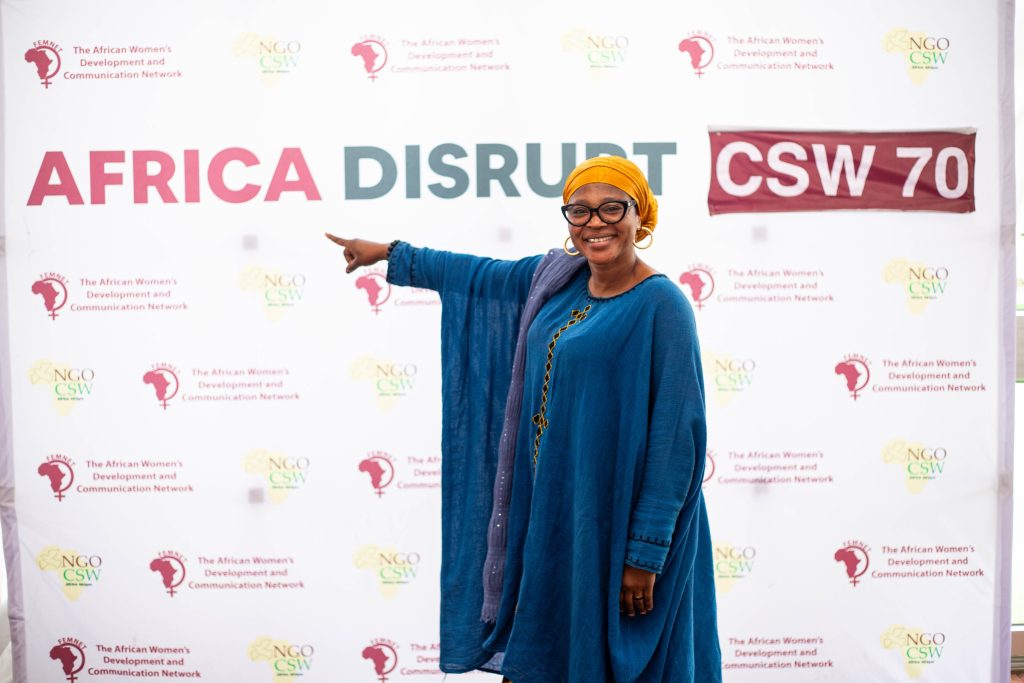
As Emmah Kaliya, executive Director at Malawi Human Rights Resource Centre (MHRRC), aptly noted, “Access to justice is not just about laws, it is about whether women can use them.”
This distinction resonated strongly, highlighting that legal frameworks alone are insufficient without meaningful access, awareness, and accountability.
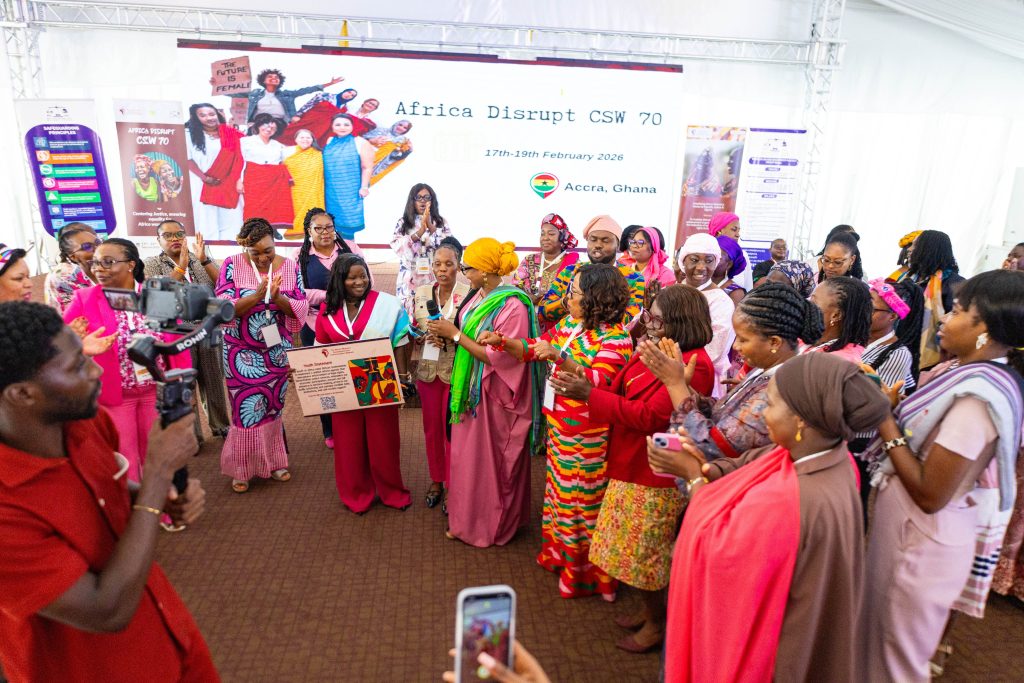
What set Africa Disrupt CSW70 apart was its deliberate shift from conversation to co-creation. Participants engaged in reimagining what inclusive and feminist justice systems should look like — systems that are not only legally sound but socially responsive and accessible to all women and girls, including those in rural and marginalized communities. The convening culminated in the adoption of a Call to Action on Access to Justice for Women and Girls in Africa, reflecting a unified continental position and a shared commitment to advancing legal reform, strengthening accountability, and centering the lived realities of African women in justice systems.
“When African women organize collectively, they shift power and reshape the conversations about justice and development. Centering justice means recognizing the intersecting challenges African women face, from economic inequality to climate injustice,” said Melody Darkey, National Coordinator, Women in Law and Development in Africa – Wildaf Ghana
As the convening closed, it was clear that Africa Disrupt CSW70 was not an endpoint but part of an ongoing continuum. From its origins as a response to fragmentation, it has evolved into a space of alignment, strategy, and collective power. The message carried forward into CSW is unequivocal: African feminists are not merely participants in global gender equality processes — they are agenda-setters, movement builders, and architects of a more just future. And until justice is not only promised but truly experienced by every African woman and girl, the work of disruption will continue.