
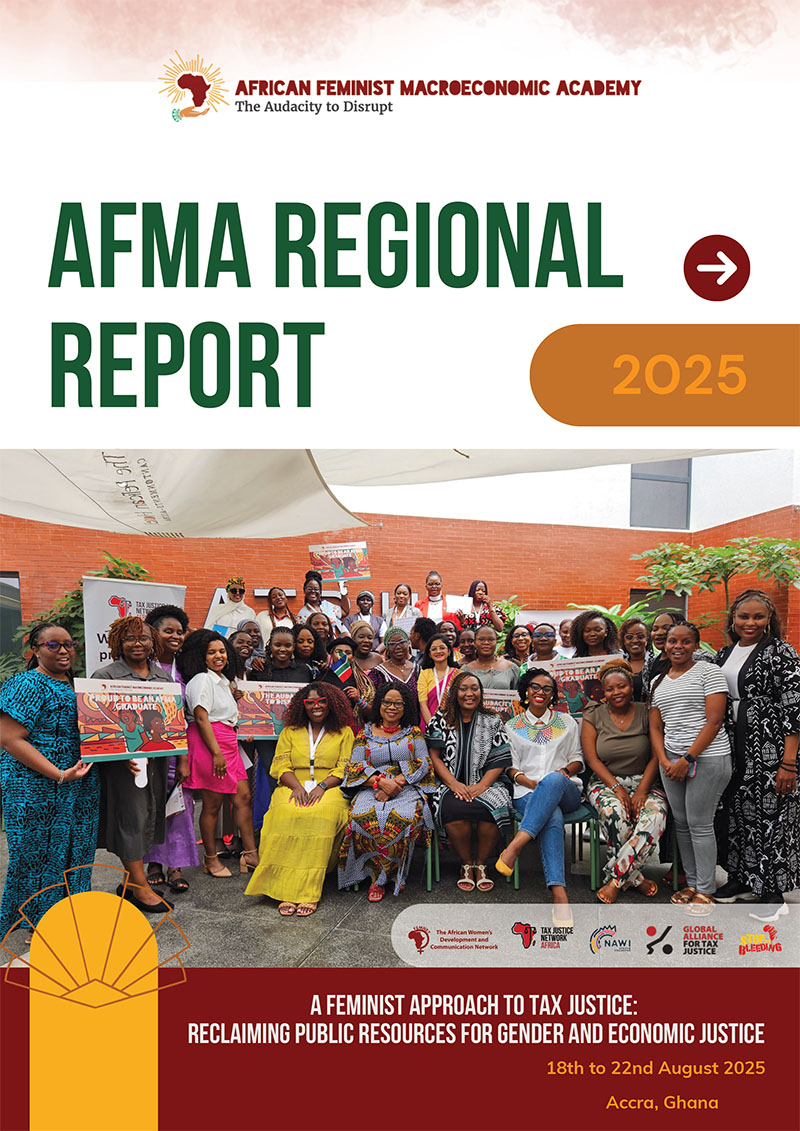
AFMA Regional Report 2025
The annual African Feminist Macroeconomy Academy (AFMA) is a platform for African women’s rights organisations, feminist movements, and researchers to strengthen their knowledge and advocacy for the advancement of economic justice. While many strides have been made by FEMNET’s members and other feminist movements in Africa in advocating for governments to acknowledge the invaluable, largely unrecognised role of women in the African economy, particularly since the aftermath of the pandemic in 2020, there remains a dearth of feminist analysis of critical macroeconomic policy issues and processes such as in illicit financial flows, informal trade, unpaid care work, tax justice and monetary policy.
Since 2017, AFMA has served as an indispensable learning exchange program that builds the capacities of women’s movements and women’s rights activists to challenge, advocate, and disrupt the structural economic impediments to achieving gender equality. Addressing this imbalance, AFMA aims to deepen participants’ appreciation of the many intersecting ways that macroeconomic policies shape the lived realities of women and how their efforts at the local level can influence and shape these policies.
A pivotal aspect of AFMA is its role in generating knowledge through research, particularly by collaborating with AFMA alumni to strengthen its advocacy and ensure policies and frameworks benefit its members.
Across the globe, governments recognize gender equality as essential for sustainable development, but existing economic policies have limited progress. With recent global financing shifts, there is a growing urgency for states to strengthen their domestic tax systems. To support this goal, many countries have committed to a range of international and regional human rights instruments aimed at both advancing the rights of women in all their diversities and eliminating discrimination and bias that hinder progress toward gender equality. However, the achievement of these commitments has, to an extent, been limited by the existing economic policies.
This limitation stems from the fact that, in an effort to ensure well-run economies and the availability of resources to finance national development priorities, governments design and implement economic policies aimed at mobilizing resources to improve citizens’ lives. While these policies are central to national development, they also play a critical role in shaping the well-being of individuals and communities. Depending on their design and implementation, economic policies can either catalyze gender equality or further entrench existing inequalities and biases. With recent global financing shifts, including reductions in official development assistance (ODA) to countries in the Global South and increasing levels of debt distress, there is growing urgency for states to strengthen their domestic tax systems. This shift reflects the broader recognition that taxation is the most reliable and sustainable source of long-term development financing. As a result, efforts have been made by actors at the national, regional, and global levels.